
British Shorthair Markings Guide: The Ultimate Look

Have you ever seen a cat with a coat like a fluffy cloud? Maybe it was a British Shorthair! These cats are famous for their round faces and soft fur. But did you know they come in many colors and patterns? Let’s explore the wonderful world of British Shorthair markings guide.
Have you ever wondered how these markings happen? It’s all thanks to their genes. These genes decide the color and pattern of their fur. Understanding this guide can help you know more about your feline friend.
Some British Shorthairs have solid colors. Others have stripes or spots. It is fun to learn about all the different looks they can have. So, let’s dive in and discover the amazing British Shorthair markings guide!
Key Takeaways
- Understanding the British Shorthair markings guide helps appreciate their diverse looks.
- Classic blue is a very popular color for British Shorthairs.
- Tabby patterns include stripes, swirls, and spotted coats.
- Colorpoint markings show darker colors on the face, paws, and tail.
- Genetics play a big role in determining a cat’s coat color and pattern.
Understanding British Shorthair Colors

British Shorthairs come in a rainbow of colors. These colors range from classic blue to chocolate and lilac. The most well-known color is the British Blue. But there are many more colors to discover! Each color has its own unique charm. The color of a British Shorthair is determined by its genes. These genes are passed down from their parents. Some colors are more common than others. For example, black, white, and cream are also popular. Understanding the basics of cat genetics helps to appreciate the variety. Breeders work hard to produce beautiful and healthy cats with different colors. The British Shorthair markings guide helps breeders plan their breeding programs. This ensures that the kittens have the desired colors and patterns. It is interesting to see how genetics can create such a wide range of beautiful cats.
- Blue is a very popular and classic color.
- Black British Shorthairs have sleek, shiny coats.
- White cats can have blue or odd eyes.
- Cream is a soft, pale, and lovely color.
- Chocolate and lilac are less common but beautiful.
Did you know that the color of a British Shorthair can change slightly as they grow? Kittens might have a different shade than they do as adults. This is because their fur develops fully over time. The color can also be affected by sunlight and diet. A healthy diet can help keep their coat shiny and vibrant. Regular grooming also helps to maintain their coat’s color and condition. It’s important to choose a food that is rich in nutrients. This will support their overall health and coat quality. Taking good care of your British Shorthair will ensure they have a beautiful and healthy coat for many years. The British Shorthair markings guide highlights the importance of proper care for maintaining coat color.
What Makes Blue So Popular?
Why is the blue British Shorthair so popular? It’s because of its soft, plush coat that looks like a teddy bear. The blue color is actually a shade of gray. It’s not quite gray and not quite blue. This makes it unique and appealing. The blue color is consistent throughout the coat. It doesn’t have any stripes or spots. This solid color adds to its charm. Many people find the blue British Shorthair to be very calming and peaceful. They are often described as gentle giants. Their round faces and big eyes make them even more lovable. Owning a blue British Shorthair is like having a cuddly friend. They bring joy and comfort to their families. Their popularity continues to grow as more people discover their wonderful qualities.
How Do Genetics Determine Color?
Have you ever wondered how genetics determine a cat’s color? It’s all about genes! Cats inherit genes from their parents. These genes tell the body how to make pigment. Pigment is what gives color to their fur. Some genes are dominant, and some are recessive. Dominant genes are stronger and will show their color. Recessive genes need two copies to show their color. For example, the gene for black fur is dominant over the gene for chocolate fur. So, if a cat has one gene for black and one for chocolate, it will be black. The British Shorthair markings guide explains how these genes interact to create different colors. It’s like a secret code that determines what the cat will look like. Understanding genetics helps breeders predict the colors of kittens.
Can Diet Affect Coat Color?
Can what a cat eats really change its fur color? Yes, it can! A healthy diet is important for a shiny, vibrant coat. The right nutrients help to produce pigment. If a cat doesn’t get enough of certain vitamins and minerals, its coat can become dull. It might even change color slightly. For example, a lack of copper can cause black fur to turn reddish. A diet rich in omega-3 fatty acids can improve coat health. These fatty acids help to keep the fur soft and shiny. Make sure to feed your British Shorthair a high-quality cat food. Look for foods that contain essential nutrients for coat health. The British Shorthair markings guide emphasizes the role of diet in maintaining coat color and condition. Always consult with a vet to choose the best diet for your cat.
Fun Fact or Stat: The British Blue is so popular that it makes up over 50% of all registered British Shorthairs!
Exploring Tabby Patterns in Detail
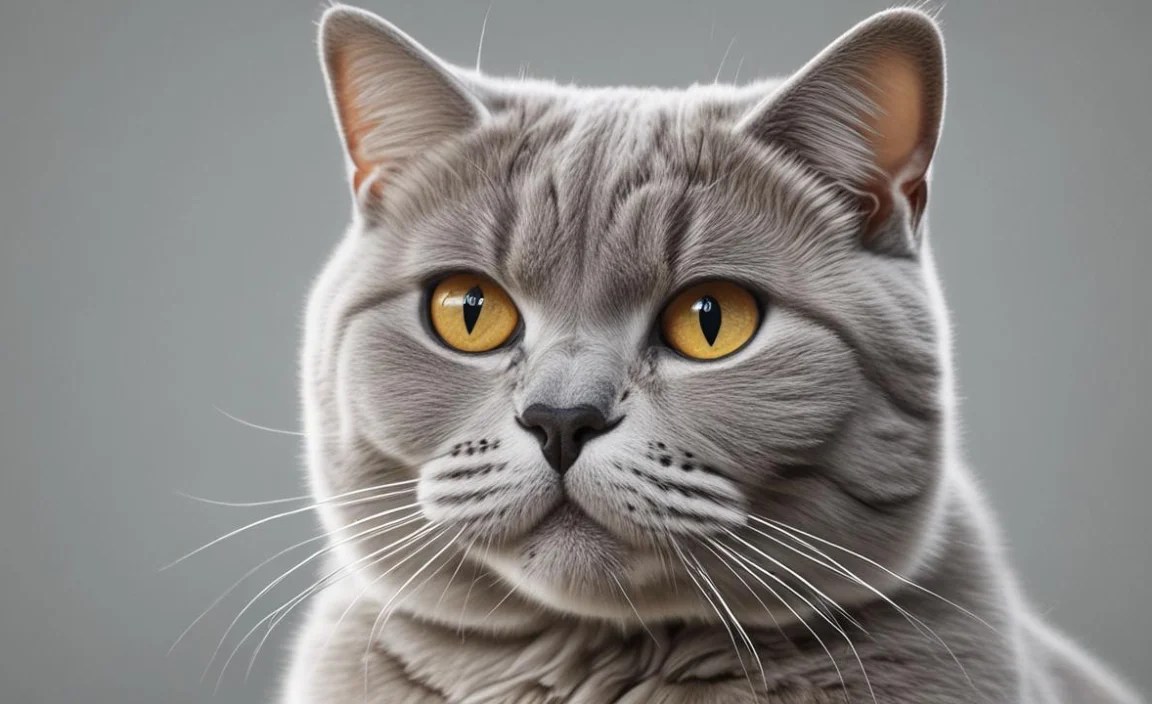
Tabby patterns are common in British Shorthairs. These patterns include stripes, swirls, and spots. The classic tabby has swirling patterns on its sides. The mackerel tabby has narrow stripes running down its body. Spotted tabbies have spots of different sizes. Ticked tabbies have hairs with bands of color. These bands give the cat a salt-and-pepper look. The tabby pattern is caused by a gene called the agouti gene. This gene controls the distribution of pigment in the hair shaft. Even solid-colored cats can have a faint tabby pattern. This is called a ghost tabby pattern. The British Shorthair markings guide provides detailed information on identifying tabby patterns. Understanding these patterns helps to appreciate the diversity of British Shorthairs. Each tabby pattern has its own unique beauty and charm.
- Classic tabby has swirling patterns.
- Mackerel tabby has narrow stripes.
- Spotted tabby has spots all over.
- Ticked tabby has banded hairs.
- Tabby patterns are caused by the agouti gene.
- Ghost tabby is a faint pattern in solid cats.
The tabby pattern is not just about stripes and spots. It also includes markings on the face. Tabbies often have an “M” shape on their forehead. They also have dark lines around their eyes and mouth. These facial markings add to their expressive look. The tabby pattern is one of the oldest and most common patterns in cats. It is found in many different breeds. The British Shorthair markings guide explains how to identify these subtle markings. It’s fun to learn about the different variations of the tabby pattern. Each cat has its own unique combination of stripes, spots, and swirls. The tabby pattern is a testament to the diversity of the cat world. It is a beautiful and fascinating aspect of the British Shorthair.
What is a Classic Tabby?
Imagine a cat with swirling patterns on its sides. That’s a classic tabby! The swirls look like marble. They are bold and eye-catching. The classic tabby also has a butterfly pattern on its shoulders. This pattern is made up of lines that resemble butterfly wings. The classic tabby pattern is very distinctive. It is easy to recognize once you know what to look for. The British Shorthair markings guide highlights the key features of the classic tabby pattern. These cats are often described as having a regal appearance. Their striking patterns add to their charm. Owning a classic tabby is like having a living work of art. Their unique patterns make them stand out from the crowd.
Mackerel vs. Spotted Tabby: What’s the Difference?
What’s the difference between a mackerel and a spotted tabby? The mackerel tabby has stripes that run down its body. These stripes are narrow and close together. They look like the bones of a fish, hence the name “mackerel.” The spotted tabby has spots all over its body. These spots can be large or small, round or oval. The British Shorthair markings guide explains how to tell these two patterns apart. Look closely at the cat’s sides. If you see stripes, it’s a mackerel tabby. If you see spots, it’s a spotted tabby. Both patterns are beautiful and unique. They add to the diversity of the British Shorthair breed. Knowing the difference helps you appreciate the variety of tabby patterns.
The Mystery of the Ticked Tabby
Have you ever seen a cat with a salt-and-pepper coat? It might be a ticked tabby! The ticked tabby doesn’t have stripes or spots. Instead, each hair has bands of color. This gives the coat a speckled appearance. The ticked tabby pattern is also known as the Abyssinian tabby. This is because it is common in the Abyssinian breed. The British Shorthair markings guide includes information on this unique pattern. The ticked tabby pattern is subtle but beautiful. It adds depth and texture to the coat. These cats often have a wild or exotic look. The ticked tabby is a fascinating example of the diversity of cat coat patterns. It is a testament to the complexity of cat genetics.
Fun Fact or Stat: All tabby cats have a distinctive “M” marking on their forehead!
Understanding Colorpoint Markings

Colorpoint markings are another fascinating aspect of the British Shorthair. These markings are characterized by darker colors on the face, paws, tail, and ears. The body is usually a lighter color. The colorpoint pattern is caused by a temperature-sensitive gene. This gene only produces pigment in cooler areas of the body. That’s why the extremities are darker. The colorpoint pattern is common in breeds like the Siamese and Himalayan. It is also found in British Shorthairs. The British Shorthair markings guide explains the different variations of colorpoint patterns. These patterns can include seal point, blue point, chocolate point, and lilac point. The color of the points depends on the cat’s genetic makeup. Colorpoint British Shorthairs are known for their striking appearance. Their contrasting colors make them stand out.
- Darker colors on face, paws, tail, and ears.
- Body is usually a lighter color.
- Caused by a temperature-sensitive gene.
- Common in Siamese and Himalayan breeds.
- Variations include seal point, blue point, chocolate point.
The colorpoint pattern can vary in intensity. Some cats have very dark points, while others have lighter points. The intensity of the points can be affected by age and temperature. Older cats tend to have darker points. Cats that live in colder climates also have darker points. The British Shorthair markings guide provides tips on how to identify different colorpoint variations. It’s important to look at the overall color of the cat. Also, check the color of the points. Colorpoint British Shorthairs are often described as elegant and refined. Their striking markings add to their allure. The colorpoint pattern is a beautiful example of the diversity of cat coat patterns. It is a testament to the complexity of cat genetics.
How Does Temperature Affect Colorpoint Markings?
How does temperature affect colorpoint markings? It’s all about the temperature-sensitive gene! This gene only works in cooler areas of the body. These cooler areas are the face, paws, tail, and ears. In these areas, the gene produces pigment, making them darker. The warmer areas of the body don’t produce as much pigment. This is why the body is lighter. If a colorpoint cat lives in a warm climate, its points might be lighter. If it lives in a cold climate, its points might be darker. The British Shorthair markings guide explains this phenomenon in detail. It’s fascinating how temperature can influence a cat’s coat color! This unique feature makes colorpoint cats even more special.
Seal Point vs. Blue Point: What’s the Difference?
What’s the difference between a seal point and a blue point? Seal point cats have dark brown or black points. Their body is usually a creamy color. Blue point cats have bluish-gray points. Their body is usually a lighter, icy white color. The British Shorthair markings guide provides a clear comparison of these two variations. Look closely at the color of the points. If they are dark brown or black, it’s a seal point. If they are bluish-gray, it’s a blue point. Both variations are beautiful and elegant. They add to the diversity of colorpoint British Shorthairs. Knowing the difference helps you appreciate the subtle variations in coat color.
Caring for a Colorpoint British Shorthair
Caring for a colorpoint British Shorthair is similar to caring for any other British Shorthair. They need a healthy diet, regular grooming, and plenty of love. However, there are a few things to keep in mind. Colorpoint cats can be sensitive to temperature changes. Make sure to keep them warm in the winter. Also, protect them from the sun in the summer. The British Shorthair markings guide emphasizes the importance of proper care for colorpoint cats. Regular vet checkups are also important. This will help to ensure they stay healthy and happy. With proper care, a colorpoint British Shorthair will be a loving and loyal companion for many years.
Fun Fact or Stat: Colorpoint kittens are born almost completely white. Their points develop as they grow!
Exploring Tortoiseshell and Calico Patterns
Tortoiseshell and calico patterns are beautiful and unique. These patterns are almost exclusively found in female cats. The tortoiseshell pattern is a mix of black and red (or their diluted versions, blue and cream). The calico pattern is similar to tortoiseshell but includes white patches. These patterns are caused by the X chromosome. Female cats have two X chromosomes, while male cats have one X and one Y. The gene for black and red color is located on the X chromosome. In female cats, one X chromosome is randomly inactivated in each cell. This results in a mosaic pattern of black and red. The addition of a white spotting gene creates the calico pattern. The British Shorthair markings guide provides detailed information on these fascinating patterns. Tortoiseshell and calico cats are often described as having a feisty personality. Their unique patterns make them stand out from the crowd.
- Almost exclusively found in female cats.
- Tortoiseshell is a mix of black and red.
- Calico includes white patches.
- Caused by the X chromosome.
- One X chromosome is randomly inactivated.
The amount of white in a calico pattern can vary. Some cats have only a few white patches. Others are mostly white with patches of black and red. The tortoiseshell pattern can also vary in intensity. Some cats have a lot of black and red. Others have more diluted colors like blue and cream. The British Shorthair markings guide explains the different variations of these patterns. It’s important to look at the overall distribution of colors. Also, check the amount of white. Tortoiseshell and calico British Shorthairs are often described as lucky cats. Their unique patterns make them special and cherished. The tortoiseshell and calico patterns are a testament to the complexity of cat genetics. They are a beautiful and fascinating aspect of the British Shorthair.
Why Are Tortoiseshell and Calico Cats Usually Female?
Why are tortoiseshell and calico cats usually female? It’s all because of the X chromosome! Female cats have two X chromosomes (XX), while male cats have one X and one Y (XY). The genes for black and red color are located on the X chromosome. In female cats, one X chromosome is randomly turned off in each cell. This is called X-inactivation. This creates a mix of black and red cells, resulting in the tortoiseshell pattern. The addition of a white spotting gene creates the calico pattern. Male cats only have one X chromosome. So, they can only be black or red, not both. The British Shorthair markings guide explains this genetic phenomenon in detail. It’s a fascinating example of how genetics can influence a cat’s appearance.
Tortoiseshell vs. Calico: Spotting the Differences
What’s the difference between a tortoiseshell and a calico? The tortoiseshell pattern is a mix of black and red (or their diluted versions, blue and cream). There are no white patches. The calico pattern is similar, but it includes white patches. These white patches can be large or small, few or many. The British Shorthair markings guide provides a clear comparison of these two patterns. Look for the presence of white. If there is no white, it’s a tortoiseshell. If there is white, it’s a calico. Both patterns are beautiful and unique. They add to the diversity of female British Shorthairs. Knowing the difference helps you appreciate the subtle variations in coat color.
Are There Male Tortoiseshell or Calico Cats?
Can male cats be tortoiseshell or calico? Yes, but it’s very rare! It happens when a male cat has an extra X chromosome (XXY). This is a genetic abnormality. The extra X chromosome allows the cat to have both black and red color. However, male tortoiseshell and calico cats are usually sterile. This means they cannot have kittens. The British Shorthair markings guide explains this rare occurrence. It’s estimated that only 1 in 3,000 male cats is tortoiseshell or calico. These cats are often considered to be very special and valuable. Their unique genetic makeup makes them a fascinating subject of study.
Fun Fact or Stat: Tortoiseshell and calico cats are often called “money cats” in Japan because they are believed to bring good luck!
Solid vs. Bicolor British Shorthairs: A Detailed Comparison

Solid and bicolor British Shorthairs are two distinct variations. Solid British Shorthairs have a single, uniform color throughout their coat. This means no stripes, spots, or patches of other colors. The most well-known solid color is the British Blue. However, they also come in black, white, cream, chocolate, and lilac. Bicolor British Shorthairs have a combination of white and another color. The most common bicolor pattern is white with patches of blue, black, or red. The amount of white can vary. Some cats have mostly white with small patches of color. Others have an even distribution of white and color. The British Shorthair markings guide provides a detailed comparison of these two variations. Both solid and bicolor British Shorthairs are beautiful and charming. Their unique coat patterns add to their appeal.
| Feature | Solid British Shorthair | Bicolor British Shorthair |
|---|---|---|
| Coat Color | Single, uniform color | White with another color |
| Patterns | No stripes, spots, or patches | Patches of color on white background |
| Common Colors | Blue, black, white, cream | White with blue, black, red |
| Rarity | Common | Relatively common |
The bicolor pattern is caused by the white spotting gene. This gene controls the distribution of pigment in the coat. Cats with one copy of the white spotting gene have a moderate amount of white. Cats with two copies have a large amount of white. The British Shorthair markings guide explains how this gene works. It’s fascinating to see how a single gene can create such a dramatic difference in coat pattern. Bicolor British Shorthairs are often described as playful and friendly. Their contrasting colors make them stand out. The bicolor pattern is a beautiful example of the diversity of cat coat patterns. It is a testament to the complexity of cat genetics.
What Defines a Solid Coat?
What exactly defines a solid coat? A solid coat means that the cat’s fur is one single color. There are no stripes, spots, or patches of any other color. The color is consistent throughout the entire coat. Even the undercoat is the same color. The British Shorthair markings guide emphasizes the importance of uniformity in a solid coat. The color should be rich and vibrant. There should be no fading or discoloration. Solid-colored British Shorthairs are often described as elegant and refined. Their simplicity adds to their charm. Owning a solid-colored British Shorthair is like having a timeless classic. Their beauty is understated but undeniable.
How Does the White Spotting Gene Work?
How does the white spotting gene work? This gene controls how much white a cat has in its coat. It stops pigment from being produced in certain areas. Cats with one copy of the gene have some white. This might be just a few spots or a larger area. Cats with two copies of the gene have more white. They might be mostly white with just a few patches of color. The British Shorthair markings guide explains this process in detail. It’s like a switch that turns off the color in certain areas. The white spotting gene is responsible for many different patterns. These patterns range from a few white spots to a completely white coat.
Grooming Tips for Solid and Bicolor Cats
Grooming is important for both solid and bicolor British Shorthairs. Regular brushing helps to remove loose fur and prevent mats. It also helps to keep their coat shiny and healthy. Solid-colored cats benefit from regular brushing to maintain their coat’s color. Bicolor cats need extra attention to prevent matting in the areas where the colors meet. The British Shorthair markings guide provides specific grooming tips for both types of cats. Use a good quality brush that is designed for their thick fur. Bathing is only necessary when they get dirty. Over-bathing can dry out their skin. With proper grooming, both solid and bicolor British Shorthairs will have a beautiful and healthy coat.
Fun Fact or Stat: Bicolor cats are sometimes called “magpies” because their black and white markings resemble the birds!
Rare and Unusual British Shorthair Markings
While many British Shorthairs have common colors and patterns, some have rare and unusual markings. These markings can include chimera patterns, odd-eyed cats, and unique color combinations. Chimera cats have two different sets of DNA. This results in a striking split pattern. One side of their face might be one color, while the other side is a different color. Odd-eyed cats have one blue eye and one eye of another color, such as green or gold. This is caused by a genetic mutation. Rare color combinations can include cinnamon, fawn, and smoke patterns. These colors are less common than the standard blue, black, and white. The British Shorthair markings guide highlights these rare and unusual markings. These cats are often highly sought after by breeders and enthusiasts. Their unique appearance makes them truly special.
- Chimera patterns show a split face.
- Odd-eyed cats have different colored eyes.
- Cinnamon and fawn are rare colors.
- Smoke patterns have a light undercoat.
- These markings are caused by genetic mutations.
The genetics behind these rare markings are complex and not fully understood. Breeders often work hard to produce these unique cats. However, it’s important to prioritize health and well-being over appearance. The British Shorthair markings guide emphasizes the importance of ethical breeding practices. It’s crucial to avoid breeding cats with known health problems. The focus should always be on producing healthy and happy kittens. Rare and unusual markings are a bonus. But they should never come at the expense of the cat’s health. These unique cats are a testament to the diversity of the British Shorthair breed. They are a reminder that beauty comes in many forms.
What is a Chimera Cat?
What exactly is a chimera cat? A chimera cat is a cat with two different sets of DNA. This happens when two embryos fuse together in the womb. The resulting cat has cells with different genetic makeup. This can result in a striking split pattern. One side of the face might be one color. The other side might be a different color. The British Shorthair markings guide explains this rare phenomenon. Chimera cats are often mistaken for tortoiseshell or calico cats. However, the split pattern is much more distinct. Chimera cats are truly unique and fascinating. Their genetic makeup makes them a subject of scientific interest.
The Mystery of Odd-Eyed Cats
Have you ever seen a cat with two different colored eyes? These cats are called odd-eyed cats. They have one blue eye and one eye of another color, such as green or gold. This is caused by a genetic mutation that affects the distribution of pigment in the eyes. The British Shorthair markings guide explores the mystery of odd-eyed cats. The blue eye lacks pigment, while the other eye has normal pigment. Odd-eyed cats are often associated with deafness. However, this is not always the case. Some odd-eyed cats have normal hearing. Odd-eyed cats are beautiful and enchanting. Their unique eyes make them stand out from the crowd.
Understanding Smoke Patterns
What are smoke patterns? Smoke patterns are characterized by a light undercoat and a darker outer coat. The tips of the hairs are colored, while the base of the hairs is white or silver. This creates a smoky effect. The British Shorthair markings guide explains how smoke patterns are created. The smoke pattern is caused by a gene that inhibits the production of pigment in the base of the hair. This gene is recessive, so both parents must carry it for the kittens to have a smoke pattern. Smoke patterns can be combined with other patterns, such as tabby or colorpoint. This creates even more unique and interesting variations.
Fun Fact or Stat: Chimera cats are named after a creature in Greek mythology that was made up of different animal parts!
Summary
The British Shorthair markings guide helps us understand the amazing variety of colors and patterns in this breed. From the popular British Blue to the unique tortoiseshell and calico, there’s a lot to discover. Genetics plays a big role in determining these markings. The tabby patterns with their stripes and swirls, the temperature-sensitive colorpoint markings, and the solid versus bicolor coats each have distinct genetic origins. Even rare markings like chimera patterns and odd eyes add to the breed’s charm.
Understanding these markings helps appreciate the complexity and beauty of British Shorthairs. Knowing the role of genes and how they interact allows us to appreciate the work of breeders who strive to create healthy and beautiful cats. This British Shorthair markings guide shows just how diverse and fascinating these feline friends can be.
Conclusion
The British Shorthair is a breed with a wide range of beautiful markings. We learned about the different colors, patterns, and genetic factors that create these unique looks. Understanding the British Shorthair markings guide helps us appreciate the diversity of this breed. Whether it’s a classic blue or a rare chimera, each cat has its own special charm. These cats make wonderful companions. Their beauty and personality bring joy to many homes.
Frequently Asked Questions
Question No 1: What is the most common color for British Shorthairs?
Answer: The most common color for British Shorthairs is blue. This color is actually a shade of gray. It is very popular due to its soft, plush appearance. Many people love the way blue British Shorthairs look like teddy bears. Breeders have worked hard to perfect this color. It has become a signature of the breed. The British Shorthair markings guide often highlights the popularity of the blue color. It is a classic and timeless choice for cat lovers.
Question No 2: How can I tell if my cat is a tabby?
Answer: You can tell if your cat is a tabby by looking for specific markings. Tabbies usually have an “M” shape on their forehead. They also have dark lines around their eyes and mouth. The tabby pattern can be stripes, swirls, or spots. The British Shorthair markings guide explains these different tabby variations. Even solid-colored cats can have a faint tabby pattern called a ghost tabby. So, look closely for these telltale signs. If you see any of these markings, your cat is likely a tabby.
Question No 3: What causes colorpoint markings in British Shorthairs?
Answer: Colorpoint markings are caused by a temperature-sensitive gene. This gene only produces pigment in cooler areas of the body. These areas include the face, paws, tail, and ears. The body is usually a lighter color because it is warmer. The British Shorthair markings guide explains this unique genetic phenomenon. The color of the points can vary. It depends on the cat’s genetic makeup. Common colorpoint variations include seal point, blue point, and chocolate point.
Question No 4: Are tortoiseshell and calico patterns only found in female cats?
Answer: Yes, tortoiseshell and calico patterns are almost exclusively found in female cats. This is because these patterns are linked to the X chromosome. Female cats have two X chromosomes, while male cats have one X and one Y. The gene for black and red color is located on the X chromosome. The British Shorthair markings guide explains how X-inactivation creates these patterns. In rare cases, male cats can be tortoiseshell or calico. But they usually have an extra X chromosome and are sterile.
Question No 5: What is the difference between a solid and a bicolor British Shorthair?
Answer: A solid British Shorthair has a single, uniform color throughout its coat. There are no stripes, spots, or patches of other colors. A bicolor British Shorthair has a combination of white and another color. The most common pattern is white with patches of blue, black, or red. The British Shorthair markings guide provides a clear comparison of these two variations. The amount of white can vary. Some cats have mostly white, while others have an even distribution of color.
Question No 6: What are some rare and unusual markings in British Shorthairs?
Answer: Some rare and unusual markings in British Shorthairs include chimera patterns, odd-eyed cats, and unique color combinations. Chimera cats have two different sets of DNA. This results in a striking split pattern. Odd-eyed cats have one blue eye and one eye of another color. Rare color combinations include cinnamon, fawn, and smoke patterns. The British Shorthair markings guide highlights these unique markings. These cats are often highly sought after due to their unusual appearance.


