
Cat Breeds with Unique Markings: Find Your Perfect Match

Do you love cats? Have you ever seen a cat with cool spots? Some cats have very special looks. These are cat breeds with unique markings. They can have stripes, spots, or swirls. Each cat is like a little piece of art.
Some cats look like they wear masks. Others have socks on their paws. Isn’t it fun to learn about them? Let’s explore the amazing world of cat breeds with unique markings. You will be surprised by what you find.
Cats come in many colors. They also have different patterns. These patterns make them special. We will learn about some of the coolest ones. Get ready to meet some amazing cats!
Key Takeaways
- Cat breeds with unique markings include those with spots, stripes, swirls, and color variations.
- The Calico cat is known for its tri-color coat: white, black, and orange.
- The Tabby cat displays classic stripes, swirls, and blotches on its fur.
- The Tortoiseshell cat features a mix of black and orange, sometimes with cream.
- Unique markings make each cat special and loved by people all over the world.
Discovering Cat Breeds with Markings

Have you ever wondered why some cats look so different? It’s all about their markings! These markings are like tiny fingerprints. No two cats have the exact same pattern. Some cats have spots, just like a leopard. Others have stripes, like a tiger. Some even have swirls, like a marble cake! These unique patterns make each cat special. They also help us tell them apart. Cat breeds with unique markings are fun to learn about. They show us how amazing nature can be. Each marking tells a story about the cat’s family. It also tells about where they come from. So, next time you see a cat, look closely at its markings. You might just discover something new!
- Markings include stripes, spots, and swirls.
- No two cats have the same markings.
- Markings help us tell cats apart.
- Patterns can tell us about a cat’s family.
- Unique markings make each cat special.
Learning about cat breeds with unique markings is like going on an adventure. You get to see all the different ways that cats can look. Some cats have markings that help them hide. These cats might live in the wild. Their markings help them blend in with trees and grass. Other cats have markings that make them stand out. These cats might be show cats. Their markings make them look beautiful and interesting. Whether they are hiding or showing off, cat breeds with unique markings are always fascinating. The world of cats is full of surprises. From tiny kittens to big cats, there is always something new to discover. Keep exploring and learning about these amazing animals!
Fun Fact or Stat: The most common cat marking is the tabby pattern, which is found in many different breeds!
How Do Cats Get Their Markings?
Ever wondered how cats get their cool looks? It starts with their genes. Genes are like tiny instructions inside their bodies. These instructions tell the cat what colors to be. They also tell the cat where to put those colors. Some genes say “put a stripe here.” Other genes say “put a spot there.” It’s like a special code that makes each cat unique. Sometimes, the genes mix and match. This creates even more interesting patterns. That’s why you see so many different cat breeds with unique markings. It’s all thanks to the magic of genes working together. The genes decide on patterns like tabby, calico, or even solid colors. Isn’t science amazing?
Why Are Markings Important?
Markings aren’t just for looks. They can help cats survive. In the wild, markings can help cats hide from enemies. Stripes can help them blend in with tall grass. Spots can help them hide in the forest. Markings can also help cats find each other. A mother cat can recognize her kittens by their markings. Kittens can recognize their mother, too. Even pet cats use markings to tell each other apart. So, markings are important for more than just looking pretty. They help cats stay safe and connected. Cat breeds with unique markings use their patterns every day to communicate and survive. This is true for both wild and domestic cats.
Can Markings Change Over Time?
Did you know that a cat’s markings can change? It’s true! Sometimes, as a kitten grows, its markings might get darker or lighter. This is because the cat’s body is still growing. The colors in its fur might change a little bit. Also, some cats get spots or stripes as they get older. These are called “ticking” patterns. It’s like the cat is getting a little bit of extra decoration. But most of the time, a cat’s markings stay the same. What you see as a kitten is pretty much what you get as an adult. So, enjoy those unique markings! They make your cat special. Cat breeds with unique markings are constantly evolving, even if it’s just a little bit.
Exploring Tabby Cat Patterns
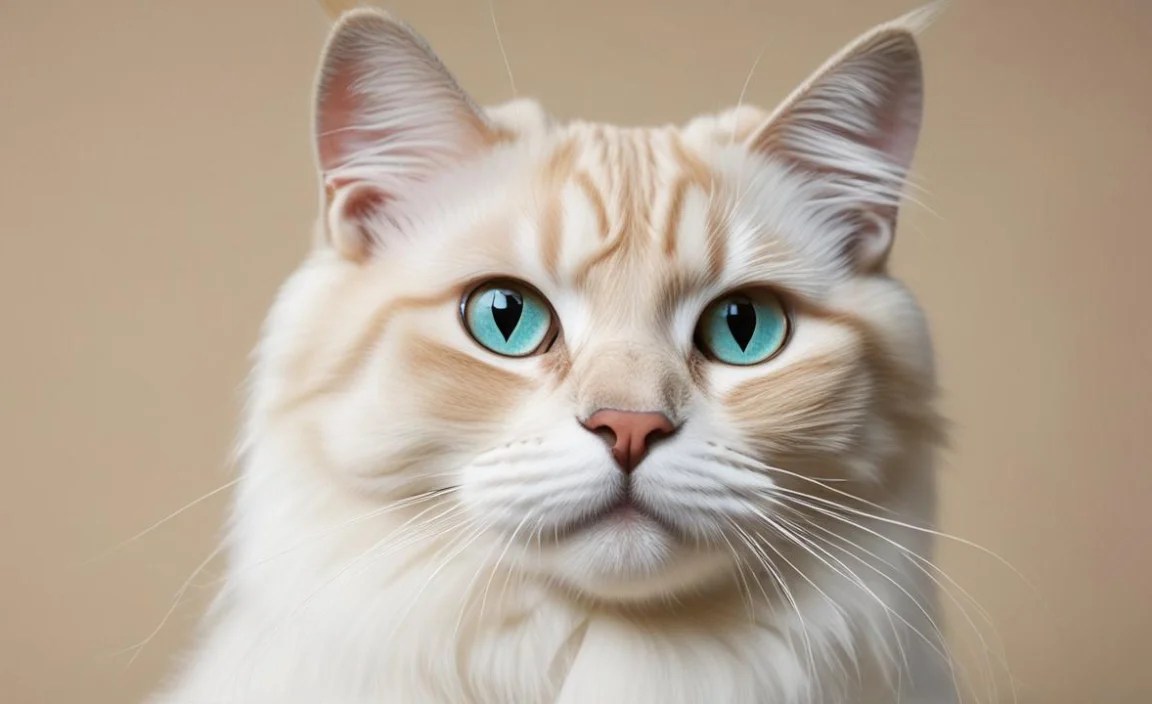
Let’s talk about Tabby cats. They are super common. You’ve probably seen one. Tabby isn’t a breed. It’s a pattern. Tabbies have stripes, swirls, or spots. They also have a mark on their forehead. It looks like an “M.” There are four main tabby patterns. The classic tabby has swirls. The mackerel tabby has stripes. The spotted tabby has spots. The ticked tabby doesn’t have clear stripes or spots. Instead, each hair has bands of color. Tabby cats come in many colors. You can find them in orange, brown, gray, and more. They are one of the most recognizable cat breeds with unique markings. Each tabby cat is special and unique.
- Tabby is a common cat pattern.
- Tabbies have stripes, swirls, or spots.
- They have an “M” on their forehead.
- There are four main tabby patterns.
- Tabbies come in many colors.
Tabby cats are popular pets. They are known for being friendly and playful. They also make great family cats. Tabby cats are often mixed breeds. This means they have a mix of different cat breeds in their family. This can make them even more unique. Some tabby cats are very talkative. They love to meow and purr. Others are more quiet and reserved. No matter their personality, tabby cats are always loved. They bring joy to many homes around the world. When you see a tabby cat, remember that it’s not just a pattern. It’s a whole family of amazing cats. Tabby patterns make cat breeds with unique markings even more interesting.
Fun Fact or Stat: The “M” on a tabby cat’s forehead is sometimes called the “mark of the tabby!”
What Makes a Tabby a Tabby?
Have you ever wondered what makes a tabby cat a tabby? It’s all about the agouti gene. This gene controls how the color is distributed in the cat’s fur. In tabby cats, the agouti gene allows for stripes, spots, or swirls to appear. Without this gene, the cat would have a solid color. The agouti gene also creates the “M” marking on the forehead. This is a key feature of all tabby cats. So, next time you see a tabby, remember the agouti gene. It’s the secret ingredient that makes them so special. The cat breeds with unique markings we know as tabbies are all thanks to this gene.
Are All Orange Cats Tabby?
Here’s a fun fact: Almost all orange cats are tabby cats! That’s because the gene that makes cats orange also makes them tabby. This is true for both male and female orange cats. You might see an orange cat with faint stripes or spots. These are still tabby markings. The orange color can sometimes make the markings harder to see. But if you look closely, you’ll notice the classic tabby patterns. So, if you love orange cats, you probably love tabby cats too! They are two parts of the same amazing cat family. The link between color and pattern makes cat breeds with unique markings even more fascinating.
Can Tabby Cats Have Different Eye Colors?
Yes, tabby cats can have different eye colors! Their eye color depends on their genes. Some tabby cats have green eyes. Others have gold or yellow eyes. Some even have blue eyes. The eye color doesn’t change the tabby pattern. It just adds another layer of uniqueness. A tabby cat with blue eyes is especially striking. It’s like a beautiful combination of colors and patterns. So, next time you see a tabby cat, take a look at its eyes. You might be surprised by what you see. Cat breeds with unique markings often have beautiful and varied eye colors.
Understanding Tortoiseshell Cats

Tortoiseshell cats are known for their cool colors. They have a mix of black and orange. Sometimes, they have cream or yellow too. These colors are mixed together in patches. It’s like a colorful mosaic. Tortoiseshell isn’t a breed. It’s a color pattern. Most tortoiseshell cats are female. This is because of their genes. The genes that control orange and black are on the X chromosome. Female cats have two X chromosomes. This means they can have both orange and black. Male cats have only one X chromosome. So, they are usually only orange or black. Tortoiseshell cats are often called “torties.” They are one of the most interesting cat breeds with unique markings.
- Tortoiseshell cats have black and orange colors.
- Sometimes they have cream or yellow.
- Tortoiseshell is a color pattern, not a breed.
- Most tortoiseshell cats are female.
- They are often called “torties.”
Tortoiseshell cats are known for their strong personalities. Some people say they are feisty and independent. Others say they are sweet and loving. Each tortie is different. But they all have a special charm. Tortoiseshell cats can be found in many different breeds. You can find them in Maine Coons, Persians, and more. No matter the breed, torties always stand out. Their unique colors make them hard to miss. They are a favorite among cat lovers. If you’re looking for a cat with personality, a tortie might be right for you. Their unique colors make cat breeds with unique markings even more appealing.
Fun Fact or Stat: Male tortoiseshell cats are very rare and are often sterile due to their genetic makeup!
Why Are Tortoiseshell Cats Mostly Female?
The reason why tortoiseshell cats are mostly female is all about genetics. Female cats have two X chromosomes (XX), while male cats have one X and one Y chromosome (XY). The genes for orange and black fur color are located on the X chromosome. A female cat can have one X chromosome with the orange gene and another with the black gene, resulting in a tortoiseshell pattern. Male cats only have one X chromosome, so they can typically only be either orange or black, but not both. Very rarely, a male cat can be born with an extra X chromosome (XXY), which can result in a male tortoiseshell. However, these males are usually sterile. The genetic explanation helps us understand why cat breeds with unique markings like tortoiseshells are predominantly female.
Do Tortoiseshell Cats Have Any Health Issues?
Generally, tortoiseshell cats do not have specific health issues related to their coat color. Their health is more closely tied to their breed and overall genetics. However, male tortoiseshell cats (which are rare) with the XXY chromosome configuration may have certain health problems. These can include reduced fertility, or other genetic abnormalities. It’s important to provide all cats, including tortoiseshells, with regular veterinary care. This includes vaccinations, parasite prevention, and a healthy diet. Good care helps ensure they live long and happy lives. The health of cat breeds with unique markings depends more on their breed than on their unique coat patterns.
What is a Calico Cat?
A calico cat is similar to a tortoiseshell, but with one big difference: they have white fur in addition to black and orange. The white fur is caused by a separate gene that suppresses color in certain areas. This creates a distinct pattern of colored patches against a white background. Like tortoiseshells, calico cats are almost always female due to the same genetic reasons. The combination of black, orange, and white makes calico cats truly unique and beautiful. Calico cats are a great example of how genetics create cat breeds with unique markings.
Calico Cats and Their Tri-Color Coats

Calico cats are famous for their tri-color coats. They have white, black, and orange fur. These colors are arranged in patches. The patches are different sizes and shapes. No two calico cats look exactly alike. Calico is not a breed. It’s a color pattern. Like tortoiseshell cats, most calicos are female. This is because of the X chromosome. The genes for orange and black are on the X chromosome. Female cats have two X chromosomes. This allows them to have both orange and black, plus white. Calico cats are often seen as lucky. They are popular in many cultures. They are one of the most recognizable cat breeds with unique markings.
| Feature | Tortoiseshell | Calico |
|---|---|---|
| Colors | Black and Orange | White, Black, and Orange |
| White Fur | No | Yes |
| Gender | Mostly Female | Mostly Female |
| Pattern | Mixed Patches | Distinct Patches |
- Calico cats have white, black, and orange fur.
- The colors are arranged in patches.
- Calico is a color pattern, not a breed.
- Most calico cats are female.
- They are often seen as lucky.
Calico cats are often associated with good luck. In Japan, they are called “maneki-neko.” These cats are believed to bring good fortune. You often see calico cat figurines in shops and homes. They are a symbol of prosperity and happiness. Calico cats are also popular in the United States. They are the official state cat of Maryland. This is because their colors match the state flag. Whether they are bringing luck or representing a state, calico cats are loved around the world. Their unique colors make cat breeds with unique markings even more special. They stand out and bring smiles to people’s faces.
Fun Fact or Stat: In Japan, calico cats are considered lucky and are often used as symbols of good fortune!
What Breeds Can Be Calico?
Many different cat breeds can have the calico pattern. Some common breeds include the American Shorthair, British Shorthair, Persian, and Japanese Bobtail. The calico pattern is determined by genetics, so it can appear in any breed where the necessary genes are present. The specific breed influences the cat’s overall appearance, but the calico pattern always adds a unique touch. This makes each cat special. So, you can find calico cats with long fur, short fur, or even no tail! The variety makes cat breeds with unique markings even more interesting.
Are Male Calico Cats Common?
Male calico cats are very rare. They occur in only about 1 in 3,000 births. This is because male cats typically have one X and one Y chromosome (XY). The calico pattern requires two X chromosomes, as the genes for orange and black are located on the X chromosome. Male calico cats usually have an extra X chromosome (XXY). This genetic condition is called Klinefelter syndrome. These male calico cats are often sterile and may have other health issues. Their rarity makes them a special case among cat breeds with unique markings.
How Do Calico Markings Develop?
Calico markings develop through a process called X-chromosome inactivation. In female cats (XX), one of the X chromosomes is randomly inactivated in each cell early in development. This means that in some cells, the X chromosome with the orange gene is active, while in other cells, the X chromosome with the black gene is active. The white spotting gene then causes the white areas. This creates the distinct patches of color seen in calico cats. The random inactivation of X chromosomes results in the unique and varied patterns of cat breeds with unique markings like calicos.
Exploring Colorpoint Cat Breeds

Colorpoint cats have a special kind of marking. Their bodies are light in color. But their ears, paws, tail, and face are darker. This is called the “point” coloration. The colorpoint pattern is caused by a special gene. This gene is sensitive to temperature. It only works in cooler areas of the body. That’s why the points are darker. The most famous colorpoint cat is the Siamese. But other breeds can have this pattern too. These include the Himalayan, Ragdoll, and Balinese. Colorpoint cats are beautiful and elegant. They are one of the most stunning cat breeds with unique markings. Their contrast in color makes them stand out.
- Colorpoint cats have light bodies and dark points.
- The points are on the ears, paws, tail, and face.
- The colorpoint pattern is caused by a temperature-sensitive gene.
- The Siamese is the most famous colorpoint cat.
- Other breeds can have the colorpoint pattern.
Colorpoint cats are known for their striking blue eyes. This is especially true for Siamese cats. The blue eyes add to their beauty. Colorpoint cats are also known for being vocal. They love to talk to their owners. They can be very demanding. They want attention and love. But they are also very affectionate. They love to cuddle and play. Colorpoint cats make great companions. They bring joy and laughter to their homes. They are a favorite among cat lovers. The unique color patterns make cat breeds with unique markings like colorpoints very popular. Their beauty and personality make them great pets.
Fun Fact or Stat: Siamese cats are known for their striking blue almond-shaped eyes and vocal nature!
How Does Temperature Affect Colorpoint Markings?
Temperature plays a key role in the development of colorpoint markings. The enzyme responsible for producing pigment in colorpoint cats is temperature-sensitive. It works best in cooler areas of the cat’s body. That’s why the points (ears, paws, tail, and face) are darker, as these areas are typically cooler than the rest of the body. If a colorpoint cat lives in a warmer climate, its points may be less pronounced. Conversely, if it lives in a cooler climate, its points may be darker. Temperature sensitivity explains the unique distribution of color in cat breeds with unique markings like colorpoints.
Do Colorpoint Kittens Have Points When They Are Born?
Colorpoint kittens are usually born all white or cream-colored. Their points develop gradually as they grow. This is because the temperature-sensitive enzyme needs time to react to the cooler areas of their body. The points typically start to appear within the first few weeks of life. The color becomes more pronounced as the kitten gets older. By the time they are adults, the colorpoint pattern is fully developed. The gradual development of color makes observing cat breeds with unique markings like colorpoints an exciting experience.
What Colors Can Colorpoint Cats Be?
Colorpoint cats can come in a variety of colors. The most common colors include seal point (dark brown), blue point (gray), chocolate point (light brown), and lilac point (pale gray). Other colors include red point (orange) and cream point (pale orange). The specific color depends on the genes the cat inherits from its parents. The variety of colors adds to the beauty and uniqueness of colorpoint cats. Each color variation makes cat breeds with unique markings even more diverse and appealing.
Spotted Cat Breeds and Their Patterns
Some cat breeds with unique markings have spots. These spots can be big or small. They can be round or oval. Some spotted cats look like leopards. Others look like ocelots. The Bengal cat is a famous spotted breed. They have wild-looking spots. The Egyptian Mau is another spotted breed. They have randomly scattered spots. The Ocicat is also spotted. But they are not related to wild cats. They were bred to look spotted. Spotted cats are fun and exciting. Their unique patterns make them stand out. They bring a touch of the wild into our homes.
- Some cat breeds have spots.
- The spots can be big or small.
- Bengal cats are famous for their spots.
- Egyptian Maus have randomly scattered spots.
- Ocicats were bred to look spotted.
Spotted cats are often energetic and playful. They love to run and jump. They need lots of exercise. They also need mental stimulation. Puzzle toys can help keep them entertained. Spotted cats can be very affectionate. They love to cuddle with their owners. They make great companions. But they can also be independent. They like to explore and do their own thing. If you’re looking for a cat with personality, a spotted cat might be right for you. The unique patterns make cat breeds with unique markings like spotted cats very desirable. They bring excitement and fun into any home.
Fun Fact or Stat: The Bengal cat was created by crossing domestic cats with Asian Leopard Cats to achieve its distinctive spotted coat!
How Are Spots Inherited in Cats?
The inheritance of spots in cats is complex. Several genes can influence whether a cat has spots and what those spots look like. The tabby gene plays a key role. It determines whether a cat has stripes, swirls, or spots. Modifier genes can then influence the size, shape, and distribution of the spots. In some breeds, like the Bengal, breeders have carefully selected cats with desirable spot patterns. Over time, this has led to more consistent spot patterns within the breed. The genetic complexity makes cat breeds with unique markings like spotted cats so diverse.
Are Spotted Cats Prone to Any Health Issues?
Spotted cats, like any other cat breed, can be prone to certain health issues. However, there are no specific health issues directly related to their spotted coat pattern. Health concerns are more closely tied to the breed of the cat. For example, Bengal cats may be prone to certain genetic conditions, such as hypertrophic cardiomyopathy (HCM). It’s important to research the specific breed and be aware of any potential health risks. Regular veterinary checkups and a healthy lifestyle can help ensure a long and happy life. The health of cat breeds with unique markings depends more on their breed than on their unique spot patterns.
What Makes Bengal Spots Unique?
Bengal spots are unique because they are derived from the Asian Leopard Cat. These spots are often referred to as “rosettes.” They resemble the spots seen on leopards and jaguars. Rosettes have a darker outer edge and a lighter inner area. This gives them a distinctive look. Bengal spots can also vary in size and shape. Some Bengals have small, scattered spots, while others have large, bold rosettes. The unique appearance of Bengal spots makes them stand out among other cat breeds with unique markings.
Summary
We learned about cat breeds with unique markings. Some cats have stripes like tabby cats. Others have a mix of colors like tortoiseshell and calico cats. Colorpoint cats have dark points on their ears, paws, tail, and face. Spotted cats have cool spots all over their bodies. Each cat is special and different. Markings make cats beautiful and interesting. They also help us tell them apart. Learning about different cat markings is fun. It helps us appreciate the diversity of cats. The world of cats is full of surprises. Keep exploring and learning about these amazing animals!
Conclusion
Cat breeds with unique markings come in many forms. From the stripes of a tabby to the spots of a Bengal, each pattern tells a story. Genetics and environment play a role in creating these beautiful variations. These markings make our feline friends special. Enjoy the unique beauty of every cat. Appreciate the amazing variety in the cat world. Whether they are cuddly companions or playful adventurers, cats with unique markings bring joy to our lives.
Frequently Asked Questions
Question No 1: What are some examples of cat breeds with unique markings?
Answer: There are many examples of cat breeds that showcase unique markings. Tabby cats have distinctive stripes, swirls, or spots, along with an “M” on their forehead. Tortoiseshell cats display a beautiful mix of black and orange, sometimes with cream or yellow. Calico cats feature a tri-color coat of white, black, and orange in distinct patches. Colorpoint cats, like Siamese, have light bodies with darker points on their ears, paws, tail, and face. Spotted breeds, such as Bengals and Egyptian Maus, boast eye-catching spots across their fur. Each of these breeds and patterns contributes to the incredible diversity and beauty of the feline world.
Question No 2: How do cats get their unique markings?
Answer: A cat’s unique markings are primarily determined by their genes. Genes are like tiny instructions that dictate the colors and patterns of their fur. The agouti gene, for example, plays a crucial role in creating tabby patterns, allowing for stripes, spots, or swirls to appear. Other genes control the distribution of color, such as in calico and tortoiseshell cats. Temperature-sensitive genes are responsible for the colorpoint patterns seen in breeds like Siamese. The complex interplay of these genes results in the vast array of unique markings that make each cat special. The genes decide on patterns like tabby, calico, or even solid colors. Isn’t science amazing?
Question No 3: Are there any health issues associated with specific cat markings?
Answer: Generally, specific coat markings do not directly cause health issues in cats. Health concerns are typically more related to the cat’s breed and overall genetics. For instance, male tortoiseshell or calico cats, which are rare due to their XXY chromosome configuration, may have certain genetic abnormalities or reduced fertility. However, the markings themselves are not the cause. It’s essential to provide all cats, regardless of their markings, with regular veterinary care, a healthy diet, and a safe environment to ensure their well-being. Taking care of your cat is important, no matter their cat breeds with unique markings.
Question No 4: Why are most tortoiseshell and calico cats female?
Answer: The reason why most tortoiseshell and calico cats are female is rooted in genetics. The genes that determine orange and black fur color are located on the X chromosome. Female cats have two X chromosomes (XX), allowing them to potentially carry both orange and black genes. In some cells, one X chromosome is randomly inactivated, leading to the mosaic pattern of colors seen in tortoiseshell and calico cats. Male cats, with only one X chromosome (XY), can typically only be either orange or black. The presence of two X chromosomes in females explains why tortoiseshell and calico patterns are predominantly found in female cats. It’s all a matter of genetic probability when it comes to cat breeds with unique markings.
Question No 5: How do breeders create cats with specific markings?
Answer: Breeders create cats with specific markings through careful selection and breeding practices. They choose cats with desirable markings and breed them together, increasing the likelihood of passing on those genes to their offspring. Over generations, breeders can refine and enhance specific markings, such as the rosettes in Bengal cats or the points in Siamese cats. Understanding the genetics behind coat patterns is essential for successful breeding. Breeders also consider other factors, such as temperament and health, to ensure they are producing well-rounded cats. Responsible breeders prioritize the health and well-being of their cats above all else. The art of breeding cat breeds with unique markings takes time and patience.
Question No 6: Can a cat’s markings change over time?
Answer: While a cat’s basic markings are generally set, some changes can occur over time. In colorpoint cats, the points may darken as the cat ages, especially if they live in cooler environments. Some cats may also develop ticking patterns, where individual hairs have bands of different colors. Additionally, scars or injuries can alter the appearance of a cat’s markings. However, major changes in coat pattern are uncommon. The markings a cat has as a kitten usually remain consistent throughout its life. Small changes may occur, but the overall pattern will stay the same. Cat breeds with unique markings will mostly stay the same as they age.


