
Historical Background of the Bluetick Coonhound: Secret?

Quick Summary: The Bluetick Coonhound’s story begins in France with the Grand Bleu de Gascogne. These dogs came to America and were bred with other hounds, like the English Coonhound, to make the Bluetick we know today. Known for their blue-ticked coat and loud bay, they became popular hunting dogs, especially in the Southern United States. They were officially recognized as a breed by the United Kennel Club (UKC) in 1946 and the American Kennel Club (AKC) in 2009.
Have you ever wondered where the Bluetick Coonhound, with its striking coat and soulful eyes, comes from? Many people admire this breed for its hunting skills and loyal nature, but the history of the Bluetick Coonhound is often a mystery. Understanding their background can help you appreciate their unique traits and care for them better. This guide will walk you through the fascinating journey of the Bluetick Coonhound, from its European roots to its popularity in American hunting.
We’ll explore the breed’s origins, its development in the United States, and its recognition as a distinct breed. By the end of this article, you’ll have a clear picture of the Bluetick Coonhound’s rich heritage. Let’s dive in and uncover the historical background of this remarkable hound.
The European Ancestry: Grand Bleu de Gascogne

The Bluetick Coonhound’s story starts far across the Atlantic, in France, with a breed called the Grand Bleu de Gascogne. These dogs are large, powerful hounds known for their excellent scent-tracking abilities. They were primarily used to hunt big game like wild boar, deer, and even wolves.
Arrival in America
The Grand Bleu de Gascogne made its way to America during colonial times. It’s believed that these dogs were brought over by French settlers. Once in America, they were crossbred with other hound breeds to enhance their hunting skills and adapt them to the local terrain and game.
- French Settlers: Brought the Grand Bleu de Gascogne to America.
- Crossbreeding: Mixed with other hounds to improve hunting abilities.
- Adaptation: Adjusted to American terrain and game.
Development in the United States

As the Grand Bleu de Gascogne mixed with other breeds in America, a new type of hound began to emerge. This new hound was well-suited for hunting raccoons and other small game, which were plentiful in the American South.
Key Breeds in the Bluetick’s Development
Several breeds played a role in shaping the Bluetick Coonhound. These include:
- English Coonhound: Known for its speed and agility.
- American Foxhound: Valued for its endurance and strong scent-tracking abilities.
- Other French Hounds: Contributed to the Bluetick’s distinctive appearance and hunting style.
The “Bluetick” Coat
One of the most distinctive features of the Bluetick Coonhound is its coat. The “bluetick” pattern comes from a combination of black and white hairs that create a mottled, blue appearance. This unique coat is not only visually appealing but also provides excellent camouflage in various hunting environments.
The coat pattern is a result of the ticking gene, which causes small, isolated spots of color on a white background. In the case of the Bluetick, these spots are predominantly black, giving the dog its characteristic blue appearance. The ticking can vary in density, with some dogs having a lighter blue color and others appearing much darker.
Hunting Heritage

The Bluetick Coonhound quickly became a favorite among hunters in the Southern United States. Their exceptional scent-tracking abilities, combined with their loud, distinctive bay, made them ideal for coon hunting.
Qualities of a Good Hunting Dog
Hunters valued several key traits in the Bluetick Coonhound:
- Scent-Tracking: Excellent ability to follow trails.
- Endurance: Stamina to hunt for long periods.
- Baying: Loud, distinctive bark to signal the location of the game.
- Courage: Willingness to confront prey.
Hunting Techniques
Bluetick Coonhounds are typically used in “treeing” hunts. This involves the dog following the scent of a raccoon until it climbs a tree. The Bluetick then bays at the base of the tree, alerting the hunter to the location of the prey.
Their keen sense of smell allows them to pick up even faint trails, and their endurance ensures they can stay on the track for hours. The Bluetick’s distinctive bay is not only useful for locating the dog but also serves to keep the raccoon treed until the hunter arrives.
Breed Recognition
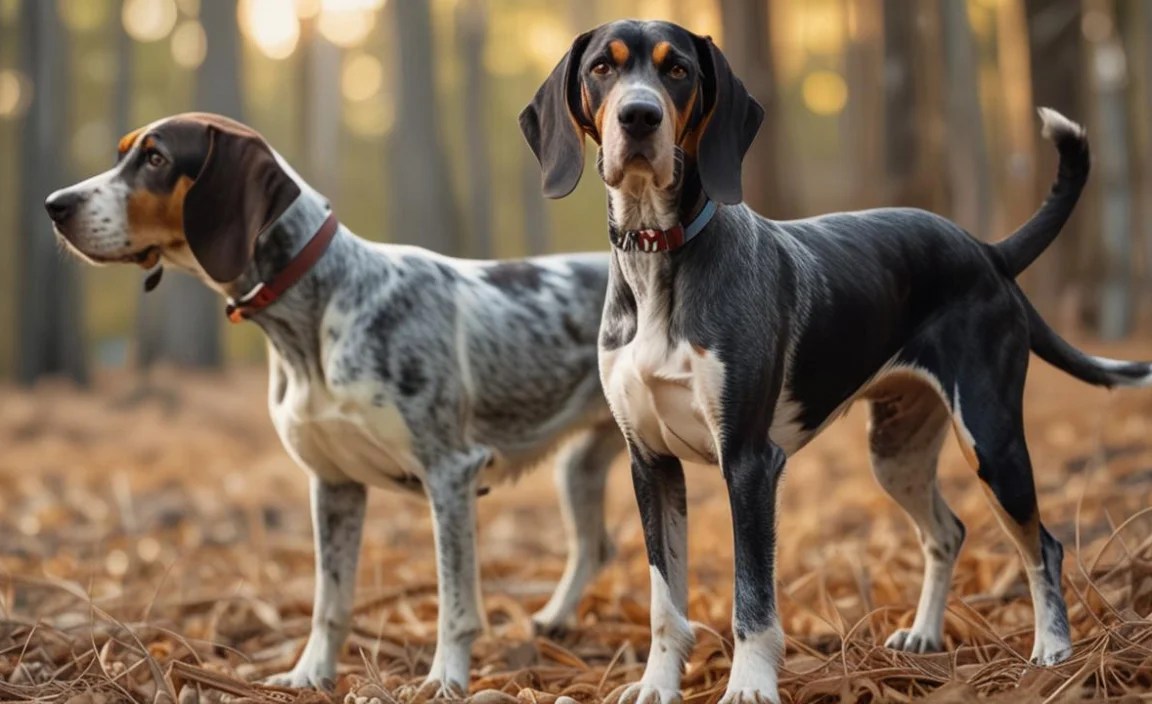
Despite their popularity among hunters, it took some time for the Bluetick Coonhound to gain official recognition as a distinct breed.
United Kennel Club (UKC)
The United Kennel Club (UKC) was the first major kennel club to recognize the Bluetick Coonhound. This recognition came in 1946, marking a significant milestone for the breed.
American Kennel Club (AKC)
It wasn’t until 2009 that the American Kennel Club (AKC) officially recognized the Bluetick Coonhound. This recognition further solidified the breed’s status and opened up new opportunities for Bluetick owners to participate in AKC events.
The AKC recognition was a long-awaited achievement for Bluetick enthusiasts. It allowed the breed to compete in conformation shows, obedience trials, and other AKC-sponsored activities, increasing their visibility and popularity.
Physical Characteristics
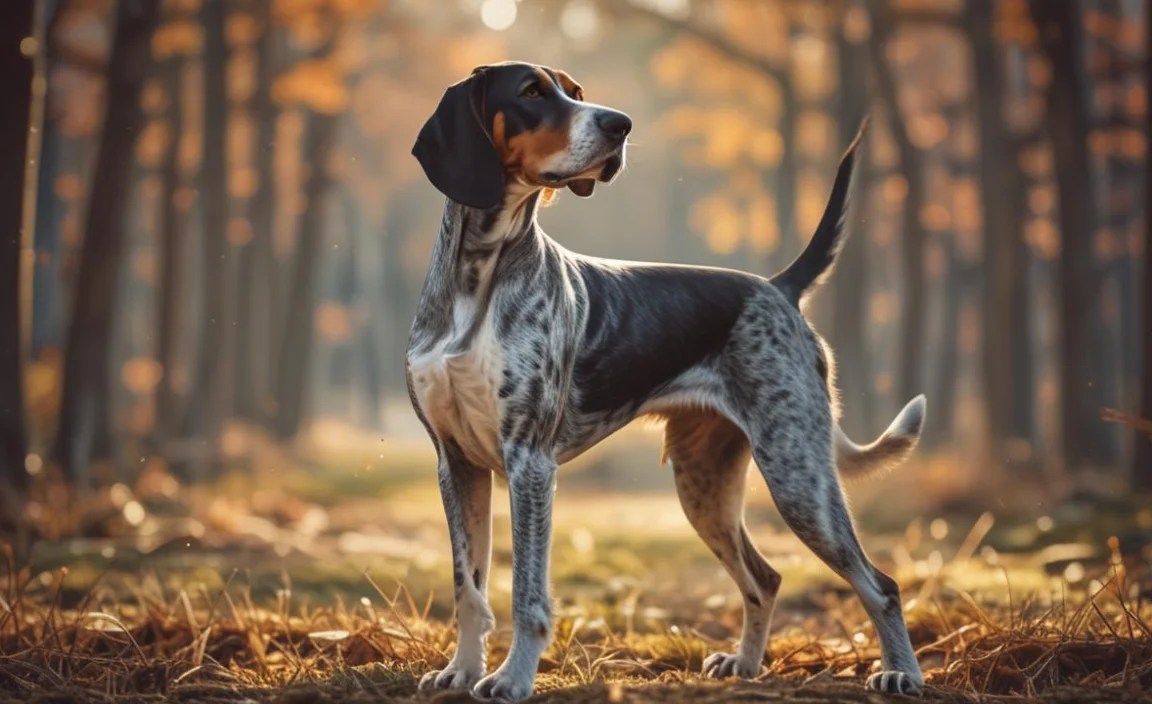
The Bluetick Coonhound is a medium to large-sized dog with a muscular build and a distinctive appearance. Their physical characteristics are well-suited for their original purpose as hunting dogs.
Size and Build
Here’s a quick overview of their size and build:
- Weight: Typically ranges from 45 to 80 pounds.
- Height: Stands between 20 to 27 inches at the shoulder.
- Build: Muscular and athletic.
Coat and Color
The Bluetick’s coat is short, dense, and smooth. The most common color pattern is, of course, the “bluetick,” but they can also have black and tan markings.
- Bluetick: Mottled blue appearance due to black and white hairs.
- Black and Tan: Solid black with tan points on the face, chest, and legs.
Some Blueticks may also have a “saddle” pattern, where a large area of black covers the back and sides. The ticking pattern can vary widely, with some dogs having dense ticking and others having a more sparse pattern.
Head and Facial Features
The Bluetick Coonhound has a noble head with a moderate stop and a strong muzzle. Their eyes are typically dark brown and have a gentle, pleading expression. The ears are long and droopy, reaching almost to the end of the nose.
- Eyes: Dark brown with a gentle expression.
- Ears: Long and droopy.
- Muzzle: Strong and well-defined.
Temperament and Personality
Bluetick Coonhounds are known for their friendly and loyal nature. They make excellent family pets, but their hunting instincts and high energy levels require a dedicated owner.
Loyalty and Affection
Blueticks are incredibly loyal to their families and form strong bonds with their owners. They enjoy being around people and thrive on attention and affection.
Energy Levels
As a hunting breed, Bluetick Coonhounds have high energy levels and require plenty of exercise. They need daily walks, runs, or other activities to stay happy and healthy. Without enough exercise, they can become bored and destructive.
- Daily Exercise: Essential for physical and mental well-being.
- Outdoor Activities: Hiking, running, and playing fetch are great options.
Training and Socialization
Bluetick Coonhounds are intelligent but can be stubborn, so early training and socialization are essential. Positive reinforcement techniques work best with this breed.
- Early Training: Start training as early as possible.
- Positive Reinforcement: Use treats, praise, and toys to motivate your dog.
- Socialization: Expose your Bluetick to different people, places, and situations to help them become well-adjusted adults.
Consistency is key when training a Bluetick Coonhound. They respond well to clear, consistent commands and a structured routine. Enrolling in obedience classes can be a great way to establish good habits and strengthen the bond between you and your dog.
Caring for a Bluetick Coonhound
Proper care is essential to keep your Bluetick Coonhound healthy and happy. This includes regular grooming, a balanced diet, and routine veterinary care.
Grooming
Bluetick Coonhounds have a short, smooth coat that requires minimal grooming. However, regular brushing can help reduce shedding and keep their coat looking its best.
- Brushing: Brush weekly to remove loose hair.
- Bathing: Bathe as needed, usually every few months.
- Nail Trimming: Trim nails regularly to prevent overgrowth.
- Ear Cleaning: Clean ears weekly to prevent infections.
Because of their long, droopy ears, Bluetick Coonhounds are prone to ear infections. Regular cleaning can help prevent this problem. Use a veterinarian-approved ear cleaning solution and gently clean the inside of the ear, being careful not to insert anything too deep.
Diet and Nutrition
A balanced diet is crucial for maintaining your Bluetick Coonhound’s health. Feed them a high-quality dog food that is appropriate for their age, size, and activity level.
- High-Quality Food: Choose a food with real meat as the main ingredient.
- Proper Portion Sizes: Feed the recommended amount to prevent obesity.
- Fresh Water: Always provide fresh, clean water.
Avoid feeding your Bluetick Coonhound table scraps or processed foods, as these can lead to weight gain and other health problems. Consult with your veterinarian to determine the best diet for your dog.
Health Considerations
Bluetick Coonhounds are generally healthy dogs, but they are prone to certain health conditions. Regular veterinary checkups can help detect and prevent these issues.
Here is a table of common health issues in Bluetick Coonhounds:
| Health Issue | Description | Prevention/Management |
|---|---|---|
| Hip Dysplasia | A genetic condition where the hip joint doesn’t develop properly. | Maintain a healthy weight, provide proper exercise, and consider joint supplements. |
| Elbow Dysplasia | Similar to hip dysplasia, but affects the elbow joint. | Same as hip dysplasia. |
| Bloat (Gastric Dilatation-Volvulus) | A life-threatening condition where the stomach fills with gas and twists. | Feed smaller meals, avoid exercise before and after eating, and consider a gastropexy. |
| Ear Infections | Infections of the ear canal. | Clean ears regularly, keep ears dry, and seek veterinary treatment for infections. |
| Progressive Retinal Atrophy (PRA) | A degenerative eye disease that can lead to blindness. | Genetic testing, regular eye exams. |
Here are some common health concerns:
- Hip and Elbow Dysplasia: Common in many large breeds.
- Bloat: A life-threatening condition that requires immediate veterinary attention.
- Ear Infections: Due to their long, droopy ears.
- Progressive Retinal Atrophy (PRA): A genetic eye disease.
Regular veterinary checkups are essential for early detection and treatment of these conditions. Your veterinarian can recommend preventative measures and provide guidance on managing any health issues that may arise.
Bluetick Coonhounds Today
Today, the Bluetick Coonhound is still a popular hunting dog, but they have also found their way into many homes as beloved family pets. Their friendly nature and striking appearance make them a favorite among dog lovers.
Popularity as Pets
While they still excel as hunting dogs, Bluetick Coonhounds are increasingly popular as family pets. Their loyal and affectionate nature makes them great companions for people of all ages.
Breed Clubs and Organizations
Several breed clubs and organizations are dedicated to promoting and preserving the Bluetick Coonhound. These groups provide valuable resources for owners and breeders, including information on health, training, and breed standards.
- American Kennel Club (AKC): Offers information and resources for Bluetick Coonhound owners.
- United Kennel Club (UKC): Another valuable resource for breed information and events.
- Bluetick Coonhound Association: A dedicated organization for Bluetick enthusiasts.
Joining a breed club can be a great way to connect with other Bluetick owners, learn more about the breed, and participate in events and activities.
FAQ About the Historical Background of the Bluetick Coonhound
Here are some frequently asked questions about the historical background of the Bluetick Coonhound:
Where did Bluetick Coonhounds originate?
Bluetick Coonhounds originated in the United States, but their ancestry can be traced back to the Grand Bleu de Gascogne from France.
When were Bluetick Coonhounds first recognized as a breed?
The United Kennel Club (UKC) first recognized Bluetick Coonhounds as a breed in 1946. The American Kennel Club (AKC) followed in 2009.
What breeds contributed to the development of the Bluetick Coonhound?
Key breeds include the Grand Bleu de Gascogne, English Coonhound, and American Foxhound.
What is the “bluetick” coat pattern?
The “bluetick” coat pattern is a mottled blue appearance caused by a combination of black and white hairs. It’s due to the ticking gene, which creates small, isolated spots of color on a white background.
What were Bluetick Coonhounds originally bred for?
Bluetick Coonhounds were primarily bred for hunting raccoons and other small game in the Southern United States.
Are Bluetick Coonhounds good family pets?
Yes, Bluetick Coonhounds can make excellent family pets due to their loyal and affectionate nature. However, they require plenty of exercise and early training.
What health issues are Bluetick Coonhounds prone to?
Common health issues include hip and elbow dysplasia, bloat, ear infections, and progressive retinal atrophy (PRA).
Conclusion
The historical background of the Bluetick Coonhound is a fascinating journey that spans continents and centuries. From their European roots as Grand Bleu de Gascogne to their development as a distinct breed in the United States, Blueticks have a rich heritage as skilled hunting dogs and loyal companions. Understanding their history can help you appreciate their unique traits and provide them with the care and attention they deserve.
Whether you’re a seasoned hunter or a first-time dog owner, the Bluetick Coonhound has something to offer. Their friendly nature, striking appearance, and unwavering loyalty make them a cherished member of any family. By learning about their past, you can better understand their present and ensure a bright future for this remarkable breed.


