
History of the Doberman Pinscher: The Powerful Origin

Quick Summary: The Doberman Pinscher originated in Germany around 1890, bred by Karl Friedrich Louis Dobermann. He aimed to create a medium-sized, intelligent, and fearless guard dog. The breed is a mix of various dogs, including the German Pinscher, Rottweiler, and possibly the Greyhound. Dobermans are known for their loyalty, intelligence, and protective nature.
Have you ever wondered about the brave and intelligent Doberman Pinscher? These sleek, powerful dogs have a fascinating story. Many people are curious about where they came from and how they became the loyal companions we know today. It’s a journey filled with interesting characters and careful breeding.
Understanding the history of the Doberman Pinscher helps us appreciate their unique qualities. We’ll explore their origins, the key figures who shaped the breed, and how they’ve evolved over time. Ready to discover the story behind this remarkable dog? Let’s dive in!
The Origins of the Doberman Pinscher

The Doberman Pinscher’s story begins in the late 19th century in Thuringia, Germany. A tax collector named Karl Friedrich Louis Dobermann played a crucial role in creating this breed. Let’s look closer at how it all started.
Karl Friedrich Louis Dobermann: The Founder
Karl Friedrich Louis Dobermann worked as a tax collector, dog pound operator, and night watchman. Dealing with dangerous situations, he wanted a dog that could protect him. He envisioned a medium-sized dog with intelligence, courage, and endurance. Dobermann started experimenting with different breeds to achieve his ideal guard dog.
The Need for a Protector
In the late 1800s, being a tax collector was risky. Dobermann needed a dog that could deter thieves and protect him during his rounds. This need for personal safety drove him to create a new breed. He wanted a dog that was not only strong but also loyal and obedient.
The Breeds That Shaped the Doberman

Dobermann carefully selected various breeds to combine the traits he desired. While the exact mix is not fully documented, several breeds are believed to have contributed to the Doberman’s development. Let’s explore some of the key contributors.
German Pinscher
The German Pinscher is one of the primary ancestors of the Doberman. This breed contributed its intelligence, alertness, and sturdy build. The German Pinscher was a versatile farm dog used for guarding and ratting.
Rottweiler
The Rottweiler is another significant contributor to the Doberman’s lineage. Known for their strength and guarding instincts, Rottweilers added size and protective qualities to the mix. Their calm temperament also helped balance the Doberman’s energy.
Black and Tan Terrier
The Black and Tan Terrier, now known as the English Black and Tan Terrier, likely contributed to the Doberman’s sleek appearance and tenacity. These terriers were known for their hunting abilities and fearlessness.
Weimaraner and Greyhound
Some believe that the Weimaraner and Greyhound may have also played a role in the Doberman’s development. The Weimaraner could have contributed to the breed’s intelligence and hunting skills, while the Greyhound might have influenced its speed and agility.
Other Possible Contributors
Other breeds that might have been involved include the Great Dane and the German Shepherd. Each breed added unique characteristics that helped shape the Doberman into the dog we know today.
Early Development and Standardization
After Karl Friedrich Louis Dobermann’s death in 1894, others continued his work. They refined the breed and established breed standards. Let’s look at how the Doberman became a recognized breed.
Otto Göller: Continuing Dobermann’s Work
Otto Göller took over the breeding program after Dobermann’s death. He focused on refining the breed’s temperament and physical traits. Göller is credited with helping to standardize the Doberman and promote it as a police and military dog.
The First Doberman Pinscher Club
The first Doberman Pinscher Club was founded in Germany in 1899. This club played a crucial role in establishing breed standards and promoting the Doberman. They organized shows and trials to evaluate the dogs and ensure they met the desired criteria.
Recognition as a Breed
The Doberman Pinscher quickly gained recognition for its intelligence, loyalty, and protective abilities. By the early 20th century, it was recognized as an official breed in Germany and other countries. This recognition helped solidify the Doberman’s place as a valuable working dog and companion.
The Doberman Pinscher in the 20th Century

The 20th century saw the Doberman Pinscher’s role evolve. They became popular as military dogs, police dogs, and family pets. Let’s explore their journey through the century.
Dobermans in World War I and II
Dobermans served with distinction in both World War I and World War II. They were used as messenger dogs, sentries, and mine detectors. Their courage and intelligence made them invaluable assets to the military.
Dobermans as Police Dogs
The Doberman’s intelligence and trainability made them excellent police dogs. They were used for tracking, apprehension, and drug detection. Many police departments around the world adopted Dobermans for their K-9 units.
The Doberman as a Family Pet
Despite their working dog background, Dobermans also became popular family pets. Their loyalty and protective nature made them great companions. However, responsible breeding and training were essential to ensure they were well-behaved and safe around children.
Breed Standards and Characteristics

The Doberman Pinscher has specific breed standards that define its physical and temperamental traits. These standards ensure the breed maintains its unique characteristics. Let’s explore some key aspects.
Physical Appearance
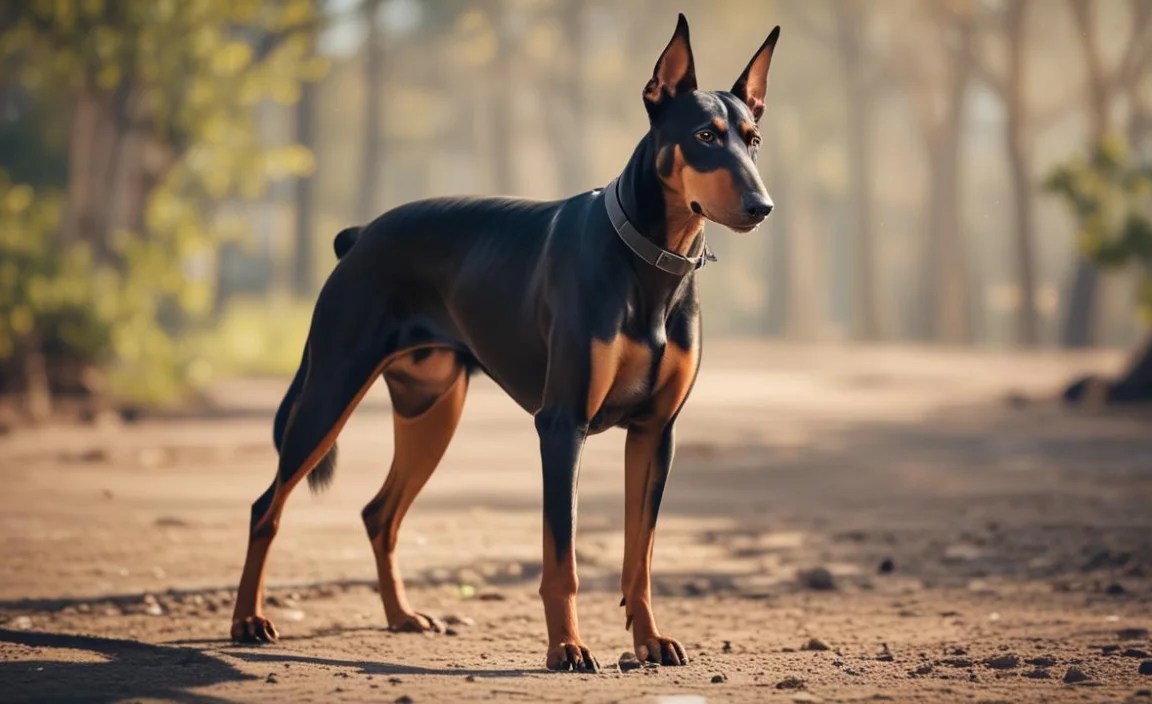
Dobermans are known for their sleek, muscular build. They have a distinctive wedge-shaped head and a noble expression. Their coat is short, hard, and comes in several colors, including black, red, blue, and fawn. Here’s a quick look at the breed’s physical standards:
| Characteristic | Description |
|---|---|
| Size | Medium-large |
| Height | 24-28 inches |
| Weight | 60-100 pounds |
| Coat | Short, hard, and smooth |
| Color | Black, red, blue, fawn (with or without rust markings) |
Temperament
Dobermans are intelligent, alert, and loyal. They are known for their protective nature and make excellent guard dogs. Early socialization and training are crucial to ensure they are well-behaved and friendly. A well-bred Doberman should be:
- Intelligent and trainable
- Loyal and protective
- Alert and watchful
- Confident and fearless
Health Considerations
Like all breeds, Dobermans are prone to certain health issues. Dilated cardiomyopathy (DCM) and Von Willebrand’s disease are common concerns. Responsible breeders screen their dogs to minimize the risk of these conditions. Regular veterinary check-ups and a healthy lifestyle are essential for keeping Dobermans healthy. Some common health concerns include:
- Dilated Cardiomyopathy (DCM)
- Von Willebrand’s Disease
- Hip Dysplasia
- Wobbler Syndrome
The Doberman Pinscher Today
Today, the Doberman Pinscher remains a popular breed worldwide. They excel in various roles, from family companions to working dogs. Let’s see where they fit in today’s world.
Dobermans in Modern Society
Dobermans continue to serve as police dogs, search and rescue dogs, and therapy dogs. Their versatility and intelligence make them valuable assets in many fields. They also thrive as family pets, providing companionship and protection.
Responsible Breeding Practices
Responsible breeding is crucial for maintaining the health and temperament of the Doberman Pinscher. Breeders should focus on producing dogs with sound temperaments and good health. They should also prioritize early socialization and training to ensure the dogs are well-adjusted.
The Future of the Breed
The future of the Doberman Pinscher looks bright. With responsible breeding and ongoing efforts to improve the breed’s health and temperament, the Doberman will continue to be a beloved companion and valuable working dog for years to come.
Interesting Facts About Doberman Pinschers
Here are some fun and interesting facts about Doberman Pinschers:
- Dobermans were initially bred to be personal protection dogs for tax collectors.
- They served in both World War I and World War II as messenger dogs and sentries.
- Dobermans are known for their intelligence and trainability, making them excellent police dogs.
- The breed was named after Karl Friedrich Louis Dobermann, who is credited with creating the breed.
- Dobermans have a short, sleek coat that requires minimal grooming.
Tips for Doberman Owners
If you’re considering owning a Doberman Pinscher, here are some tips to keep in mind:
- Start socialization and training early to ensure a well-behaved dog.
- Provide plenty of exercise to keep them physically and mentally stimulated.
- Feed them a high-quality diet to maintain their health and energy levels.
- Regularly check their health and take them to the vet for check-ups.
- Give them plenty of love and attention to strengthen your bond.
Common Misconceptions About Dobermans
There are several misconceptions about Doberman Pinschers. Let’s address some of them:
- Myth: Dobermans are naturally aggressive.
Fact: Dobermans are loyal and protective but not naturally aggressive. Proper training and socialization are key.
- Myth: Dobermans have “locking jaws.”
Fact: This is a common myth. Dobermans do not have locking jaws.
- Myth: Dobermans are not good with children.
Fact: With proper socialization, Dobermans can be excellent family pets and good with children.
Doberman Pinscher FAQs
Here are some frequently asked questions about Doberman Pinschers:
What is the origin of the Doberman Pinscher?
The Doberman Pinscher originated in Germany around 1890, bred by Karl Friedrich Louis Dobermann to create a medium-sized, intelligent, and fearless guard dog.
What breeds were used to create the Doberman Pinscher?
The Doberman is a mix of several breeds, including the German Pinscher, Rottweiler, Black and Tan Terrier, and possibly the Greyhound and Weimaraner.
What is the temperament of a Doberman Pinscher?
Dobermans are known for their intelligence, loyalty, and protective nature. They are alert, trainable, and make excellent guard dogs and companions.
Are Doberman Pinschers good family pets?
Yes, with proper socialization and training, Dobermans can be excellent family pets. They are loyal and protective, making them great companions for both adults and children.
What are some common health issues in Doberman Pinschers?
Common health issues include dilated cardiomyopathy (DCM), Von Willebrand’s disease, hip dysplasia, and wobbler syndrome. Responsible breeding practices can help minimize these risks.
How much exercise does a Doberman Pinscher need?
Dobermans are active dogs and need plenty of exercise to stay healthy and happy. Aim for at least 1-2 hours of exercise per day, including walks, runs, and playtime.
What kind of training does a Doberman Pinscher need?
Dobermans are intelligent and trainable, but they need consistent and early training. Start with basic obedience training and socialization to ensure they are well-behaved and friendly.
Conclusion
The history of the Doberman Pinscher is a fascinating journey from its origins as a personal protection dog to its current role as a versatile companion and working dog. Understanding their history helps us appreciate their unique qualities and the importance of responsible breeding and training. Whether you’re a Doberman owner or simply an admirer of the breed, their story is a testament to the dedication and vision of those who shaped them into the remarkable dogs they are today. With proper care and understanding, the Doberman Pinscher will continue to be a beloved and valued member of society for many years to come.


