
British Shorthair Cat Behavioral Health: A Smart Guide

Quick Summary: British Shorthairs are known for their calm nature, but like all cats, they can experience behavioral issues. Addressing these problems early with environmental enrichment, consistent routines, and positive reinforcement is key. If issues persist, consulting a vet or feline behaviorist is recommended to rule out underlying medical conditions and create a tailored behavior modification plan.
Bringing a British Shorthair into your home is a joy! These cuddly cats are famous for their easy-going personalities and charming looks. But sometimes, even the most laid-back kitty can develop unwanted behaviors. Are you finding your British Shorthair scratching the furniture or becoming withdrawn? Don’t worry; many common behavioral issues can be addressed with a little understanding and patience.
This guide will walk you through the common behavioral challenges in British Shorthairs and provide practical steps to help your feline friend live a happy and balanced life. We’ll explore everything from creating a stimulating environment to recognizing when it’s time to seek professional help. Let’s get started!
Understanding British Shorthair Behavior

British Shorthairs are known for their gentle and adaptable nature, but understanding their specific behavioral traits is crucial for responsible ownership. These cats are typically independent but enjoy companionship on their own terms.
Typical British Shorthair Temperament
British Shorthairs are often described as:
- Affectionate but not demanding: They enjoy being around their owners but are not overly clingy.
- Calm and relaxed: They are less likely to be hyperactive compared to some other breeds.
- Playful: They appreciate interactive play sessions but also enjoy independent activities.
- Adaptable: They generally adjust well to different environments and routines.
Common Behavioral Issues
Even with their generally good temperament, British Shorthairs can exhibit behavioral problems. Common issues include:
- Scratching: Inappropriate scratching on furniture instead of designated scratching posts.
- Overeating: Tendency to gain weight if food intake is not monitored.
- Aggression: Can be territorial aggression towards other pets or even people in the household.
- Hiding/Withdrawal: Could be a sign of stress, illness, or environmental changes.
- Litter Box Issues: Urinating or defecating outside the litter box.
Creating a Harmonious Environment
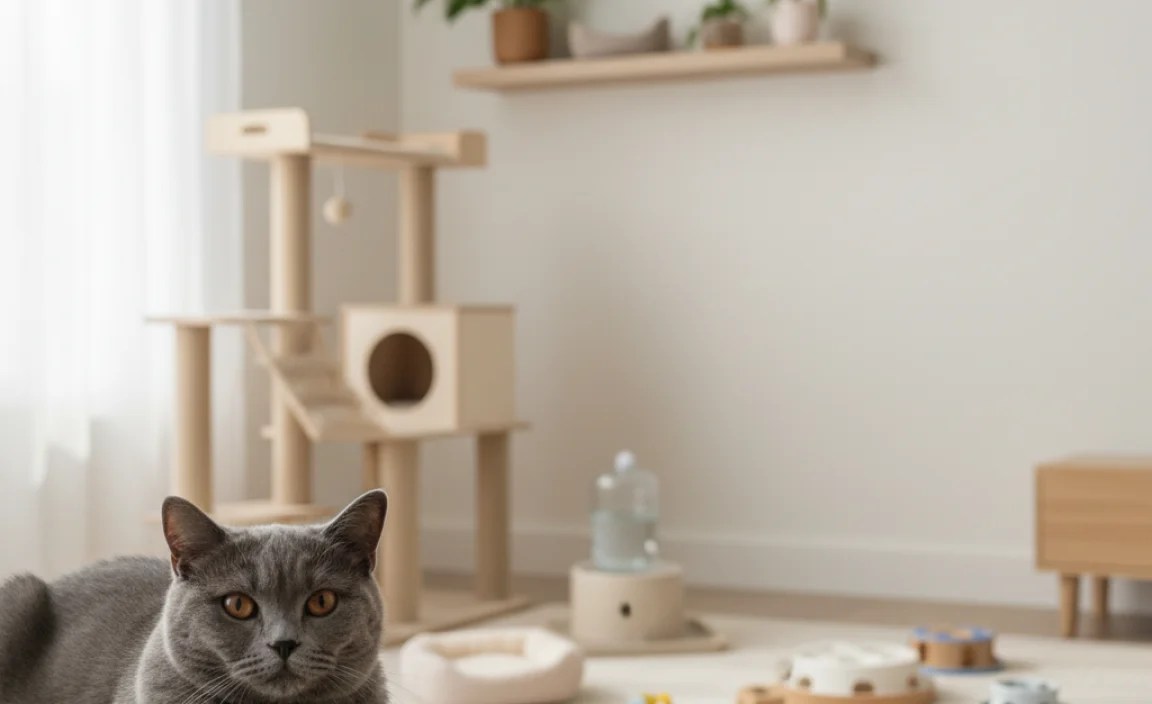
A stimulating and comfortable environment is crucial for preventing behavioral issues in British Shorthairs. Enrichment and routine are key elements.
Environmental Enrichment
Enrichment provides mental and physical stimulation, reducing boredom and stress. Consider these options:
- Scratching Posts: Provide a variety of scratching surfaces (vertical, horizontal, angled) made of different materials like sisal, cardboard, or wood.
- Climbing Structures: Cat trees, shelves, and window perches allow your cat to explore and survey their territory.
- Interactive Toys: Puzzle feeders, feather wands, laser pointers, and toy mice encourage play and exercise.
- Safe Outdoor Access: A secure catio or supervised outdoor time allows your cat to explore the natural world safely.
- Multiple Resting Spots: Offer a variety of comfortable beds, blankets, and hideaways in different locations.
Establishing a Routine
Cats thrive on routine. Predictable schedules reduce anxiety and promote a sense of security.
- Feeding Schedule: Feed your cat at the same times each day to regulate their appetite and prevent overeating.
- Playtime: Schedule regular interactive play sessions to provide exercise and mental stimulation.
- Grooming: Regular grooming helps maintain their coat and provides an opportunity for bonding.
- Litter Box Maintenance: Clean the litter box daily to encourage proper elimination habits.
Addressing Specific Behavioral Problems

Let’s dive into common behavioral problems and how to address them. Early intervention is always best!
Inappropriate Scratching
Scratching is a natural behavior for cats, but it can be destructive if directed at furniture. Redirect this behavior by:
- Providing Attractive Scratching Posts: Place scratching posts near areas where your cat already scratches.
- Using Catnip: Sprinkle catnip on scratching posts to make them more appealing.
- Positive Reinforcement: Reward your cat with treats or praise when they use the scratching post.
- Making Furniture Unattractive: Cover furniture with plastic or use double-sided tape to deter scratching.
- Trimming Nails: Regularly trim your cat’s nails to reduce damage from scratching.
Overeating and Weight Management
British Shorthairs are prone to weight gain, which can lead to health problems. Manage their weight by:
- Controlled Portions: Measure food portions carefully and avoid free-feeding.
- High-Quality Food: Choose a food formulated for weight management, if necessary.
- Puzzle Feeders: Use puzzle feeders to slow down eating and provide mental stimulation.
- Regular Exercise: Encourage play and activity to burn calories.
- Consult Your Vet: Talk to your veterinarian about the appropriate diet and weight for your cat.
Aggression
Aggression can be a complex issue. It’s important to identify the cause before attempting to address it. Common causes include:
- Fear: The cat is scared of something in the environment.
- Territoriality: The cat feels threatened by another animal or person.
- Pain: An underlying medical condition is causing pain and irritability.
- Play Aggression: Overstimulation during play leading to biting or scratching.
Strategies for managing aggression include:
- Identifying and Removing Triggers: Determine what is causing the aggression and eliminate the source if possible.
- Providing Safe Spaces: Ensure your cat has access to quiet, secure areas where they can retreat when feeling stressed.
- Gradual Introduction: Introduce new pets or people gradually and under supervision.
- Desensitization and Counter-Conditioning: Gradually expose your cat to the trigger while pairing it with positive reinforcement (treats, praise).
- Consulting a Professional: A veterinarian or feline behaviorist can help diagnose the cause of the aggression and develop a treatment plan.
Hiding and Withdrawal
If your British Shorthair is suddenly hiding or withdrawing, it could be a sign of stress, illness, or environmental changes. Consider the following:
- Medical Checkup: Rule out any underlying medical conditions by taking your cat to the veterinarian.
- Environmental Assessment: Identify any recent changes in the environment that may be causing stress (new pet, new baby, construction).
- Providing Comfort: Offer your cat a quiet, comfortable space where they feel safe.
- Pheromone Therapy: Use synthetic feline pheromones (Feliway) to create a calming environment.
- Gradual Reintroduction: If the hiding is due to a specific event, gradually reintroduce your cat to the environment.
Litter Box Issues
Eliminating outside the litter box is a common problem with many potential causes. Before assuming it’s behavioral, rule out medical issues like a urinary tract infection.
Once medical causes are ruled out, consider these factors:
- Litter Box Type: Experiment with different types of litter boxes (covered, uncovered, large, small) to see what your cat prefers.
- Litter Type: Try different types of litter (clay, clumping, crystal) to find one your cat likes.
- Litter Box Location: Place litter boxes in quiet, accessible locations away from food and water.
- Litter Box Cleanliness: Clean the litter box daily and change the litter regularly.
- Number of Litter Boxes: Have enough litter boxes for the number of cats in your household (one per cat plus one extra).
Positive Reinforcement Techniques

Positive reinforcement is a highly effective way to modify your cat’s behavior. It involves rewarding desired behaviors to encourage them to be repeated.
How to Use Positive Reinforcement
- Identify Desired Behaviors: Determine what behaviors you want to encourage (using the scratching post, coming when called, etc.).
- Use Rewards: Offer treats, praise, or petting immediately after your cat performs the desired behavior.
- Be Consistent: Consistently reward the desired behavior every time it occurs.
- Avoid Punishment: Punishment can create fear and anxiety, which can worsen behavioral problems.
Examples of Positive Reinforcement
- Scratching Post: Reward your cat with a treat or praise when they scratch the scratching post.
- Coming When Called: Reward your cat with a treat or petting when they come to you when called.
- Litter Box Use: Reward your cat with praise after they use the litter box.
When to Seek Professional Help

While many behavioral issues can be resolved with environmental modifications and positive reinforcement, sometimes professional help is needed. Consult a veterinarian or feline behaviorist if:
- The behavior is sudden or severe.
- The behavior is causing harm to your cat or others.
- You are unable to identify the cause of the behavior.
- Your efforts to address the behavior have been unsuccessful.
Finding a Qualified Professional
When seeking professional help, look for a veterinarian with experience in behavioral medicine or a certified feline behaviorist. Organizations like the American College of Veterinary Behaviorists (ACVB) and the International Association of Animal Behavior Consultants (IAABC) can help you find qualified professionals in your area.
Medication and Behavioral Therapy
In some cases, medication may be necessary to manage behavioral issues. This is typically used in conjunction with behavioral therapy. Your veterinarian can prescribe medications to help reduce anxiety, aggression, or other underlying conditions that may be contributing to the problem. Never administer medication to your cat without veterinary supervision.
Behavioral therapy involves working with a qualified professional to develop a tailored plan to address your cat’s specific needs. This may include techniques such as desensitization, counter-conditioning, and environmental management.
Long-Term Management and Prevention
Addressing behavioral health in British Shorthairs is not always a quick fix but an ongoing process. Here’s how to manage things long term:
Ongoing Monitoring
Regularly observe your cat’s behavior for any signs of stress, anxiety, or changes in habits. Early detection can help prevent minor issues from escalating into more serious problems.
Consistent Routine
Maintain a consistent daily routine to provide your cat with a sense of security and predictability. This includes feeding, playtime, grooming, and litter box maintenance.
Regular Veterinary Checkups
Schedule regular veterinary checkups to monitor your cat’s overall health and address any potential medical issues that may be contributing to behavioral problems.
Continuing Education
Stay informed about feline behavior and health by reading books, articles, and attending workshops or seminars. The more you know, the better equipped you’ll be to provide your British Shorthair with the best possible care.
British Shorthair Behavioral Health: A Quick Guide
Here’s a quick reference table summarizing common British Shorthair behavior issues and how to handle them.
| Behavioral Issue | Possible Causes | Solutions |
|---|---|---|
| Scratching Furniture | Natural instinct, lack of appropriate scratching surfaces | Provide scratching posts, use catnip, trim nails, make furniture unattractive |
| Overeating | Boredom, free-feeding, underlying medical conditions | Controlled portions, high-quality food, puzzle feeders, regular exercise |
| Aggression | Fear, territoriality, pain, play aggression | Identify and remove triggers, provide safe spaces, gradual introductions, consult a professional |
| Hiding/Withdrawal | Stress, illness, environmental changes | Medical checkup, environmental assessment, provide comfort, pheromone therapy |
| Litter Box Issues | Medical issues, litter box type, litter type, location, cleanliness | Rule out medical issues, experiment with litter boxes and litter, clean regularly, provide enough boxes |
Frequently Asked Questions
Here are some common questions about British Shorthair behavioral health.
Why is my British Shorthair suddenly aggressive?
Sudden aggression can stem from fear, pain, or territorial issues. Consult your vet to rule out medical causes first, then assess the environment for stressors. Never punish your cat, as this can worsen the aggression.
How can I stop my British Shorthair from scratching the furniture?
Provide plenty of appealing scratching posts made of different materials. Place them near the furniture your cat likes to scratch. Use positive reinforcement when your cat uses the posts, and consider making the furniture less appealing with covers or deterrent sprays.
Is it normal for my British Shorthair to hide a lot?
Occasional hiding is normal, but excessive hiding can indicate stress or illness. Ensure your cat has safe, quiet spaces and monitor for other signs of distress. If hiding persists, consult your veterinarian.
How much should I feed my British Shorthair to prevent overeating?
Follow the feeding guidelines on the cat food packaging, but adjust based on your cat’s activity level and weight. Divide the daily portion into multiple smaller meals and consider using a puzzle feeder to slow down eating.
What are the signs of stress in a British Shorthair?
Signs of stress include hiding, decreased appetite, increased vocalization, changes in litter box habits, and aggression. Identify and address any potential stressors in the environment.
Can pheromone diffusers help with behavioral issues in British Shorthairs?
Yes, pheromone diffusers like Feliway can help create a calming environment and reduce stress-related behaviors. They mimic natural feline pheromones that promote a sense of security.
When should I consult a feline behaviorist?
Consult a feline behaviorist if you’re struggling to resolve behavioral issues on your own or if the behavior is severe, causing harm, or significantly impacting your cat’s quality of life. A behaviorist can provide a tailored assessment and treatment plan.
Conclusion
Understanding and addressing the behavioral health of your British Shorthair is an ongoing journey. By creating a stimulating environment, establishing a consistent routine, and using positive reinforcement techniques, you can help your feline friend thrive. Remember to seek professional help when needed, and always prioritize your cat’s well-being. With patience, understanding, and a little effort, you and your British Shorthair can enjoy a happy and harmonious life together.


