
British Shorthair Feeding Behavior & Personality: Secret?

Quick Summary: British Shorthairs are typically relaxed and easygoing eaters. They enjoy their food but aren’t usually demanding or greedy. Provide them with high-quality cat food in appropriate portions to prevent overeating and maintain their healthy weight. Their calm personality extends to meal times, making them a joy to feed.
Is your British Shorthair a picky eater? Or maybe they seem a little too enthusiastic about mealtime? Understanding your British Shorthair’s feeding behavior is key to keeping them happy and healthy. As a breed, they have some unique traits when it comes to food and personality. Don’t worry; it’s usually smooth sailing, and I’m here to guide you through every step of the way. Let’s explore how to make mealtime a breeze for both you and your feline friend. Together, we’ll ensure your British Shorthair thrives!
Understanding the British Shorthair Personality

Before we dive into feeding habits, let’s get to know the typical British Shorthair personality. These cats are known for their calm, affectionate, and independent nature. They’re often described as “gentle giants” due to their laid-back demeanor and sturdy build. Understanding these traits can help you better manage their feeding behavior.
Key Personality Traits
- Calm and Relaxed: British Shorthairs are generally not high-strung or anxious, which influences their approach to food.
- Affectionate but Independent: They enjoy human company but are also content on their own, so they won’t constantly beg for food.
- Playful but Not Hyperactive: They have moderate energy levels, which means they don’t require excessive calories.
- Intelligent: They can learn feeding routines and understand when and where they’ll be fed.
Typical British Shorthair Feeding Behavior

British Shorthairs have some typical feeding behaviors that set them apart. Knowing these tendencies can help you create a feeding plan that suits them best. They generally have good appetites but are not usually voracious eaters.
Expected Eating Habits
- Moderate Appetite: They typically eat what they need without excessive overeating, but portion control is still essential.
- Regular Meal Times: They thrive on routine, so feeding them at the same times each day is beneficial.
- Not Finicky: Most British Shorthairs aren’t overly picky about their food, but quality matters.
- Tendency to Overeat if Allowed: They can gain weight easily, so controlled portions are crucial.
Setting Up the Perfect Feeding Routine

Establishing a consistent and appropriate feeding routine is crucial for your British Shorthair’s health and happiness. Here’s how to create the ideal mealtime environment.
Choosing the Right Food
Selecting the right food is the foundation of a good feeding routine. Look for high-quality cat food that meets your cat’s nutritional needs. According to the RSPCA, a balanced diet is essential for your cat’s overall health.
- High-Quality Protein: Look for cat food with real meat (chicken, fish, or beef) as the primary ingredient.
- Appropriate for Age: Choose food formulated for your cat’s life stage (kitten, adult, or senior).
- Avoid Fillers: Steer clear of foods high in grains, corn, and artificial additives.
- Wet vs. Dry Food: A mix of both can be beneficial. Wet food helps with hydration, while dry food can aid dental health.
Creating a Feeding Schedule
Consistency is key. Feed your British Shorthair at the same times each day to regulate their appetite and digestive system. According to the International Cat Care organization, regular feeding schedules can prevent overeating.
- Two Meals a Day: Typically, feeding them twice a day (morning and evening) works well.
- Consistent Timing: Stick to the same time each day, as much as possible.
- Portion Control: Measure out the food according to the guidelines on the food packaging and your vet’s recommendations.
Selecting the Right Feeding Spot
The location of your cat’s feeding area can also impact their eating habits. Choose a quiet, low-traffic area where they can eat in peace.
- Quiet Location: Avoid placing the food bowl near loud appliances or busy areas.
- Cleanliness: Keep the feeding area clean to prevent contamination and encourage your cat to eat.
- Separate from Litter Box: Ensure the feeding area is far away from the litter box to maintain hygiene.
- Elevated Bowls: Consider using elevated bowls to improve posture and digestion, especially for older cats.
Portion Control: Preventing Overeating
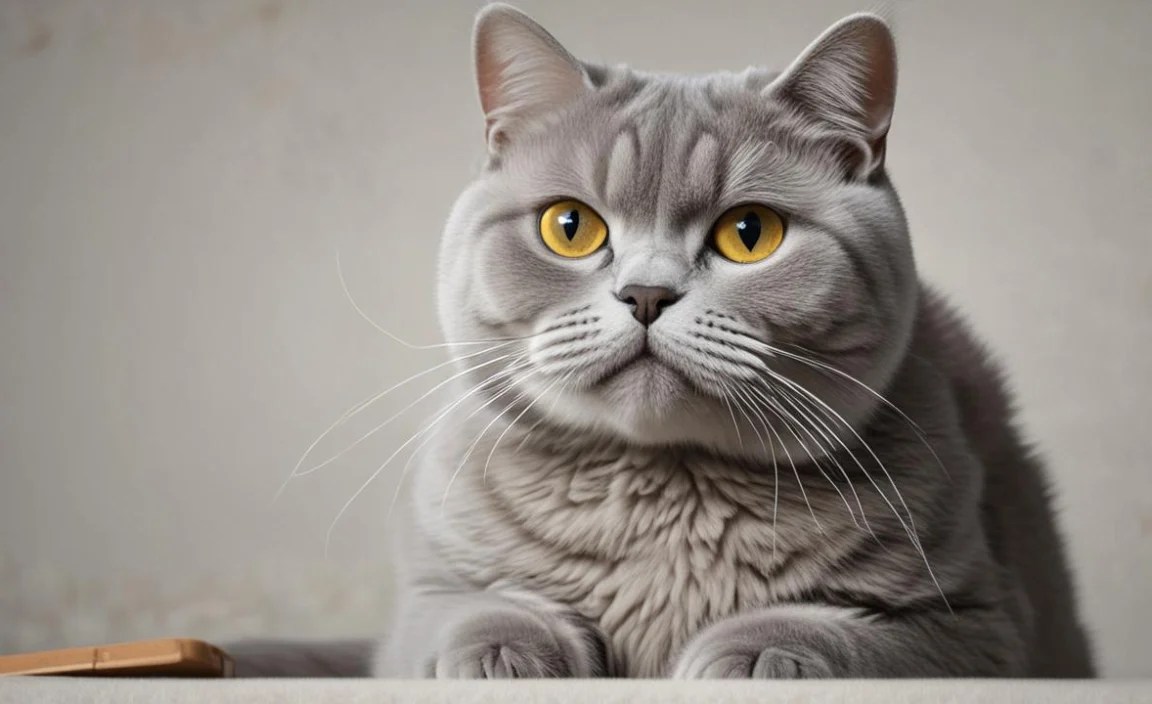
British Shorthairs are prone to weight gain, so portion control is crucial. Overfeeding can lead to obesity and related health issues. Consult your veterinarian for the right amount of food based on your cat’s age, weight, and activity level.
How to Measure Portions
- Read the Label: Start by following the feeding guidelines on the cat food packaging.
- Use a Measuring Cup: Use a standard measuring cup to ensure accurate portions.
- Monitor Weight: Regularly weigh your cat to check for weight gain or loss.
- Adjust as Needed: Adjust the portion size based on your cat’s body condition and activity level.
Understanding Body Condition Score
The Body Condition Score (BCS) is a tool to assess whether your cat is at a healthy weight. It’s a visual and tactile assessment that helps you determine if your cat is underweight, overweight, or at an ideal weight. The Purina website offers a helpful guide on using the BCS.
| Score | Description | What to Look For |
|---|---|---|
| 1/9 (Emaciated) | Ribs, spine, and pelvic bones easily visible; obvious loss of muscle mass. | Minimal fat covering; abdominal tuck is severe. |
| 3/9 (Underweight) | Ribs easily felt with minimal fat covering; spine and pelvic bones prominent. | Obvious waist; abdominal tuck is present. |
| 5/9 (Ideal) | Ribs felt without excess fat covering; abdomen is tucked up when viewed from the side. | Waist is easily noted behind the ribs when viewed from above. |
| 7/9 (Overweight) | Ribs difficult to feel with moderate fat covering; waist may be barely visible. | Abdomen is rounded; fat deposits may be present. |
| 9/9 (Obese) | Ribs not felt under a heavy fat covering; significant fat deposits over the back and base of the tail. | Distended abdomen; no waist; obvious fat deposits. |
Tips for Preventing Overeating
- Avoid Free Feeding: Don’t leave food out all day; stick to scheduled meal times.
- Puzzle Feeders: Use puzzle feeders to slow down eating and provide mental stimulation.
- Limit Treats: Treats should only make up a small portion of their daily calorie intake.
- Monitor Begging: Don’t give in to begging, as this reinforces the behavior.
Dealing with Common Feeding Issues

Even with the best routines, you might encounter some feeding challenges. Here’s how to handle common issues with your British Shorthair’s eating habits.
Picky Eating
While British Shorthairs are generally not picky, some may develop preferences. Here’s how to encourage them to eat a balanced diet.
- Rule Out Medical Issues: Consult your vet to ensure there are no underlying health problems causing the pickiness.
- Try Different Textures: Experiment with wet, dry, or semi-moist foods to see what your cat prefers.
- Warm the Food: Slightly warming the food can enhance its aroma and make it more appealing.
- Add Toppers: Use small amounts of tuna juice or low-sodium broth to entice eating.
Eating Too Quickly
If your cat gulps down food too quickly, they may be at risk of bloating or vomiting. Slow down their eating with these strategies.
- Puzzle Feeders: These require the cat to work for their food, slowing down the eating process.
- Small, Frequent Meals: Divide their daily portion into smaller meals served throughout the day.
- Special Bowls: Use bowls designed to slow down eating, such as those with raised patterns or obstacles.
Begging for Food
Begging can be annoying and lead to overfeeding. Here’s how to manage this behavior.
- Ignore the Begging: Don’t give in to their demands, as this reinforces the behavior.
- Consistent Feeding Schedule: Stick to a regular feeding schedule so they know when to expect food.
- Provide Attention: Sometimes, cats beg for attention rather than food, so offer playtime or cuddles.
Adjusting Feeding Habits for Different Life Stages
Your British Shorthair’s nutritional needs will change as they age. Adjusting their diet and feeding habits accordingly is crucial for their health.
Kitten Stage
Kittens need more calories and nutrients to support their rapid growth. The Cornell Feline Health Center recommends feeding kittens a diet specifically formulated for growth.
- Frequent Meals: Feed kittens three to four times a day.
- Kitten Food: Choose a high-quality kitten food with plenty of protein and essential nutrients.
- Wet and Dry Food: Offer a mix of wet and dry food to ensure adequate hydration and nutrition.
Adult Stage
Once your British Shorthair reaches adulthood (around one year old), switch to an adult cat food formula. Maintain a consistent feeding schedule and monitor their weight to prevent obesity.
- Two Meals a Day: Feed adults twice a day, morning and evening.
- Adult Food: Choose a balanced adult cat food that meets their nutritional needs.
- Portion Control: Measure portions carefully to prevent weight gain.
Senior Stage
Senior cats (over seven years old) may have different dietary needs due to decreased activity levels and potential health issues. Consult your vet for the best diet for your senior cat.
- Senior Food: Switch to a senior cat food formula that is lower in calories and easier to digest.
- Smaller, Frequent Meals: Offer smaller meals more frequently to aid digestion.
- Hydration: Ensure they have access to plenty of fresh water, as senior cats are prone to dehydration.
When to Consult Your Veterinarian
While most feeding issues can be managed at home, some situations require veterinary attention. Contact your vet if you notice any of the following:
- Sudden Loss of Appetite: This could indicate an underlying health issue.
- Vomiting or Diarrhea: These symptoms can be signs of food allergies or gastrointestinal problems.
- Sudden Weight Loss or Gain: Significant changes in weight can indicate health issues.
- Changes in Drinking Habits: Increased or decreased thirst can be a sign of diabetes or kidney disease.
Supplements and Treats: What’s Safe?
Treats and supplements can be a part of your British Shorthair’s diet, but moderation and safety are key.
Safe Treats
- Commercial Cat Treats: Choose treats specifically designed for cats and offer them in moderation.
- Plain Cooked Chicken or Fish: Small amounts of plain, cooked meat can be a healthy treat.
- Catnip: Catnip can be a fun and safe treat for most cats.
Supplements
- Omega-3 Fatty Acids: These can promote healthy skin and coat.
- Probiotics: These can support digestive health, especially for cats with sensitive stomachs.
Foods to Avoid
Certain foods are toxic to cats and should never be given to your British Shorthair. According to the ASPCA, these include:
- Chocolate: Toxic to cats and can cause serious health issues.
- Onions and Garlic: Can damage red blood cells.
- Grapes and Raisins: Can cause kidney failure.
- Alcohol: Highly toxic to cats.
Creating a Stress-Free Mealtime Environment
A calm and comfortable environment can significantly impact your British Shorthair’s feeding behavior. Here’s how to create a stress-free mealtime.
- Quiet Setting: Choose a quiet location away from loud noises and distractions.
- Clean Bowls: Keep food and water bowls clean to encourage eating and drinking.
- Multiple Feeding Stations: If you have multiple cats, provide separate feeding stations to prevent competition.
- Consistent Routine: Stick to a consistent feeding schedule to reduce anxiety and promote regular eating habits.
Table: British Shorthair Feeding Guide
Here’s a quick reference guide to help you manage your British Shorthair’s feeding habits.
| Life Stage | Feeding Frequency | Food Type | Portion Size | Considerations |
|---|---|---|---|---|
| Kitten (0-1 year) | 3-4 times daily | Kitten food | Follow packaging guidelines | High protein and nutrient content |
| Adult (1-7 years) | 2 times daily | Adult cat food | Follow packaging guidelines | Monitor weight; adjust portions as needed |
| Senior (7+ years) | 2-3 times daily | Senior cat food | Follow packaging guidelines | Lower calorie content; easy to digest |
FAQ About British Shorthair Feeding Behavior
Here are some frequently asked questions to help you better understand your British Shorthair’s feeding behavior.
Q: How much should I feed my British Shorthair?
A: The amount of food depends on your cat’s age, weight, and activity level. Start by following the feeding guidelines on the cat food packaging and adjust as needed to maintain a healthy weight.
Q: Why is my British Shorthair always hungry?
A: Constant hunger could be due to several factors, including insufficient portion sizes, a diet lacking in nutrients, or underlying health issues like diabetes. Consult your vet to rule out any medical problems.
Q: Is wet or dry food better for my British Shorthair?
A: Both wet and dry food have their benefits. Wet food helps with hydration, while dry food can aid dental health. A mix of both is often the best option.
Q: How can I prevent my British Shorthair from overeating?
A: Prevent overeating by sticking to scheduled meal times, measuring portions accurately, avoiding free feeding, and using puzzle feeders to slow down eating.
Q: What are some signs of food allergies in British Shorthairs?
A: Signs of food allergies include vomiting, diarrhea, itchy skin, and excessive grooming. If you suspect a food allergy, consult your vet for diagnosis and dietary recommendations.
Q: Can I give my British Shorthair milk?
A: Most adult cats are lactose intolerant, so giving them cow’s milk can cause digestive upset. If you want to give them milk, choose a lactose-free cat milk.
Q: How often should I change my British Shorthair’s food?
A: It’s generally best to stick to a consistent diet unless there’s a specific reason to change, such as a change in life stage or a dietary recommendation from your vet. When changing food, do so gradually to avoid digestive upset.
Conclusion
Understanding your British Shorthair’s feeding behavior and personality is key to ensuring they lead a happy, healthy life. By providing a balanced diet, consistent feeding routine, and a stress-free environment, you can help your feline friend thrive. Remember, every cat is unique, so pay attention to their individual needs and adjust your approach as necessary. With a little patience and care, you and your British Shorthair can enjoy many happy mealtimes together.


