
Origin of the Doberman Pinscher: The Powerful Truth

Quick Summary: Origin of the Doberman Pinscher
The Doberman Pinscher originated in Germany around 1890, bred by Karl Friedrich Louis Dobermann, a tax collector and dog warden. He aimed to create a medium-sized, intelligent, and fearless guard dog. The breed’s exact ancestry is uncertain, but it’s believed to include breeds like the German Pinscher, Rottweiler, Black and Tan Terrier, and possibly the Greyhound.
Have you ever wondered where the sleek, intelligent Doberman Pinscher comes from? This striking breed, known for its loyalty and protective nature, has a fascinating history. Understanding the Doberman’s origins can help you appreciate their unique traits and care for them even better. Many people are curious about the breed’s beginnings, and it’s easy to get lost in myths.
In this article, we’ll explore the true story of the Doberman Pinscher, tracing its roots back to Germany in the late 19th century. We’ll uncover the breeds that contributed to its creation and the purpose for which it was designed. Get ready to discover the captivating history of the Doberman Pinscher!
The Father of the Doberman: Karl Friedrich Louis Dobermann

The story of the Doberman Pinscher begins with one man: Karl Friedrich Louis Dobermann. Born in Apolda, Thuringia, Germany, in 1834, Dobermann held several roles in his community, including tax collector, dog warden, and night watchman. These professions required a reliable and fearless companion, leading him to create the breed we know today.
Dobermann’s goal was to develop a medium-sized dog that was intelligent, alert, and capable of protecting him during his rounds. He wanted a dog that could deter thieves and be a loyal protector. To achieve this, he began experimenting with various breeds, carefully selecting dogs with the desired traits.
The Need for a Protector
Imagine being a tax collector in the late 19th century. You’re responsible for collecting money, often traveling alone through potentially dangerous areas. The need for a reliable protector is evident. This need drove Dobermann to create a dog that was not only physically capable but also intelligent and fearless.
Dobermann’s work as a dog warden gave him access to a variety of breeds. He carefully selected dogs with specific traits, such as courage, intelligence, and a strong build. This careful selection process was the foundation for the Doberman Pinscher.
Unraveling the Ancestry: What Breeds Contributed?

The exact breeds that Dobermann used to create the Doberman Pinscher are not definitively known, as he kept meticulous records. However, breed historians and experts have pieced together the likely ancestry based on the Doberman’s physical and behavioral traits. Several breeds are believed to have played a significant role:
- German Pinscher: This breed is a likely ancestor, contributing to the Doberman’s overall structure and energy.
- Rottweiler: Known for their strength and guarding instincts, Rottweilers likely contributed to the Doberman’s powerful build and protective nature.
- Black and Tan Terrier: This breed may have contributed to the Doberman’s intelligence, agility, and distinctive black and tan markings.
- Greyhound: Some believe that the Greyhound may have been added to improve the Doberman’s speed and elegance.
- German Shepherd: Later in the breed’s development, the German Shepherd may have been introduced to enhance its trainability and working ability.
The combination of these breeds resulted in a dog that was intelligent, strong, fast, and fearless – exactly what Dobermann was aiming for.
The Genetic Mix
While we can’t say for certain the exact percentage of each breed in the Doberman’s genetic makeup, we can appreciate how each contributed to the final result. The German Pinscher provided the foundation, while the Rottweiler added strength, and the Black and Tan Terrier contributed intelligence and alertness. The possible addition of the Greyhound added speed and elegance, creating a truly remarkable breed.
The Doberman’s ancestry is a testament to Dobermann’s skill in selectively breeding dogs to achieve a specific purpose. He carefully combined the best traits of various breeds to create a dog that was perfectly suited to his needs.
Early Development and Recognition
After Dobermann’s death in 1894, others continued his work, refining the breed and establishing it as a recognized breed. Otto Goeller, is one of the individuals who contributed significantly to the early development and recognition of the Doberman Pinscher. Goeller took over Dobermann’s kennel and continued to breed and refine the Doberman Pinscher.
The Doberman Pinscher was officially recognized by the German Kennel Club in 1899. The breed quickly gained popularity as a police dog and military dog, thanks to its intelligence, trainability, and protective nature. They were also used as personal protection dogs, guarding homes and businesses.
The Doberman Pinscher Club
The establishment of breed clubs played a crucial role in standardizing the Doberman Pinscher. The first Doberman Pinscher Club was founded in Germany in 1899, which helped to define the breed standard and promote responsible breeding practices. These clubs worked to ensure that the Doberman Pinscher remained a consistent and high-quality breed.
The Doberman Pinscher quickly spread beyond Germany, gaining popularity in other European countries and eventually in the United States. The breed’s intelligence and trainability made it a popular choice for law enforcement and military work, while its loyalty and protective nature made it a beloved family companion.
The Doberman Pinscher in America

The Doberman Pinscher made its way to America in the early 20th century and quickly gained popularity. The American Kennel Club (AKC) recognized the breed in 1908. American breeders further refined the breed, focusing on temperament and conformation.
During World War I and World War II, Dobermans served with distinction in the United States Marine Corps, earning a reputation for bravery and loyalty. Their contributions to the war effort solidified their place in American hearts.
American Breeding and Refinement
American breeders played a significant role in shaping the Doberman Pinscher breed. They focused on producing dogs with sound temperaments and excellent conformation. This led to the development of distinct American lines of Dobermans, known for their elegance and athleticism.
The Doberman Pinscher Club of America (DPCA) was founded in 1921 and played a crucial role in promoting responsible breeding practices and protecting the breed’s integrity. The DPCA continues to be a leading resource for Doberman Pinscher owners and breeders in the United States.
The Doberman Pinscher Today

Today, the Doberman Pinscher remains a popular breed, known for its intelligence, loyalty, and protective nature. They excel in various activities, including obedience, agility, and protection sports. They also make wonderful family companions for experienced dog owners.
Responsible breeders continue to prioritize health and temperament, working to ensure that the Doberman Pinscher remains a healthy and well-adjusted breed. They conduct health testing to screen for genetic conditions and carefully select breeding pairs to produce puppies with sound temperaments.
The Importance of Responsible Breeding
When considering adding a Doberman Pinscher to your family, it’s crucial to find a responsible breeder. Responsible breeders prioritize the health and temperament of their dogs, conducting health testing and providing proper socialization. They are knowledgeable about the breed and can offer valuable guidance and support.
A well-bred and well-socialized Doberman Pinscher can be a wonderful addition to the right family. They are intelligent, loyal, and eager to please, making them a joy to train and live with. However, they require an experienced owner who can provide consistent training and socialization.
Doberman Pinscher Temperament and Training
The Doberman Pinscher is known for its intelligence, loyalty, and protective nature. They are highly trainable and eager to please, making them excel in obedience and agility training. However, they also require consistent training and socialization from a young age to ensure they develop into well-adjusted adults.
Early socialization is crucial for Doberman Pinschers. Exposing them to a variety of people, places, and situations helps them develop confidence and prevents them from becoming overly suspicious or fearful. Positive reinforcement training methods are highly effective with Dobermans, as they respond well to praise and rewards.
Addressing Common Misconceptions
Unfortunately, Doberman Pinschers have sometimes been unfairly portrayed as aggressive or dangerous. However, with proper training and socialization, they are typically gentle and affectionate dogs. Like any breed, individual temperament can vary, but a well-bred and well-trained Doberman is a loving and loyal companion.
It’s important to remember that a dog’s behavior is largely a product of its environment and training. A Doberman Pinscher raised in a loving and supportive home, with consistent training and socialization, is likely to be a well-behaved and friendly dog.
Caring for Your Doberman Pinscher
Caring for a Doberman Pinscher involves providing proper nutrition, exercise, grooming, and veterinary care. They are an active breed and require regular exercise to stay healthy and happy. A balanced diet is essential for maintaining their sleek coat and strong muscles.
Grooming requirements for Doberman Pinschers are relatively minimal. Their short coat requires occasional brushing to remove loose hair. Regular nail trims and dental care are also important for maintaining their overall health.
Health Considerations
Like all breeds, Doberman Pinschers are prone to certain health conditions. Responsible breeders conduct health testing to screen for these conditions and minimize the risk of passing them on to their puppies. Some common health concerns in Doberman Pinschers include:
- Dilated Cardiomyopathy (DCM): A heart condition that can lead to heart failure.
- Von Willebrand’s Disease: A bleeding disorder that affects the blood’s ability to clot.
- Hip Dysplasia: A condition in which the hip joint doesn’t develop properly.
- Wobbler Syndrome: A neurological condition that affects the spinal cord.
Regular veterinary checkups are essential for monitoring your Doberman Pinscher’s health and detecting any potential problems early. With proper care and attention, Doberman Pinschers can live long and healthy lives.
Doberman Pinscher Breed Standard
The Doberman Pinscher breed standard describes the ideal characteristics of the breed, including physical appearance, temperament, and movement. The standard is used by judges in dog shows to evaluate Dobermans and determine which dogs best represent the breed.
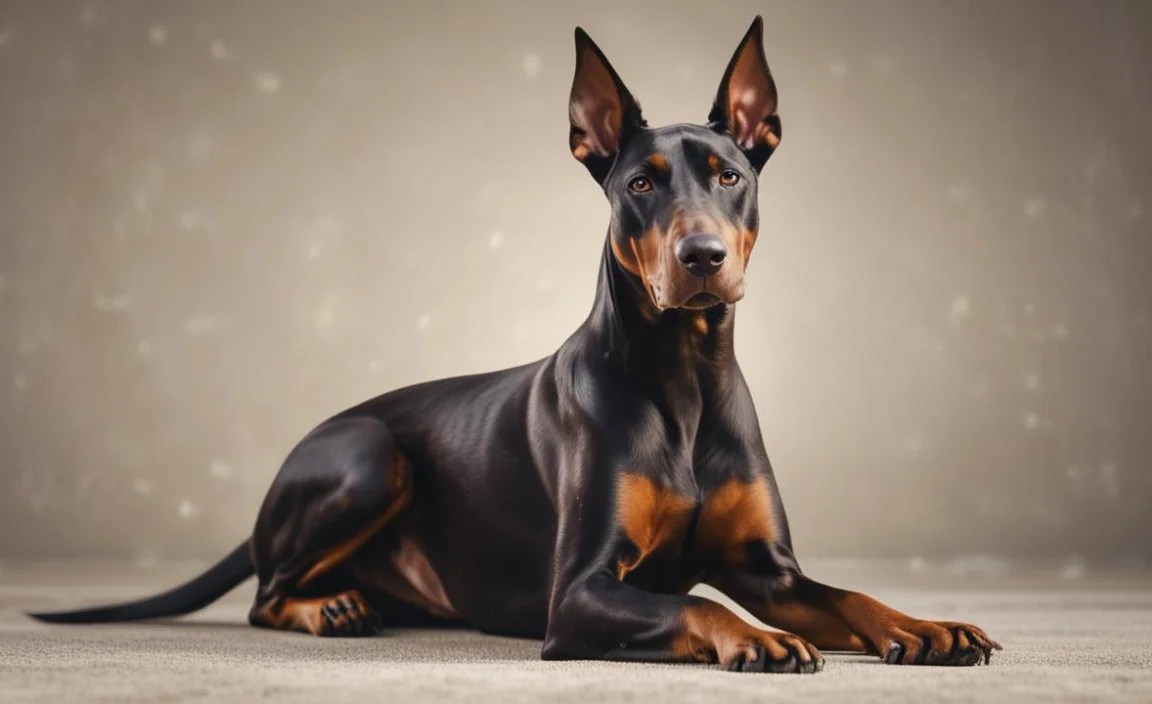
According to the AKC breed standard, the Doberman Pinscher is a medium-large, muscular dog with an elegant and athletic build. They have a sleek, short coat that comes in several colors, including black, red, blue, and fawn. Their temperament is described as alert, intelligent, and loyal.
Key Aspects of the Breed Standard
Here are some key aspects of the Doberman Pinscher breed standard:
| Characteristic | Description |
|---|---|
| Size | Medium-large, males typically 26-28 inches at the shoulder, females 24-26 inches. |
| Coat | Short, smooth, and hard. Colors include black, red, blue, and fawn, with rust markings. |
| Head | Long and clean-cut, with a slightly arched skull. |
| Temperament | Alert, intelligent, loyal, and obedient. |
| Gait | Free, balanced, and vigorous, with good reach and drive. |
breeders use the breed standard as a guide when selecting breeding pairs, aiming to produce puppies that closely conform to the ideal characteristics of the breed. The breed standard helps to maintain the consistency and quality of the Doberman Pinscher breed.
Frequently Asked Questions (FAQs)
Here are some frequently asked questions about the origin and history of the Doberman Pinscher:
1. Who created the Doberman Pinscher?
The Doberman Pinscher was created by Karl Friedrich Louis Dobermann, a tax collector and dog warden in Germany, around 1890.
2. What breeds were used to create the Doberman Pinscher?
The exact breeds are uncertain, but likely include the German Pinscher, Rottweiler, Black and Tan Terrier, and possibly the Greyhound.
3. Why was the Doberman Pinscher created?
Dobermann wanted a medium-sized, intelligent, and fearless dog to protect him during his rounds as a tax collector and dog warden.
4. When was the Doberman Pinscher officially recognized as a breed?
The Doberman Pinscher was officially recognized by the German Kennel Club in 1899.
5. What is the Doberman Pinscher known for today?
Today, the Doberman Pinscher is known for its intelligence, loyalty, and protective nature. They excel in various activities and make wonderful family companions for experienced owners.
6. Are Doberman Pinschers aggressive dogs?
With proper training and socialization, Doberman Pinschers are typically gentle and affectionate dogs. Early socialization and consistent training are crucial for developing a well-adjusted Doberman.
7. What are some common health concerns in Doberman Pinschers?
Some common health concerns include dilated cardiomyopathy (DCM), von Willebrand’s disease, hip dysplasia, and Wobbler syndrome.
Conclusion
The Doberman Pinscher’s origin is a fascinating tale of careful breeding and a specific need for a loyal and protective companion. From its humble beginnings in Germany with Karl Friedrich Louis Dobermann to its recognition as a popular and versatile breed worldwide, the Doberman Pinscher has proven its worth as a working dog and a beloved family member.
Understanding the Doberman’s history helps us appreciate the breed’s unique traits and the importance of responsible breeding practices. With proper training, socialization, and care, the Doberman Pinscher can be a wonderful addition to the right family, bringing intelligence, loyalty, and protection to your home.
So, the next time you see a Doberman Pinscher, remember the story of its creation and the dedication of those who shaped it into the remarkable breed it is today. The Doberman Pinscher is more than just a dog; it’s a testament to the power of selective breeding and the enduring bond between humans and animals.


