
Evolution of Devon Rex Cats: The Ultimate Guide

The Devon Rex’s evolution began in Buckfastleigh, Devon, UK, in 1959 with a kitten named Kirlee, born with unique curly fur. Unlike other Rex breeds, Devon Rex cats have a different gene causing their curls. Selective breeding preserved this trait, leading to the breed’s recognition. Today, they’re loved for their playful nature and distinctive look.
Have you ever seen a cat with waves for days? That’s likely a Devon Rex! These cats are known for their curly coats and playful personalities. But have you ever wondered where these unique felines came from? Understanding the Devon Rex’s history helps us appreciate their special traits. It all started with one special kitten and a lucky twist of fate.
In this guide, we will explore the origins of the Devon Rex. We’ll look at the key moments that shaped the breed. From a single barn cat to a world-renowned breed, the Devon Rex has a fascinating story. Ready to dive in? Let’s explore how these curly cats came to be!
The Accidental Discovery of Kirlee

It all started in a small town in Devon, England. In 1959, a stray cat gave birth to a litter of kittens near an abandoned tin mine. One of these kittens was different. He had a soft, curly coat. His name was Kirlee. This kitten would become the founding father of the Devon Rex breed.
Beryl Cox, the owner of Kirlee’s mother, noticed his unusual fur right away. She had been a breeder of British Shorthair cats, so she knew cats. She had never seen anything like Kirlee’s coat before. The curls were tight and even, giving him a unique look.
Initially, people thought Kirlee might be related to the Cornish Rex, another curly-coated breed. To test this, Kirlee was bred with a Cornish Rex. The result? Kittens with straight hair. This showed that Kirlee’s curl was caused by a different gene. This was a brand new mutation. The Devon Rex was officially its own breed.
The Unique Genetics of the Devon Rex

The Devon Rex’s curly coat is all thanks to a recessive gene. This gene affects the hair follicles, causing the hair to curl. Unlike the Cornish Rex, which has a different rex gene (r), the Devon Rex has its own unique rex gene (re). This means that a Devon Rex bred with a Cornish Rex will not produce curly kittens. Instead, the kittens will carry both genes but have straight hair.
Understanding this genetic difference is key to breeding healthy Devon Rex cats. Breeders must carefully select cats with the rex gene (re) to ensure the curly coat is passed on. This selective breeding has helped preserve the unique traits of the Devon Rex.
Early Recognition and Breed Development
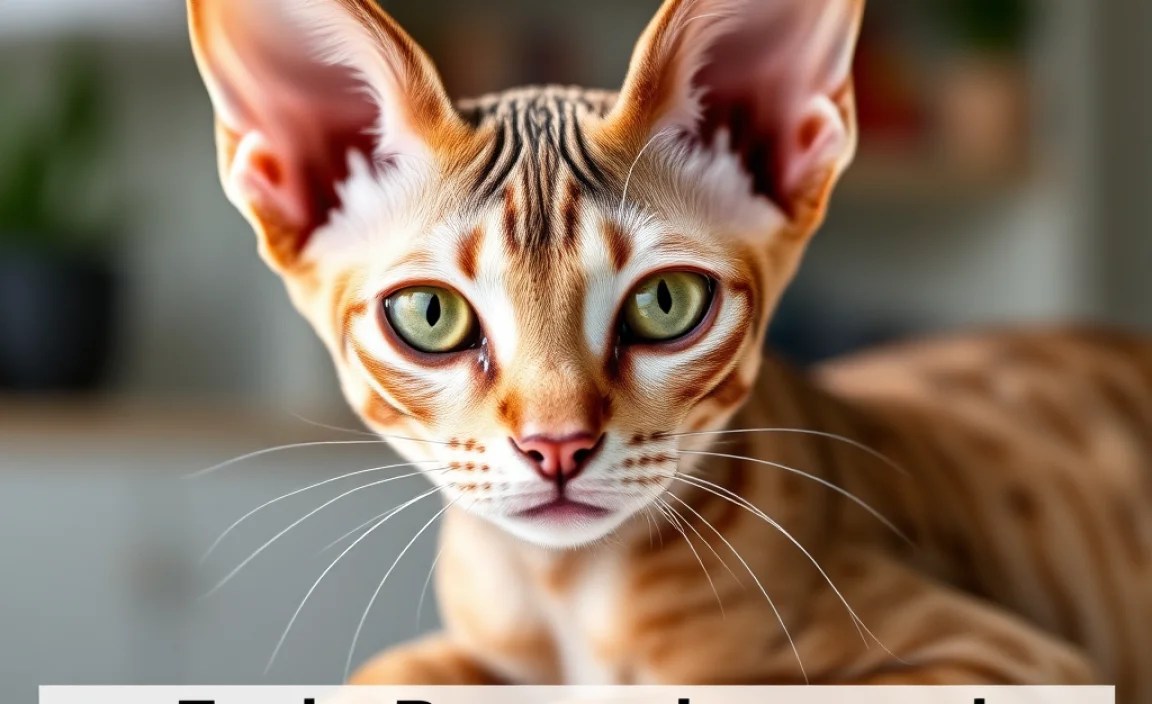
After discovering that Kirlee’s curls were unique, Beryl Cox started a breeding program to preserve this trait. She named the breed Devon Rex, after the county where Kirlee was found. The “Rex” part of the name refers to the gene mutation that causes the curly coat, a term borrowed from rabbit breeding. She worked to establish the Devon Rex as a distinct breed.
The early years of the Devon Rex were challenging. The gene pool was small, and breeders had to be careful to avoid genetic problems. Despite these challenges, the Devon Rex gained recognition from cat associations. The Governing Council of the Cat Fancy (GCCF) in the UK recognized the breed in 1967. Later, cat associations in North America, such as The International Cat Association (TICA) and the Cat Fanciers’ Association (CFA), also recognized the Devon Rex.
Physical Characteristics of the Devon Rex

The Devon Rex is known for its distinctive appearance. Here are some key physical traits:
- Coat: The most notable feature is the soft, curly coat. The curls are tightest on the back and sides, giving the cat a wavy look.
- Ears: Devon Rex cats have large, wide-set ears that are low on the head. These ears give them an alert expression.
- Eyes: Their eyes are large and oval-shaped, adding to their expressive face.
- Body: They have a slender, muscular body with long legs. Their overall appearance is often described as “elf-like.”
- Whiskers: Their whiskers are crinkled, which is another unique trait of the breed.
Here’s a table summarizing the physical characteristics of the Devon Rex:
| Characteristic | Description |
|---|---|
| Coat | Soft, curly, and wavy |
| Ears | Large and wide-set |
| Eyes | Large and oval-shaped |
| Body | Slender and muscular |
| Whiskers | Crinkled |
Temperament and Personality

The Devon Rex is not just known for its looks. They are also loved for their playful and affectionate personality. These cats are often described as “monkey in a cat suit” because of their playful antics.
- Playful: Devon Rex cats love to play and explore. They enjoy interactive toys and games.
- Affectionate: They are very affectionate and love to cuddle with their owners. They often follow their favorite people around the house.
- Intelligent: Devon Rex cats are intelligent and easy to train. They can learn tricks and commands with patience and positive reinforcement.
- Social: They enjoy being around people and other pets. They are often good with children and other cats.
Here are some personality traits of the Devon Rex:
| Trait | Description |
|---|---|
| Playful | Loves interactive games and toys |
| Affectionate | Enjoys cuddling and companionship |
| Intelligent | Easy to train and quick to learn |
| Social | Gets along well with people and other pets |
Grooming and Care
Caring for a Devon Rex is relatively simple. Their unique coat requires some special attention, but overall, they are easy to care for.
- Coat Care: The Devon Rex coat is delicate and can be damaged by harsh brushing. Instead of brushing, gently rub them with a soft cloth.
- Bathing: They don’t need frequent baths. Over-bathing can dry out their skin. When you do bathe them, use a mild shampoo.
- Ear Cleaning: Their large ears can accumulate wax. Clean their ears regularly with a vet-approved ear cleaner.
- Nail Trimming: Trim their nails regularly to prevent them from getting too long.
- Dental Care: Brush their teeth regularly to maintain good dental health.
Here’s a simple grooming schedule for your Devon Rex:
| Task | Frequency |
|---|---|
| Coat Care (soft cloth rub) | Weekly |
| Bathing | As needed (usually every few months) |
| Ear Cleaning | Every 2 weeks |
| Nail Trimming | Every 2-3 weeks |
| Teeth Brushing | Daily or weekly |
Health Considerations
Devon Rex cats are generally healthy. But, like all breeds, they can be prone to certain health issues. Knowing these potential problems can help you keep your cat healthy.
- Hypertrophic Cardiomyopathy (HCM): This is a heart condition that can affect Devon Rex cats. Regular veterinary check-ups can help detect this early.
- Patellar Luxation: This is a condition where the kneecap can dislocate. It can cause lameness and discomfort.
- Hereditary Myopathy: This is a muscle weakness condition. Genetic testing can help identify carriers of this disease.
Regular veterinary check-ups are key to keeping your Devon Rex healthy. Your vet can screen for these potential health issues and recommend preventive care.
Finding a Reputable Breeder
If you’re thinking about getting a Devon Rex, it’s important to find a reputable breeder. A good breeder will prioritize the health and well-being of their cats. Here are some things to look for:
- Registration: Make sure the breeder is registered with a recognized cat association, such as TICA or CFA.
- Health Testing: Ask about health testing for common genetic conditions. Reputable breeders will test their cats to avoid passing on health problems.
- Living Conditions: Visit the breeder’s cattery to see the living conditions. The cats should be clean, well-fed, and socialized.
- Knowledge: A good breeder will be knowledgeable about the breed and happy to answer your questions.
- References: Ask for references from previous buyers.
Avoid breeders who seem more interested in making a profit than caring for their cats. A responsible breeder will be committed to the health and well-being of their cats.
The Devon Rex Today
Today, the Devon Rex is a popular breed around the world. They are loved for their unique appearance and playful personalities. They make great pets for families, singles, and seniors.
The Devon Rex has come a long way since Kirlee was discovered in 1959. Through careful breeding and dedication, the Devon Rex has become a well-established and beloved breed. Their story is a testament to the power of genetics and the beauty of unique traits.
The Devon Rex and British Shorthairs: A Note
As a British Shorthair expert, I often get asked about the differences between the Devon Rex and British Shorthairs. While both breeds are wonderful, they have very different traits. The British Shorthair is known for its plush, dense coat and calm demeanor. The Devon Rex, on the other hand, has a curly coat and a more playful, energetic personality. They each bring unique qualities to the world of cats.
Conclusion
The story of the Devon Rex is a fascinating journey. From a single curly-coated kitten in Devon to a beloved breed worldwide, their evolution is a testament to the beauty of genetic diversity. Understanding their history helps us appreciate their unique traits and the dedication of breeders who have worked to preserve them.
Whether you’re a cat lover or thinking about getting a Devon Rex, I hope this guide has given you a deeper understanding of this wonderful breed. Their playful nature and distinctive looks make them a joy to have around. Thank you for joining me on this exploration of the Devon Rex!
Frequently Asked Questions About Devon Rex Cats
Here are some common questions about Devon Rex cats:
1. Where did the Devon Rex cat breed originate?
The Devon Rex breed originated in Buckfastleigh, Devon, UK, in 1959. A kitten named Kirlee, born with a curly coat, was the first of this unique breed.
2. What makes the Devon Rex’s coat different from other Rex breeds?
The Devon Rex has a unique gene that causes its curly coat, different from the gene responsible for the Cornish Rex or other Rex breeds. This is why crossing a Devon Rex with a Cornish Rex doesn’t result in curly-haired kittens.
3. Are Devon Rex cats hypoallergenic?
While no cat is truly hypoallergenic, Devon Rex cats produce less of the Fel d 1 protein, which causes allergies. Their coat also sheds less, potentially reducing allergic reactions.
4. What is the personality of a Devon Rex cat?
Devon Rex cats are known for being playful, intelligent, and affectionate. They enjoy interacting with people and often seek attention. They are sometimes described as “monkey in a cat suit”.
5. Do Devon Rex cats require special grooming?
Yes, Devon Rex cats require gentle grooming. Their coat is delicate and can be damaged by harsh brushing. Use a soft cloth to gently groom them and avoid over-bathing to prevent skin issues.
6. What health issues are Devon Rex cats prone to?
Devon Rex cats are generally healthy, but they can be prone to certain genetic conditions such as hypertrophic cardiomyopathy (HCM) and patellar luxation. Regular veterinary check-ups can help detect and manage these issues early.
7. How can I find a reputable Devon Rex breeder?
To find a reputable Devon Rex breeder, look for breeders who are registered with cat associations like The International Cat Association (TICA) or the Cat Fanciers’ Association (CFA). Ask about health testing, visit their cattery, and ensure they prioritize the health and well-being of their cats.


