
Role of Food Rewards in Training Cats: Smart Secrets

Cats are cute and smart. Did you know you can teach them tricks? Do you want your cat to sit or give you a high five? One way to train your cat is with food. The role of food rewards in training cats is very important. Food can help your cat learn new things!
Key Takeaways
- Using food rewards makes cat training fun and easy for both of you.
- Small, healthy treats are best for keeping your cat motivated and fit.
- Timing is key: give the treat right after your cat does what you want.
- The role of food rewards in training cats is to reinforce good behavior.
- Always be patient and positive when training your cat with food rewards.
Understanding the Role of Food Rewards

Have you ever wondered why your cat does certain things? Cats learn by associating actions with results. If something good happens after they do something, they will do it again. This is where food rewards come in! The role of food rewards in training cats is to make them want to repeat good behaviors. When your cat does something right, like sitting when you ask, giving them a treat tells them, “Good job!” They learn that sitting equals a tasty reward. This makes them more likely to sit again next time. It is like giving them a gold star for being a good kitty. Food rewards are a simple and effective way to communicate with your cat. They help your cat understand what you want them to do. This can make training fun and easy for both of you.
- Food rewards make training fun.
- Cats learn by associating actions with results.
- Treats tell your cat “Good job!”.
- Training becomes easier with rewards.
- Cats want to repeat good behaviors.
Think of it like this: you are teaching your cat a new game. The rules of the game are simple. When they do what you ask, they get a tasty prize. The more they play, the better they get at the game. They start to understand the rules and enjoy winning the prize. This is how food rewards work. They make learning a positive experience for your cat. They also strengthen the bond between you and your furry friend. So, next time you want to teach your cat a trick, remember the power of food rewards. They can turn training into a fun and rewarding experience for both of you. They are a great way to communicate with your cat and help them learn new things.
Why Food Works for Cats
Cats, just like people, have things they really like. For many cats, food is high on that list. Food is important for survival. It gives them energy to play, explore, and stay healthy. When you use food as a reward, you are tapping into something very powerful. You are using their natural desire for food to help them learn. It is a way of saying, “I appreciate what you did, and here is something you really like.” This creates a positive association in their mind. They start to link the action with the reward. This makes them more likely to do it again. It is like a little thank you for being a good cat. Food is a great motivator. It can help your cat focus and learn new things quickly.
Choosing the Right Treats
Not all treats are created equal! Some treats are healthier than others. You want to choose treats that are good for your cat. Look for treats that are low in calories and made with healthy ingredients. Small treats are best. You don’t want to give your cat too much food. This can lead to weight gain. Think of treats as small rewards, not meals. You can also use pieces of your cat’s regular food as treats. This can be a good option if your cat is on a special diet. The key is to find something your cat loves that is also good for them. This will make training more effective and keep your cat healthy and happy. Remember, a healthy cat is a happy cat!
Timing is Everything
Imagine you are trying to learn a new dance move. Your teacher tells you, “Good job!” a few minutes after you did the move. Would that be very helpful? Probably not! The same is true for cats. Timing is very important when using food rewards. You want to give the treat right after your cat does what you want. This helps them make the connection between the action and the reward. If you wait too long, they may not understand what they are being rewarded for. It is like saying, “Good job!” at the exact moment they do the dance move correctly. This helps them understand what they did right. Good timing is key to successful training. It helps your cat learn quickly and easily.
Fun Fact or Stat: Did you know that cats can learn tricks just like dogs? With patience and the right rewards, you can teach your cat all sorts of fun things!
Selecting the Best Food Rewards for Cats

Choosing the right food rewards is very important. Not all foods are created equal. Some are healthier and more appealing to cats than others. When you are picking treats, think about what your cat likes. Do they love tuna? Do they go crazy for chicken? Tiny pieces of these can make great rewards. You can also buy special cat treats at the store. Look for ones that are small, soft, and easy to chew. Avoid treats that are high in calories or contain artificial ingredients. The goal is to reward your cat, not to make them unhealthy. Remember, the best food rewards are the ones that your cat loves and that are good for them. This will make training more fun and effective. Always check with your vet if you are unsure about which treats are best for your cat.
- Choose treats your cat loves.
- Small pieces of tuna or chicken work well.
- Buy small, soft cat treats.
- Avoid high-calorie or artificial treats.
- Talk to your vet about healthy options.
Consider trying a variety of treats to see what your cat prefers. Some cats love crunchy treats, while others prefer soft and chewy ones. You can even make your own cat treats at home! There are many recipes online that use simple, healthy ingredients. This can be a great way to control what your cat eats and save money. Just be sure to avoid ingredients that are harmful to cats, like chocolate or onions. Remember, the key is to find something your cat finds irresistible and that is safe for them to eat. This will make training much easier and more enjoyable for both of you. The role of food rewards in training cats is enhanced when using something they love.
What Makes a Good Treat?
A good treat is small, tasty, and healthy. It should be something your cat really enjoys. But it should not be something that will make them gain weight. Think of it as a small reward, not a meal replacement. Look for treats that are low in calories and made with natural ingredients. Avoid treats that are full of fillers or artificial flavors. The best treats are the ones that are good for your cat and that they love to eat. This will make training a positive experience for both of you. It is like giving them a little piece of happiness in exchange for good behavior.
Treat Size Matters
Imagine you are trying to eat a whole pizza after doing one small task. That would be way too much! The same is true for cats and treats. You want to give them small pieces, not big chunks. This is important for two reasons. First, it helps prevent them from gaining weight. Second, it keeps them motivated. If they get a big treat every time, they might lose interest. Small treats keep them wanting more. They are like little bites of encouragement that keep them focused and engaged. So, remember to keep the treats small and your cat will stay happy and healthy.
Homemade vs. Store-Bought
Making your own cat treats can be a fun and rewarding experience. You can control exactly what goes into them. This is great if your cat has allergies or sensitivities. You can also save money by making your own treats. However, it can also be time-consuming. Buying treats from the store is convenient and easy. There are many healthy options available. Just be sure to read the labels carefully. Look for treats that are low in calories and made with natural ingredients. Whether you make your own or buy them from the store, the most important thing is to choose treats that are good for your cat.
Fun Fact or Stat: Many cats prefer treats with a strong smell, like fish or chicken. The stronger the smell, the more likely they are to be interested!
Timing is Crucial for Effective Training

Timing is everything when it comes to training your cat with food rewards. You need to give the treat at the exact moment your cat does what you want. This helps them make the connection between the action and the reward. If you wait too long, they may not understand what they are being rewarded for. Imagine you are trying to learn a new language. Your teacher corrects your pronunciation a few minutes after you say the word. Would that be very helpful? Probably not! You need immediate feedback to understand what you did wrong. The same is true for cats. Immediate rewards help them learn quickly and easily. The role of food rewards in training cats is maximized with good timing.
| Timing | Description | Example |
|---|---|---|
| Immediate | Give the treat right after the action. | Cat sits, give treat immediately. |
| Delayed | Give the treat a few seconds later. | Cat sits, wait 5 seconds, give treat. |
| Inconsistent | Sometimes give the treat, sometimes not. | Cat sits, sometimes gets a treat. |
| Wrong Timing | Give the treat before or during the action. | Give treat while asking cat to sit. |
- Give the treat immediately.
- Help your cat connect action and reward.
- Avoid delays in giving treats.
- Be consistent with your timing.
- Practice makes perfect for timing.
Think of it like taking a photo. You want to capture the exact moment your cat does what you want. If you are too slow, you will miss the shot. The same is true for training. You want to “capture” the moment with a treat. This reinforces the behavior and makes it more likely to happen again. Good timing also helps prevent confusion. If you give the treat at the wrong time, your cat might think they are being rewarded for something else. This can make training more difficult. So, focus on your timing and your cat will learn faster and more easily. Timing is a key ingredient for successful training.
The “Clicker” Connection
Have you ever heard of clicker training? It is a popular way to train animals, including cats. The clicker makes a distinct sound that your cat will learn to associate with a reward. You click the clicker at the exact moment your cat does what you want. Then, you immediately give them a treat. The clicker acts as a bridge between the action and the reward. It helps your cat understand exactly what they are being rewarded for. Clicker training can be very effective. It is a fun and positive way to train your cat. It also helps improve your communication with your furry friend.
Consistency is Key
Imagine you are trying to learn a new game. Sometimes the rules are one way, and sometimes they are different. Would that be very confusing? Yes! The same is true for cats. They need consistency to learn. This means using the same commands, the same treats, and the same timing every time. If you are inconsistent, your cat will get confused. They might not understand what you want them to do. Consistency helps them learn quickly and easily. It also helps build trust between you and your cat. So, be consistent and your cat will be a star student!
Practice Makes Perfect
Learning anything new takes practice. The same is true for training your cat. Don’t get discouraged if they don’t learn something right away. Just keep practicing and be patient. Short training sessions are best. A few minutes each day is better than one long session. This helps keep your cat focused and engaged. Remember to end each session on a positive note. This will make your cat want to come back for more. With practice and patience, you can teach your cat all sorts of fun tricks.
Fun Fact or Stat: Cats can learn to associate over 50 different words with actions or objects. Training can be a great way to bond with your cat and challenge their minds!
Maintaining Motivation with Food Rewards

Keeping your cat motivated is important for successful training. If your cat loses interest, they will not want to participate. Food rewards are a great way to keep them engaged and excited about learning. But you need to use them in the right way. Don’t give your cat treats all the time. Save them for training sessions. This will make them more special and valuable. Also, vary the treats you use. If you always give the same treat, your cat might get bored. Try different flavors and textures to keep them interested. Remember, the goal is to make training fun and rewarding for your cat. The role of food rewards in training cats is to make learning enjoyable.
- Save treats for training sessions.
- Vary the types of treats.
- Keep training sessions short.
- End sessions on a positive note.
- Use praise along with treats.
Think of it like playing a game. If you always win, it might get boring. You need some challenges to keep you interested. The same is true for cats. They need to be challenged to stay motivated. You can do this by gradually increasing the difficulty of the tricks you teach them. You can also introduce new tricks to keep things interesting. Remember to always be patient and positive. If your cat is struggling, don’t get frustrated. Just go back to an easier trick and try again later. The key is to make training a positive experience for both of you. A happy cat is a motivated cat.
Vary the Rewards
Imagine eating the same food every day for every meal. You would get tired of it very quickly! The same is true for cats and treats. They need variety to stay interested. Try different flavors, textures, and shapes of treats. You can even use small pieces of their regular food as rewards. The key is to keep them guessing. This will make training more exciting and engaging. It is like giving them a little surprise every time they do something right. Variety is the spice of life, even for cats!
Keep Sessions Short and Sweet
Long training sessions can be overwhelming for cats. They have short attention spans. It is better to have several short sessions throughout the day. This will help keep them focused and engaged. Aim for sessions that are 5-10 minutes long. This is enough time to teach them a new trick or reinforce an old one. Remember to end each session on a positive note. This will make them want to come back for more. Short and sweet sessions are the key to successful training.
Praise and Affection
Treats are not the only way to reward your cat. Praise and affection can also be very effective. When your cat does something right, tell them “Good job!” in a happy voice. You can also pet them or give them a scratch behind the ears. This shows them that you are happy with their behavior. Combining treats with praise and affection is a powerful way to reinforce good behavior. It also helps strengthen the bond between you and your cat. Remember, a little love goes a long way!
Fun Fact or Stat: Cats respond well to positive reinforcement. They are more likely to repeat behaviors that are rewarded with treats, praise, or affection!
Troubleshooting Common Training Issues
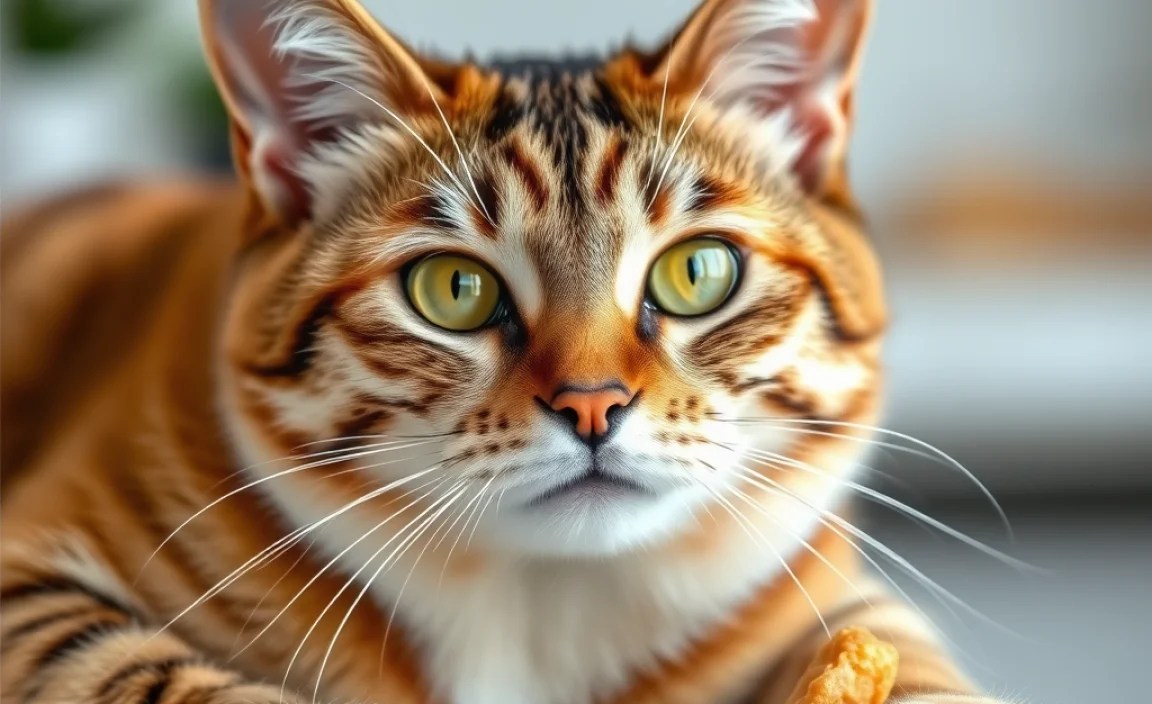
Sometimes, training does not go as planned. Your cat might not be interested in the treats. Or they might get distracted easily. It is important to be patient and persistent. Don’t give up! There are ways to overcome these challenges. First, make sure you are using treats that your cat really loves. If they are not motivated by the treats, try something else. Second, eliminate distractions. Train in a quiet place where your cat can focus. Third, keep the training sessions short and positive. If your cat is struggling, go back to an easier trick. Remember, the goal is to make training a positive experience for both of you. The role of food rewards in training cats can be improved with troubleshooting.
- Use high-value treats.
- Eliminate distractions.
- Keep sessions short and positive.
- Be patient and persistent.
- Seek help from a professional trainer.
Think of it like solving a puzzle. Sometimes you get stuck, but you don’t give up. You try different things until you find a solution. The same is true for training. If you are having trouble, try different approaches. You can also seek help from a professional trainer. They can provide guidance and support. Remember, every cat is different. Some cats learn quickly, while others take more time. Be patient and celebrate small victories. With persistence and patience, you can overcome any training challenge.
Not Interested in Treats
What if your cat is not interested in the treats you are offering? This can be frustrating! But don’t worry, there are solutions. First, make sure the treats are fresh and appealing. Try warming them up slightly to enhance the smell. You can also try different types of treats. Some cats prefer crunchy treats, while others prefer soft treats. You can even use small pieces of their regular food as rewards. If your cat is still not interested, it might be because they are not hungry. Try training them before mealtime when they are more likely to be motivated by food.
Distracted Easily
Cats can be easily distracted by their surroundings. A bird outside the window, a noise in the hallway, or even a dust bunny can steal their attention. To minimize distractions, train in a quiet room with no other animals or people present. Close the windows and turn off the TV. You can also use a blanket or towel to create a cozy and secure space for your cat. This will help them focus on you and the training session.
Regression in Training
Sometimes, cats will seem to forget what they have learned. This is called regression. It is normal and happens to all cats. Don’t get discouraged! Just go back to the basics and review the steps of the trick. Use positive reinforcement and praise to encourage your cat. You can also make the training sessions shorter and more frequent. With patience and persistence, your cat will soon remember what they have learned. Regression is just a temporary setback, not a sign of failure.
Fun Fact or Stat: Some cats are more motivated by play than by food. If your cat is not interested in treats, try using toys as rewards instead!
Ethical Considerations in Using Food Rewards
Using food rewards to train your cat is a great way to teach your cat new things. However, it is important to do it in a way that is ethical and responsible. This means being mindful of your cat’s health and well-being. Don’t overfeed your cat with treats. This can lead to weight gain and other health problems. Choose healthy treats that are low in calories and made with natural ingredients. Also, be aware of your cat’s individual needs. Some cats have allergies or sensitivities to certain foods. It is important to choose treats that are safe for your cat to eat. Remember, the goal is to reward your cat, not to harm them. The role of food rewards in training cats should always be ethical.
- Avoid overfeeding your cat.
- Choose healthy treats.
- Be aware of allergies.
- Never use punishment.
- Focus on positive reinforcement.
Think of it like giving a gift. You want to give something that is beneficial and enjoyable, not something that is harmful. The same is true for food rewards. You want to give treats that are good for your cat and that they enjoy. You also want to use food rewards in a way that is positive and encouraging. Never use food to bribe or manipulate your cat. This can damage your relationship and make them distrust you. Focus on positive reinforcement and reward your cat for good behavior. This will create a positive learning experience for both of you.
Avoiding Overfeeding
It is easy to overfeed your cat with treats. They are so cute and they always seem hungry! But it is important to resist the urge to give them too many treats. Overfeeding can lead to weight gain, which can cause a variety of health problems. Measure out the treats you give your cat each day. Make sure they are not exceeding their daily calorie allowance. You can also reduce the amount of regular food you give them to compensate for the treats. Remember, treats should be a small part of your cat’s diet, not the main course.
Recognizing Allergies
Some cats have allergies or sensitivities to certain foods. If you notice your cat scratching, licking, or having digestive problems after eating a certain treat, they might be allergic to it. Stop giving them that treat and try something else. You can also talk to your vet about allergy testing. They can help you identify which foods your cat is allergic to. Once you know what to avoid, you can choose treats that are safe and healthy for your cat.
Positive Reinforcement Only
Never use punishment when training your cat. This can damage your relationship and make them fearful of you. Focus on positive reinforcement. Reward your cat for good behavior. This will create a positive learning experience and strengthen your bond. Positive reinforcement is more effective than punishment. It also helps build trust and respect between you and your cat. Remember, training should be fun and enjoyable for both of you.
Fun Fact or Stat: Over 50% of cats are overweight or obese. Choose healthy treats and avoid overfeeding to keep your cat at a healthy weight!
Summary
The role of food rewards in training cats is to create positive associations with desired behaviors. When used correctly, food rewards can be a powerful tool for teaching your cat new tricks and reinforcing good behavior. It is important to choose healthy treats that your cat enjoys. Timing is also crucial. Give the treat immediately after your cat does what you want. Keep training sessions short and positive. Avoid overfeeding and be aware of any allergies your cat may have. With patience and persistence, you can use food rewards to train your cat and strengthen your bond.
Remember to always be ethical and responsible when using food rewards. Focus on positive reinforcement and never use punishment. This will create a positive learning experience for both you and your cat. Training can be a fun and rewarding experience for both you and your cat. It can also help improve your communication and strengthen your bond.
Conclusion
Training your cat with food rewards can be a fun and rewarding experience. It helps you teach them new things. It also strengthens your bond. Remember to choose healthy treats. Time your rewards carefully. Be patient and consistent. Avoid overfeeding and punishment. The role of food rewards in training cats is important. Use it wisely to create a happy and well-behaved feline friend.
Frequently Asked Questions
Question No 1: What kind of treats are best for training cats?
Answer: The best treats for training cats are small, soft, and tasty. Look for treats that are low in calories and made with healthy ingredients. Some popular options include small pieces of cooked chicken, fish, or commercial cat treats. You can also use your cat’s regular dry food as treats if they enjoy it. It is important to find treats that your cat finds highly motivating, as this will make training more effective. Remember that the role of food rewards in training cats relies on the cat finding the reward appealing.
Question No 2: How often should I give my cat treats during training?
Answer: You should give your cat treats sparingly during training. The goal is to reward them for specific behaviors, not to overfeed them. Give a treat immediately after your cat performs the desired action. Keep the treats small to avoid weight gain. You can also use verbal praise and petting along with treats to reinforce good behavior. Remember to adjust your cat’s regular food intake to account for the extra calories from treats. This will help maintain a healthy weight. Using the role of food rewards in training cats effectively means using them in moderation.
Question No 3: What if my cat is not interested in treats?
Answer: If your cat is not interested in treats, try a few different things. First, make sure the treats are fresh and appealing. Try warming them up slightly to enhance the smell. You can also try different types of treats, such as crunchy, soft, or freeze-dried options. If your cat is still not interested, it might be because they are not hungry. Try training them before mealtime when they are more likely to be motivated by food. You can also try using toys or praise as rewards instead of treats. The role of food rewards in training cats is only effective if the cat is motivated by food.
Question No 4: How long should training sessions be?
Answer: Training sessions should be short and frequent. Cats have short attention spans, so it is best to keep sessions to 5-10 minutes. You can have several short sessions throughout the day. This will help keep your cat focused and engaged. End each session on a positive note. This will make them want to come back for more. If your cat starts to lose interest or get distracted, end the session and try again later. This ensures they associate training with positive experiences. The role of food rewards in training cats is best utilized in short, focused sessions.
Question No 5: Can I use food rewards to stop my cat from scratching furniture?
Answer: Food rewards can be used to redirect your cat’s scratching behavior. Instead of punishing your cat for scratching furniture, reward them for scratching a scratching post. Place the scratching post near the furniture they are scratching. When they use the post, give them a treat and praise. You can also try applying catnip to the scratching post to make it more appealing. This will help them associate the scratching post with positive experiences. The role of food rewards in training cats can be used to encourage positive behaviors.
Question No 6: Is it okay to use human food as treats for my cat?
Answer: It is generally not recommended to give your cat human food as treats. Many human foods are not safe for cats. Some can even be toxic. Chocolate, onions, garlic, and grapes are all dangerous for cats. It is best to stick to treats that are specifically made for cats. These treats are formulated to meet their nutritional needs and are safe for them to eat. If you are unsure about a particular food, it is always best to check with your veterinarian before giving it to your cat. This is important for the cat’s health. Never compromise your cat’s well-being. The role of food rewards in training cats is only positive if the treats are safe.


