
DIY Cat Agility Course: Build Your Own Fun!

Do you love your cat? Do you want to play fun games? You can build a DIY cat agility course. It is a great way to bond with your cat. It also helps them stay active. Cats need exercise just like us. A fun course can keep them happy and healthy. Have you ever seen a cat jump through a hoop? It is amazing!
Making a DIY cat agility course is easier than you think. You can use things you already have. Cardboard boxes make great tunnels. Chairs can be hurdles. Toys can lead them through the course. Get ready for some fun! Your cat will love it.
Key Takeaways
- A DIY cat agility course strengthens the bond between you and your cat.
- Building a course at home provides mental and physical stimulation for your cat.
- Common household items can easily be repurposed into agility equipment.
- Training your cat with an agility course helps reduce boredom and destructive behavior.
- Setting up a DIY cat agility course saves money compared to buying expensive sets.
Benefits of a DIY Cat Agility Course

A DIY cat agility course has many benefits. It is good for your cat’s body. It keeps them active and helps them burn energy. A course also helps their mind. They have to think and solve problems. This makes them smarter. Building a course is fun for you too. You get to be creative. You can design new challenges. You will also spend more time with your cat. This will make your bond stronger. A DIY cat agility course can also help with behavior. A tired cat is a good cat. They will be less likely to scratch furniture. They will also be less likely to be bored. Bored cats can get into trouble. An agility course gives them something to do. This is a great way to keep your cat happy and healthy. It is also a fun project for you!
- It keeps cats physically fit.
- It stimulates their minds.
- It strengthens the bond with owners.
- It can reduce behavioral problems.
- It’s a fun and creative project.
Think about how much your cat sleeps. They sleep a lot! An agility course can wake them up. It can get them moving. It is important for their health. Just like people, cats need exercise. A DIY cat agility course is a fun way to get them active. You can change the course often. This keeps it interesting. Your cat will always have something new to explore. It is also a great way to show your cat love. You are giving them attention and care. This will make them feel happy and secure. So, start planning your course today. Your cat will thank you for it!
Fun Fact or Stat: Studies show that cats who engage in regular physical activity live longer and healthier lives!
Physical Exercise for Cats
Does your cat seem bored? Do they sleep all day? Cats need physical exercise. It keeps them healthy and happy. A DIY cat agility course is perfect. It gets them moving. It helps them burn energy. Just like people, cats can get overweight. Being overweight can cause health problems. Exercise helps them stay at a healthy weight. It also helps their heart. A strong heart is important. It helps them live a long life. Physical exercise also helps their muscles. Strong muscles make it easier to jump and climb. A DIY cat agility course provides all these benefits. It is a fun way to keep your cat in shape. You can even join in the fun. Play with your cat as they go through the course. This makes it even more enjoyable for both of you.
Mental Stimulation for Cats
Have you ever seen a cat solve a puzzle? They are very smart! Cats need mental stimulation. It keeps their minds sharp. A DIY cat agility course provides this. It challenges them to think. They have to figure out how to get through the course. This helps them learn and grow. Mental stimulation also prevents boredom. Bored cats can become destructive. They may scratch furniture or knock things over. An agility course gives them something to focus on. It keeps them entertained. It is like a puzzle for their body. They have to use their brains and their muscles. This is a great way to keep them happy and engaged. You can also add toys to the course. This makes it even more challenging and fun.
Bonding with Your Cat
Do you want to be closer to your cat? Spending time together is important. A DIY cat agility course can help. It gives you a fun activity to do together. You can cheer them on as they go through the course. You can give them treats when they do well. This shows them that you care. It strengthens your bond. Cats love attention. They love to play. An agility course provides both. It is a great way to show your cat love. It also helps you understand them better. You can see how they think and solve problems. This makes your relationship even stronger. So, build a course and start bonding with your cat today!
How to Design a Simple Cat Agility Course

Designing a DIY cat agility course can be easy. Start with a plan. Think about the space you have. Where will the course go? How much room do you have? Then, think about your cat. What do they like to do? Do they like to jump? Do they like to climb? Use these things to design the course. You can use cardboard boxes for tunnels. Chairs can be hurdles. Toys can lead them through. Make sure the course is safe. Remove anything that could hurt your cat. Avoid sharp edges. Make sure everything is stable. You don’t want anything to fall over. Start simple. You can always add more challenges later. The most important thing is to have fun. Your cat will enjoy spending time with you. They will also enjoy the challenge of the course. A well-designed course is a happy cat.
- Plan your course in advance.
- Consider your cat’s preferences.
- Use safe and stable materials.
- Start with a simple design.
- Make it fun for both of you.
Remember, you don’t have to spend a lot of money. A DIY cat agility course should be affordable. Use things you already have at home. This makes it even more fun. You are being creative and resourceful. You are also saving money. It is a win-win situation. You can also get your kids involved. They can help you design and build the course. This is a great family activity. Everyone can have fun together. So, gather your supplies and start building. Your cat will be so excited to have a new challenge. You will be happy to see them active and engaged. It is a great way to spend time together.
Fun Fact or Stat: Cats can jump up to six times their height!
Planning the Layout
Where will your course go? Think about the space you have. A living room can work. A basement can also work. Even a hallway can be used. Just make sure there is enough room. You want your cat to be able to move freely. They need to be able to run and jump. Measure the space. This will help you plan the layout. Draw a sketch of the course. This will give you a visual guide. Think about the flow of the course. How will your cat move from one obstacle to the next? Make sure it is easy for them to understand. You can use treats to guide them. This will help them learn the course. Remember to keep it simple at first. You can always add more challenges later. The most important thing is to make it fun for your cat.
Choosing Safe Materials
Safety is very important. You want to protect your cat. Choose materials that are safe. Avoid sharp edges. Avoid anything that could be toxic. Cardboard is a good choice. It is safe and easy to find. Fabric is also a good choice. It is soft and won’t hurt your cat. Make sure everything is stable. You don’t want anything to fall over. This could scare your cat. It could also injure them. Check the course regularly. Make sure everything is still safe. Replace anything that is damaged. A safe course is a happy course. Your cat will feel comfortable and confident. They will be more likely to enjoy the challenge. So, take the time to choose safe materials. It is worth it for your cat’s well-being.
Considering Your Cat’s Abilities
Is your cat a good jumper? Do they like to climb? Think about their abilities. Design the course to match. If your cat is not a good jumper, don’t make the hurdles too high. If they don’t like to climb, don’t include a climbing wall. You want them to be successful. This will encourage them to keep trying. Start with easy challenges. Then, gradually make them harder. This will help them build confidence. It will also keep them engaged. Pay attention to your cat’s body language. If they seem scared or frustrated, stop. Try something easier. The goal is to have fun. You want your cat to enjoy the course. So, consider their abilities and design accordingly. A well-designed course will be a success.
DIY Obstacles for Your Cat Agility Course
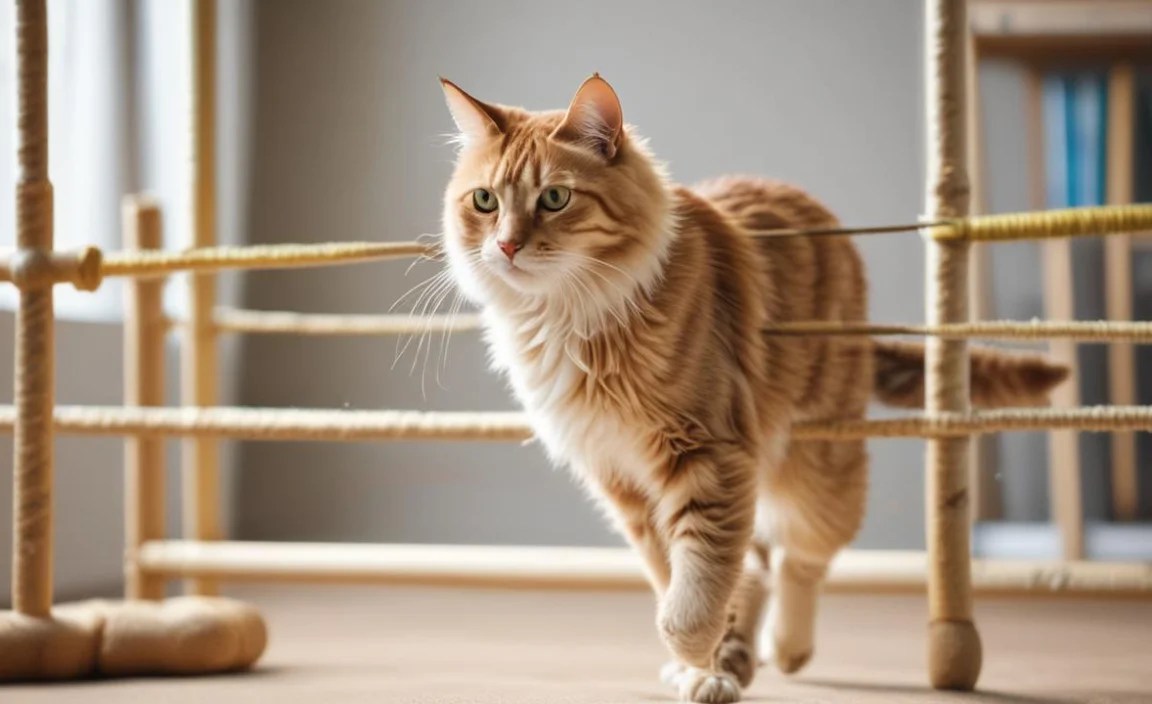
What can you use for obstacles? Look around your house. You probably have many things you can use. Cardboard boxes make great tunnels. Chairs can be hurdles. Hula hoops can be jump-throughs. Pillows can be soft landing spots. Be creative! The possibilities are endless. You can also buy some things. PVC pipes can be used to build frames. Fabric can be used to make tunnels. Just make sure everything is safe. Avoid sharp edges. Make sure everything is stable. You don’t want anything to fall over. A DIY cat agility course doesn’t have to be expensive. You can use what you have. You can also find cheap materials. The most important thing is to have fun. Your cat will appreciate the effort. They will love exploring the new course.
- Use cardboard boxes for tunnels.
- Use chairs as hurdles.
- Use hula hoops for jumps.
- Use pillows for soft landings.
- Get creative with materials.
Think about the size of your cat. A small cat needs smaller obstacles. A large cat needs larger obstacles. You want them to be comfortable. You also want them to be challenged. Don’t make the obstacles too easy. They will get bored. Don’t make them too hard. They will get frustrated. Find the right balance. This will keep them engaged. You can also change the obstacles often. This keeps the course interesting. Your cat will always have something new to explore. A DIY cat agility course is a great way to keep your cat active. It is also a great way to bond with them. So, start gathering your materials and building your course today!
Fun Fact or Stat: Cats can squeeze through spaces that are only slightly larger than their heads!
Cardboard Box Tunnels
Do you have any cardboard boxes? They are perfect for tunnels. Cats love tunnels. They feel safe and secure inside. Cut holes in the boxes. This will allow your cat to enter and exit. You can connect multiple boxes together. This will create a longer tunnel. Decorate the boxes. This will make the tunnel more fun. You can paint them. You can add stickers. You can even cut out windows. Just make sure the decorations are safe. Avoid anything that could be toxic. You can also add toys inside the tunnel. This will encourage your cat to explore. A cardboard box tunnel is a simple but effective obstacle. Your cat will love it. It is a great addition to any DIY cat agility course.
Chair Hurdles
Do you have any chairs? They can be used as hurdles. Cats love to jump. Hurdles provide a fun challenge. Start with low hurdles. Gradually make them higher. This will help your cat build confidence. Make sure the chairs are stable. You don’t want them to fall over. This could scare your cat. It could also injure them. You can also use other objects as hurdles. Books, pillows, and even toys can work. Be creative! The possibilities are endless. The key is to make the hurdles safe and fun. Your cat will enjoy the challenge. They will love jumping over the hurdles. This is a great way to add variety to your DIY cat agility course.
Hula Hoop Jumps
Have you ever used a hula hoop? They are not just for people. Cats can jump through them too. Hang the hula hoop from the ceiling. You can also use a stand. Make sure it is secure. You don’t want it to fall over. Start with the hula hoop low to the ground. Gradually raise it higher. This will help your cat learn to jump. You can also use treats to lure them through. This will make it more fun. A hula hoop jump is a great way to add excitement to your DIY cat agility course. Your cat will love the challenge. They will feel proud when they successfully jump through the hoop. It is a great way to keep them active and engaged.
Training Your Cat on the Agility Course
Training your cat takes time. Be patient. Start with short sessions. A few minutes each day is enough. Use positive reinforcement. Reward your cat with treats. Praise them when they do well. Never punish your cat. This will scare them. It will make them not want to play. Make it fun! If your cat is not enjoying it, stop. Try again later. You can also use a clicker. This can help your cat understand what you want. Click the clicker when they do the right thing. Then, give them a treat. Consistency is key. Train your cat at the same time each day. This will help them learn faster. A well-trained cat is a happy cat. They will enjoy the challenge of the agility course. They will also love spending time with you. A DIY cat agility course is a great way to bond with your cat.
- Be patient and consistent.
- Use positive reinforcement.
- Keep training sessions short.
- Make it fun for your cat.
- Use a clicker for training.
Remember, every cat is different. Some cats learn faster than others. Don’t get discouraged if your cat doesn’t learn right away. Just keep trying. Be patient and supportive. Your cat will eventually get it. The most important thing is to have fun. Enjoy spending time with your cat. The agility course is a great way to do that. You can also involve your kids in the training. This is a great family activity. Everyone can have fun together. So, start training your cat today. You will be amazed at what they can do. A DIY cat agility course is a great way to enrich your cat’s life.
Fun Fact or Stat: Cats can learn tricks just like dogs, but they require more patience and positive reinforcement!
Using Positive Reinforcement
Positive reinforcement is important. It means rewarding your cat. Give them treats when they do well. Praise them with your voice. Tell them they are a good cat. Pet them gently. These things will encourage them. They will want to keep trying. Never punish your cat. This will scare them. It will make them not want to play. Positive reinforcement is the best way to train. It is kind and effective. Your cat will learn faster. They will also enjoy the process more. A happy cat is a well-trained cat. So, use positive reinforcement. It will make a big difference. Your DIY cat agility course will be a success.
Keeping Training Sessions Short
Cats have short attention spans. They can get bored easily. That’s why it’s important to keep training sessions short. A few minutes each day is enough. You can always do more later. But start with short sessions. This will help your cat stay focused. It will also prevent them from getting frustrated. If you see your cat losing interest, stop. Try again later. Short and sweet is the key. Your cat will learn faster. They will also enjoy the training more. A DIY cat agility course is a fun activity. But it should not be stressful. Keep the sessions short and positive. Your cat will thank you for it.
Introducing New Obstacles Gradually
Don’t overwhelm your cat. Introduce new obstacles slowly. Start with one or two. Let them get used to them. Then, add more. This will prevent them from getting scared. It will also help them learn faster. If you introduce too many obstacles at once, they may get confused. They may also give up. So, take it slow. Be patient. Let your cat explore the new obstacles at their own pace. You can use treats to lure them. This will make it more fun. A DIY cat agility course should be a positive experience. Introduce new obstacles gradually. Your cat will be more likely to succeed. They will also enjoy the challenge more.
Common Mistakes to Avoid
It is easy to make mistakes. But you can avoid them. Don’t rush the process. Be patient with your cat. Don’t force them to do anything. This will scare them. Don’t use punishment. This will make them not want to play. Don’t make the course too difficult. Start with easy challenges. Don’t forget to have fun! A DIY cat agility course should be enjoyable for both of you. Avoid these mistakes. Your cat will be more likely to succeed. They will also enjoy the training more. A well-trained cat is a happy cat. So, take your time and be patient. Your cat will appreciate it.
- Rushing the training process.
- Forcing your cat to participate.
- Using punishment as a training method.
- Making the course too challenging.
- Forgetting to have fun.
Remember, every cat is different. Some cats learn faster than others. Don’t compare your cat to others. Focus on their progress. Celebrate their successes. Even small successes are important. They show that your cat is learning. They also encourage them to keep trying. A DIY cat agility course is a journey. Enjoy the ride. Don’t focus on the destination. The most important thing is to spend time with your cat. This will strengthen your bond. It will also make them happy. So, avoid these mistakes and enjoy the process.
Fun Fact or Stat: Cats have a natural instinct to explore and climb, which makes them well-suited for agility training!
Rushing the Training
Don’t rush the training. This is a common mistake. Cats need time to learn. They need time to adjust. Don’t expect them to learn everything overnight. Be patient. Start with the basics. Then, gradually move on to more difficult challenges. If you rush the training, your cat may get frustrated. They may also give up. So, take your time. Let them learn at their own pace. A DIY cat agility course is a marathon, not a sprint. Enjoy the journey. Your cat will appreciate your patience. They will be more likely to succeed.
Forcing Your Cat
Never force your cat to participate. This is a big mistake. Cats don’t like to be forced. It scares them. It makes them not want to play. If your cat doesn’t want to do something, don’t make them. Let them explore at their own pace. Let them choose what they want to do. You can encourage them with treats. You can praise them with your voice. But never force them. A DIY cat agility course should be fun. It should not be a stressful experience. Respect your cat’s boundaries. They will thank you for it. They will be more likely to participate in the future.
Using Punishment
Punishment is never the answer. It is a bad training method. It scares your cat. It makes them not want to play. It can also damage your relationship. Never hit your cat. Never yell at your cat. Never use any form of punishment. Positive reinforcement is the best way to train. Reward your cat when they do well. Praise them with your voice. Pet them gently. These things will encourage them. They will want to keep trying. A DIY cat agility course should be a positive experience. Use positive reinforcement. Avoid punishment. Your cat will be happier and more successful.
Maintaining Your Cat Agility Course
Maintenance is important. It keeps your course safe. It also keeps it interesting. Check the course regularly. Look for any damage. Replace anything that is broken. Clean the course. Remove any dirt or debris. This will prevent your cat from getting sick. Change the course often. This keeps it interesting. Your cat will always have something new to explore. A well-maintained course is a happy course. Your cat will enjoy spending time on it. A DIY cat agility course is an investment. Take care of it. It will provide years of fun for you and your cat.
- Regularly inspect the course.
- Replace damaged or broken parts.
- Clean the course frequently.
- Change the layout to keep it interesting.
- Store the course properly when not in use.
Think about the safety of your cat. A damaged course can be dangerous. Sharp edges can cut them. Loose parts can trip them. Make sure everything is secure. Check the course before each use. This will prevent accidents. You can also involve your kids in the maintenance. This is a great way to teach them responsibility. They can help you clean the course. They can also help you change the layout. A DIY cat agility course is a family project. Everyone can participate. So, take the time to maintain your course. It will be worth it.
Fun Fact or Stat: A well-maintained agility course can last for years, providing endless fun and exercise for your cat!
Regular Inspections
Inspect your course often. Look for any damage. Check the tunnels for holes. Check the hurdles for stability. Check the jumps for safety. Replace anything that is broken or damaged. This will prevent accidents. It will also keep your cat safe. Regular inspections are important. They are a key part of maintaining your DIY cat agility course. Make it a habit. Check the course before each use. Your cat will thank you for it.
Cleaning the Course
Clean your course regularly. This will prevent the spread of germs. It will also keep your cat healthy. Wipe down the surfaces with a damp cloth. Use a mild cleaner. Avoid harsh chemicals. They can be harmful to your cat. Vacuum the area around the course. This will remove any dirt or debris. Cleaning the course is important. It is a key part of maintaining your DIY cat agility course. Make it a habit. Clean the course at least once a week. Your cat will thank you for it.
Changing the Layout
Don’t let your cat get bored. Change the layout of the course often. This will keep it interesting. It will also challenge them. Move the obstacles around. Add new obstacles. Remove old obstacles. This will create a new experience for your cat. They will love exploring the new layout. Changing the layout is important. It is a key part of maintaining your DIY cat agility course. Make it a habit. Change the layout at least once a month. Your cat will thank you for it.
| Obstacle | Material | Maintenance | Safety Tips |
|---|---|---|---|
| Tunnels | Cardboard, Fabric | Check for tears, Clean regularly | Ensure proper ventilation, No sharp edges |
| Hurdles | PVC pipes, Chairs | Check stability, Replace broken parts | Adjust height for cat’s ability, Soft landing area |
| Jumps | Hula hoops, Stands | Check for secure hanging, Clean regularly | Start low, Gradual increase in height |
| Weave Poles | PVC pipes, Wooden dowels | Check for stability, Ensure proper spacing | Smooth surface, Avoid sharp edges |
Advanced DIY Cat Agility Course Ideas
Want to take your course to the next level? There are many advanced ideas. Add a climbing wall. This will challenge your cat’s strength. Add a balance beam. This will challenge their coordination. Add weave poles. This will challenge their agility. You can also create a themed course. Design it around a holiday or a movie. Be creative! The possibilities are endless. A DIY cat agility course can be anything you want it to be. Just make sure it is safe and fun. Your cat will appreciate the effort. They will love exploring the new challenges.
- Add a climbing wall.
- Incorporate a balance beam.
- Include weave poles.
- Create a themed course.
- Use interactive toys.
Remember, advanced ideas require more planning. They also require more materials. But they are worth it. They will provide your cat with even more stimulation. They will also make the course more interesting for you. A DIY cat agility course is a journey. There is always something new to learn. There is always something new to try. So, don’t be afraid to experiment. Be creative. Have fun. Your cat will appreciate it. They will love exploring the new challenges you create.
Fun Fact or Stat: Some cats have even competed in organized agility competitions!
Climbing Wall
Does your cat love to climb? A climbing wall is perfect. It will challenge their strength. It will also give them a place to explore. You can build a climbing wall out of wood. Add shelves and platforms. Cover it with carpet. This will give your cat something to grip. Make sure the wall is stable. You don’t want it to fall over. A climbing wall is a great addition to any DIY cat agility course. Your cat will love it. They will spend hours climbing and exploring.
Balance Beam
Does your cat have good balance? A balance beam is a great challenge. It will test their coordination. It will also help them improve their balance. You can build a balance beam out of wood. Make it narrow. Cover it with carpet. This will give your cat something to grip. Make sure the beam is stable. You don’t want it to wobble. A balance beam is a great addition to any DIY cat agility course. Your cat will love it. They will enjoy the challenge of walking across the beam.
Weave Poles
Do you want to challenge your cat’s agility? Weave poles are perfect. They will test their coordination. They will also help them improve their agility. You can use PVC pipes or wooden dowels. Place them in a row. Space them evenly apart. Your cat will have to weave in and out of the poles. This requires a lot of coordination. It also requires a lot of focus. Weave poles are a great addition to any DIY cat agility course. Your cat will love it. They will enjoy the challenge of weaving through the poles.
Summary
Creating a DIY cat agility course is a rewarding experience. It provides physical and mental stimulation for your feline friend. You can use common household items to build obstacles. This makes it an affordable and creative project. Training your cat on the course strengthens your bond. It also helps reduce boredom and destructive behavior. Remember to be patient and use positive reinforcement. This will make the training process enjoyable for both of you. With a little planning and effort, you can create a fun and engaging activity for your cat.
Maintaining the course is also important. Regularly inspect the obstacles for damage. Clean them to prevent the spread of germs. Change the layout to keep it interesting. By following these tips, you can ensure that your DIY cat agility course provides years of fun and exercise for your beloved pet.
Conclusion
Building a DIY cat agility course is a fantastic way to enrich your cat’s life. It offers a fun and engaging way for them to exercise. It also provides mental stimulation. You can use simple materials to create a challenging and rewarding environment. Remember to be patient and positive. Your cat will appreciate the effort. They will love spending time with you on the course. So, get creative and start building today!
Frequently Asked Questions
Question No 1: What materials can I use to build a DIY cat agility course?
Answer: You can use many common household items. Cardboard boxes make great tunnels. Chairs can be hurdles. Hula hoops can be jump-throughs. PVC pipes can be used to build frames. Fabric can be used to make tunnels. Be creative and resourceful. Just make sure everything is safe for your cat. Avoid sharp edges and toxic materials. Get your kids involved. They can help you find materials. They can also help you design the course. Building a DIY cat agility course can be a fun family project.
Question No 2: How do I train my cat to use the agility course?
Answer: Training your cat takes time and patience. Start with short sessions. A few minutes each day is enough. Use positive reinforcement. Reward your cat with treats. Praise them when they do well. Never punish your cat. This will scare them. It will make them not want to play. Use a clicker to mark good behavior. Introduce new obstacles gradually. Be consistent with your training. Your cat will eventually learn to navigate the course. Remember to have fun! A DIY cat agility course should be enjoyable for both of you.
Question No 3: How much space do I need for a cat agility course?
Answer: The amount of space depends on the size of the course. A small course can fit in a living room. A larger course may require a basement or a backyard. Consider the size of your cat. They need enough room to move freely. They need to be able to run and jump. Measure the space before you start building. This will help you plan the layout. You can also adjust the course to fit the available space. A DIY cat agility course can be adapted to any size room. Just be creative and resourceful.
Question No 4: Is a DIY cat agility course safe for my cat?
Answer: Safety is very important. Make sure all materials are safe. Avoid sharp edges and toxic materials. Secure all obstacles. You don’t want anything to fall over. Supervise your cat while they are using the course. This will prevent accidents. Start with easy challenges. Gradually make them harder. This will help your cat build confidence. A DIY cat agility course can be safe if you take the necessary precautions. Always prioritize your cat’s safety.
Question No 5: How often should I change the layout of the agility course?
Answer: Change the layout regularly. This will keep the course interesting. It will also challenge your cat. You can change the layout every few weeks. You can also change it whenever your cat seems bored. Try new obstacle combinations. Add new obstacles. Remove old obstacles. This will create a new experience for your cat. A DIY cat agility course should be dynamic. It should always be evolving. This will keep your cat engaged and entertained.
Question No 6: What are the benefits of a DIY cat agility course?
Answer: A DIY cat agility course has many benefits. It provides physical exercise for your cat. This helps them stay healthy and fit. It also provides mental stimulation. This keeps their minds sharp. It strengthens the bond between you and your cat. You spend time together. You play together. This creates a stronger connection. It can reduce behavioral problems. A tired cat is a good cat. It is also a fun and creative project for you. You can design the course. You can build the obstacles. You can train your cat. It is a rewarding experience.


