
How to Keep a British Shorthair Calm Indoors: Easy Tips

Keeping a British Shorthair calm indoors involves providing plenty of enrichment, a predictable routine, and a safe, comfortable environment. Regular playtime, scratching posts, puzzle feeders, and quiet resting spots are essential. Consistency in feeding times and minimizing stressors also contribute to a relaxed and happy cat.
Is your British Shorthair a little too energetic indoors? Or perhaps easily stressed by changes at home? You’re not alone. Many owners find it challenging to keep these typically laid-back cats calm and content, especially in an indoor environment. The good news is that with a few adjustments to their surroundings and routine, you can create a peaceful haven for your beloved feline. This guide will walk you through proven strategies to help your British Shorthair stay relaxed, happy, and well-adjusted inside your home. We’ll explore everything from environmental enrichment to managing anxiety triggers, ensuring your furry friend thrives in their indoor domain.
Understanding Your British Shorthair’s Temperament

British Shorthairs are known for their calm and easygoing nature. However, like all cats, they have individual personalities and needs. Understanding their breed-specific traits can help you tailor your approach to keeping them calm indoors.
Typical British Shorthair Traits
- Docile and Affectionate: They enjoy human company but are not overly demanding.
- Independent: They are comfortable spending time alone, which suits indoor living.
- Playful: They still need regular play to stay physically and mentally stimulated.
- Sensitive: They can be easily stressed by loud noises, sudden changes, or unfamiliar environments.
These traits mean that while they adapt well to indoor life, they require an environment that caters to their need for both stimulation and tranquility. Knowing this is the first step in creating a calm and happy home for your British Shorthair.
Creating a Calm Environment
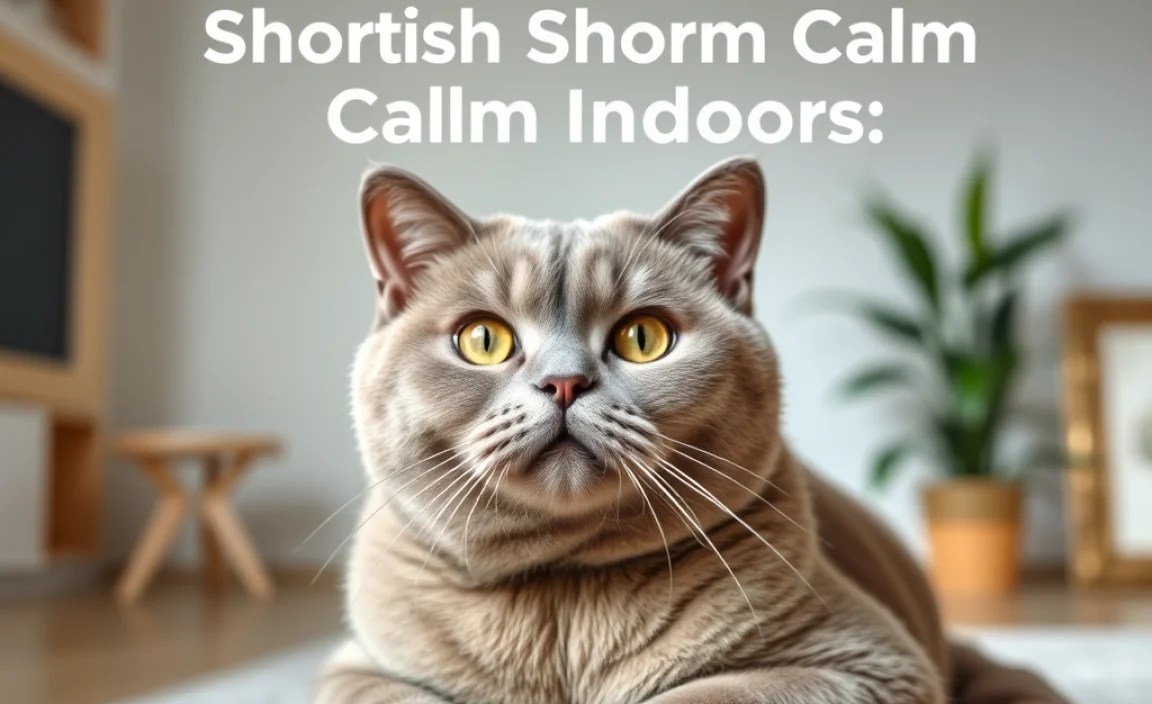
The environment plays a crucial role in your cat’s overall well-being. By making a few adjustments, you can significantly reduce stress and promote a sense of security for your British Shorthair.
Safe Spaces
Cats need places where they can retreat and feel safe. These safe havens should be easily accessible but away from high-traffic areas. According to the RSPCA, providing these spaces helps cats cope with stress and anxiety.
- Cat Trees: Offer vertical space and a sense of security.
- Covered Beds: Provide a cozy, enclosed space.
- Quiet Rooms: Ensure they have access to a room where they can be alone.
Minimizing Stressors
Identifying and reducing stressors is vital. Common stressors include loud noises, unfamiliar visitors, and changes in routine.
- Soundproofing: Use curtains, rugs, and furniture to absorb sound.
- Gradual Introductions: Introduce new people or pets slowly and calmly.
- Consistent Routine: Maintain a regular feeding and play schedule.
Temperature and Lighting
British Shorthairs are sensitive to temperature changes. Ensure the indoor temperature is comfortable, typically between 68°F and 77°F (20°C and 25°C). Soft, natural lighting is also preferable to harsh artificial lights.
Enrichment and Play

A bored cat is often a stressed cat. Providing plenty of enrichment and play opportunities can help your British Shorthair expend energy and stay mentally stimulated, which contributes to a calmer demeanor.
Interactive Play
Interactive play sessions mimic hunting behavior and provide essential exercise. The Cornell Feline Health Center recommends at least 15-20 minutes of interactive play daily.
- Feather Wands: Engage their hunting instincts with chasing and pouncing.
- Laser Pointers: Provide a fun chase, but always end with a physical toy to “catch.”
- Toy Mice: Encourage them to stalk, chase, and capture their “prey.”
Puzzle Feeders
Puzzle feeders challenge your cat mentally and slow down eating, preventing boredom and overeating.
- Rolling Feeders: Dispense food as the cat rolls the toy.
- Hidden Compartment Feeders: Require the cat to solve a puzzle to access the food.
Scratching Posts
Scratching is a natural behavior that helps cats relieve stress and maintain their claws. Providing multiple scratching posts in different materials can satisfy this need.
- Vertical Posts: Allow for a full-body stretch.
- Horizontal Scratchers: Offer a different scratching angle.
- Cardboard Scratchers: A popular and affordable option.
Routine and Consistency
Cats thrive on routine. A predictable daily schedule helps them feel secure and reduces anxiety.
Feeding Schedule
Feed your British Shorthair at the same times each day. Consistency in meal times helps regulate their digestion and provides a sense of predictability.
Playtime Schedule
Incorporate playtime into their daily routine. Regular play sessions help them expend energy and reduce boredom.
Litter Box Maintenance
Keep the litter box clean and accessible. Cats are fastidious creatures, and a dirty litter box can cause stress and lead to inappropriate elimination.
Diet and Nutrition

A balanced diet is essential for your cat’s overall health and well-being. Proper nutrition can also play a role in managing anxiety and promoting a calm demeanor.
High-Quality Cat Food
Choose a cat food that is high in protein and low in carbohydrates. Look for brands that use real meat as the primary ingredient.
Hydration
Ensure your cat has access to fresh, clean water at all times. Dehydration can lead to stress and other health problems. Consider using a cat water fountain to encourage drinking.
Supplements
Certain supplements may help reduce anxiety in cats. Always consult with your veterinarian before adding any supplements to your cat’s diet.
- L-Theanine: An amino acid that promotes relaxation.
- Omega-3 Fatty Acids: Can help reduce inflammation and improve mood.
Managing Anxiety Triggers
Identifying and managing anxiety triggers is crucial for keeping your British Shorthair calm indoors. Common triggers include loud noises, changes in the environment, and separation anxiety.
Loud Noises
Cats have sensitive hearing, and loud noises can be very stressful. Minimize exposure to loud noises by:
- Closing Windows: To block out street noise.
- Using White Noise: To mask sudden loud sounds.
- Providing a Safe Space: Where they can retreat during noisy events like thunderstorms.
Changes in the Environment
Cats are creatures of habit, and changes in their environment can be unsettling. Introduce changes gradually and provide reassurance.
- New Furniture: Introduce new items slowly and allow them to explore at their own pace.
- Moving Homes: Provide familiar bedding and toys to help them adjust to the new environment.
Separation Anxiety
Some cats experience separation anxiety when left alone. You can help alleviate this by:
- Providing Entertainment: Leave out puzzle feeders and toys to keep them occupied.
- Using Calming Pheromones: Like Feliway, to create a sense of security.
- Gradual Desensitization: Practice short departures and gradually increase the time you are away.
Using Calming Aids
Calming aids can be a helpful tool in managing anxiety and promoting relaxation in British Shorthairs. These aids come in various forms, including pheromone diffusers, calming treats, and anxiety vests.
Pheromone Diffusers
Pheromone diffusers release synthetic feline facial pheromones, which mimic the natural pheromones that cats use to mark their territory as safe and secure. According to The International Cat Association (TICA), these diffusers can help reduce stress and anxiety in cats.
- Feliway: A popular brand of pheromone diffuser that is widely recommended by veterinarians.
- Comfort Zone: Another reputable brand that offers similar benefits.
Calming Treats
Calming treats contain ingredients like L-theanine, chamomile, and valerian root, which have natural calming properties. These treats can be given as a daily supplement or as needed during stressful situations.
- Composure Chews: A popular brand that contains a blend of calming ingredients.
- Zylkene: A supplement derived from milk protein that promotes relaxation.
Anxiety Vests
Anxiety vests apply gentle, constant pressure to the cat’s body, which can have a calming effect. This is similar to how swaddling can calm a baby. These vests can be particularly helpful during thunderstorms, fireworks, or car rides.
- ThunderShirt: A well-known brand of anxiety vest that is designed to reduce anxiety in cats.
Recognizing Signs of Stress
Being able to recognize the signs of stress in your British Shorthair is essential for addressing their anxiety and promoting a calm environment. Common signs of stress in cats include:
| Sign of Stress | Description |
|---|---|
| Hiding | Withdrawing from social interaction and seeking secluded places. |
| Excessive Grooming | Over-grooming, which can lead to bald patches or skin irritation. |
| Changes in Appetite | Eating more or less than usual. |
| Litter Box Issues | Urinating or defecating outside the litter box. |
| Aggression | Becoming more irritable or aggressive towards people or other pets. |
| Vocalization | Excessive meowing, hissing, or growling. |
| Restlessness | Pacing or an inability to settle down. |
If you notice any of these signs, it’s important to take steps to identify and address the underlying cause of stress. This may involve consulting with your veterinarian or a certified cat behaviorist.
When to Seek Professional Help
While many strategies can help keep your British Shorthair calm indoors, some situations may require professional intervention. If your cat’s anxiety is severe or persistent, it’s important to seek help from a veterinarian or a certified cat behaviorist.
Veterinarian
Your veterinarian can rule out any underlying medical conditions that may be contributing to your cat’s anxiety. They can also prescribe medication to help manage anxiety in severe cases.
Certified Cat Behaviorist
A cat behaviorist can help you identify the root cause of your cat’s anxiety and develop a customized behavior modification plan. They can also provide guidance on creating a calm and enriching environment for your cat.
FAQ: Keeping Your British Shorthair Calm
Here are some frequently asked questions about keeping British Shorthairs calm indoors:
Why is my British Shorthair suddenly more anxious?
Sudden anxiety can be caused by changes in the environment, new pets or people, loud noises, or underlying health issues. Consult your vet to rule out medical causes.
How much playtime does my British Shorthair need?
Aim for at least 15-20 minutes of interactive play per day. This helps expend energy and reduces boredom, which can lead to anxiety.
Are pheromone diffusers safe for cats?
Yes, pheromone diffusers like Feliway are generally safe for cats. They mimic natural feline pheromones and can help reduce stress and anxiety.
What are some natural calming remedies for cats?
Natural calming remedies include L-theanine, chamomile, and valerian root. These can be found in calming treats or supplements.
How can I help my British Shorthair adjust to a new home?
Provide familiar bedding and toys, create safe spaces, and introduce changes gradually. Use pheromone diffusers to create a sense of security.
What should I do if my cat is scared of visitors?
Provide a safe space where your cat can retreat during visits. Introduce visitors slowly and calmly, and avoid forcing interaction.
Can diet affect my cat’s anxiety?
Yes, a balanced diet is essential for overall health and well-being. Certain supplements, like omega-3 fatty acids, may also help reduce anxiety.
Conclusion
Keeping a British Shorthair calm indoors requires a holistic approach that addresses their environmental, physical, and emotional needs. By creating a safe and enriching environment, providing plenty of play and mental stimulation, and managing anxiety triggers, you can help your furry friend thrive in their indoor domain. Remember, consistency is key, and patience is essential. With the right strategies and a little bit of love, you can create a peaceful and happy home for your beloved British Shorthair. If you ever feel overwhelmed or notice persistent anxiety, don’t hesitate to seek professional help from your veterinarian or a certified cat behaviorist. They can provide tailored advice and support to ensure your cat lives a calm, comfortable, and fulfilling life indoors.


