
British Shorthair Meal Portion Calculator: Free Guide

Quick Summary: Determining the right meal portion for your British Shorthair depends on their age, weight, activity level, and food type. A general guideline is to feed an adult British Shorthair about 1/2 to 3/4 cup of dry food daily, split into two meals. However, using a precise British Shorthair meal portion calculator, along with vet guidance, will help you fine-tune portions to keep your feline friend healthy and happy.
Is your British Shorthair the picture of feline health, or are you struggling to figure out just how much to feed them? It’s a common worry for many of us who adore this breed. Overfeeding can lead to obesity, while underfeeding can cause nutritional deficiencies. Figuring out the right balance can feel like a constant puzzle!
Don’t worry; you’re not alone! Many British Shorthair owners face this challenge. In this guide, I’ll walk you through how to calculate the perfect meal portions for your British Shorthair, ensuring they get exactly what they need to thrive. We’ll explore factors like age, activity level, and the type of food you choose. Plus, I’ll share some handy tips and tools to make mealtime a breeze. Let’s get started and ensure your British Shorthair stays healthy and happy!
Understanding Your British Shorthair’s Nutritional Needs

Before diving into calculations, let’s understand what makes your British Shorthair’s nutritional needs unique. Like all cats, they are obligate carnivores, meaning they require a diet rich in animal protein. But beyond that, several factors influence how much they should eat.
Key Factors Influencing Meal Portions
- Age: Kittens, adults, and seniors have different dietary requirements.
- Weight: An overweight cat needs fewer calories than a cat at an ideal weight.
- Activity Level: More active cats need more calories to fuel their adventures.
- Health Conditions: Certain health issues may require specific dietary adjustments. Always consult your vet.
- Type of Food: Dry, wet, and raw foods have different caloric densities, impacting portion sizes.
Nutritional Requirements by Life Stage
A British Shorthair’s dietary needs change as they grow. Here’s a breakdown by life stage:
- Kittens (Up to 1 Year): Kittens need nutrient-rich food to support rapid growth. Look for kitten-specific formulas. According to the RSPCA, kittens need more frequent meals than adult cats.
- Adults (1-7 Years): Adult cats need a balanced diet to maintain their weight and energy levels.
- Seniors (7+ Years): Senior cats may need fewer calories and more easily digestible food. Some senior formulas include supplements for joint health.
Step-by-Step Guide to Calculating Meal Portions

Now, let’s get practical! Here’s how to calculate the right meal portions for your British Shorthair:
Step 1: Determine Your Cat’s Ideal Weight
Start by assessing whether your cat is at a healthy weight. You should be able to feel their ribs without pressing too hard, and they should have a visible waistline when viewed from above. If you’re unsure, consult your veterinarian.
Step 2: Calculate Daily Calorie Needs
Use the following formula to estimate your cat’s daily calorie needs, also known as Resting Energy Requirement (RER). This formula is widely recommended by veterinary nutritionists:
RER = (Body weight in kilograms ^0.67) x 70
If you know your cat’s weight in pounds, convert it to kilograms by dividing by 2.2.
For example, let’s say your British Shorthair weighs 11 pounds (5 kg):
RER = (5^0.67) x 70 = Approximately 280 calories per day
Step 3: Adjust for Activity Level
Next, adjust the RER based on your cat’s activity level using the following multipliers. These multipliers are based on recommendations from veterinary nutrition experts:
- Inactive/Neutered: RER x 1.2
- Normal Activity: RER x 1.4
- Active: RER x 1.6
- Kitten: RER x 2.0 – 2.5
- Pregnant/Lactating: RER x 2.0 – 4.0
So, if your 11-pound British Shorthair is normally active:
Daily Calorie Needs = 280 x 1.4 = 392 calories per day
Step 4: Choose the Right Cat Food
Select a high-quality cat food that meets your British Shorthair’s needs. Look for foods with a named protein source (like chicken or fish) as the first ingredient. Avoid foods with excessive fillers or artificial additives.
Step 5: Determine Calorie Content of the Food
Check the food label for the calorie content, usually listed as “kcal/cup” or “kcal/kg.” This information is crucial for determining how much to feed.
For example, let’s say the food you’ve chosen contains 400 kcal per cup.
Step 6: Calculate the Portion Size
Divide your cat’s daily calorie needs by the calorie content of the food to determine the portion size.
Portion Size = Daily Calorie Needs / Calorie Content per Cup
Using our example:
Portion Size = 392 calories / 400 kcal per cup = Approximately 0.98 cups per day
This means you should feed your British Shorthair approximately 0.98 cups of this particular food each day. Divide this amount into two or more meals.
Tools and Resources for Easy Calculation

While the steps above provide a thorough method, several tools can simplify the process:
- Online Calculators: Many websites offer cat calorie calculators. Input your cat’s weight, age, and activity level, and the calculator will estimate their daily calorie needs.
- Smartphone Apps: Several apps are designed to help you track your pet’s food intake and manage their diet.
- Veterinary Nutritionists: If you’re unsure, consult a veterinary nutritionist for personalized recommendations.
Example Meal Plan
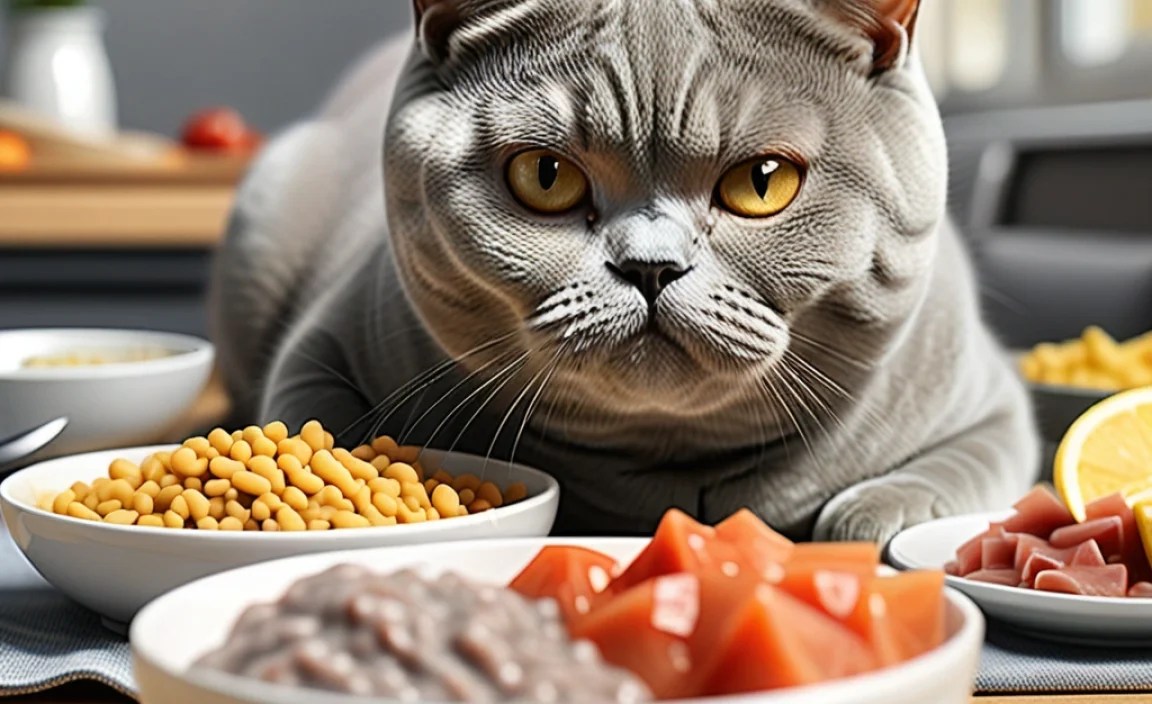
Here’s a sample meal plan for our 11-pound, normally active British Shorthair, assuming the chosen food has 400 kcal per cup:
- Total Daily Food: Approximately 0.98 cups
- Meal 1 (Morning): 0.49 cups
- Meal 2 (Evening): 0.49 cups
Remember to adjust this plan based on your cat’s individual needs and the specific food you’re using.
Special Considerations
Keep these special considerations in mind when planning your British Shorthair’s meals:
Wet vs. Dry Food
Wet food has a higher moisture content and can be beneficial for cats who don’t drink enough water. However, it’s also typically lower in calories than dry food, so you’ll need to feed a larger volume. Dry food is more calorie-dense and can help maintain dental health.
Treats
Treats should only make up a small portion of your cat’s daily calorie intake—no more than 10%. Choose healthy treats and adjust meal portions accordingly.
Health Conditions
If your British Shorthair has any health conditions, such as diabetes or kidney disease, your veterinarian may recommend a special diet. Follow their recommendations carefully.
Monitoring Your British Shorthair’s Weight and Adjusting Portions
Regularly monitor your cat’s weight and body condition. If they’re gaining weight, reduce their portions. If they’re losing weight, increase their portions. Adjust gradually and consult your vet if you have concerns.
How to Weigh Your Cat at Home
If your cat is cooperative, you can weigh them at home using a regular bathroom scale. Here’s how:
- Weigh yourself first.
- Weigh yourself while holding your cat.
- Subtract your weight from the combined weight to determine your cat’s weight.
Alternatively, you can use a pet scale for more accurate measurements.
Common Mistakes to Avoid
Here are some common mistakes to avoid when feeding your British Shorthair:
- Free-Feeding: Leaving food out all day can lead to overeating and obesity.
- Ignoring Food Labels: Always read the food label to determine the calorie content and feeding guidelines.
- Not Adjusting for Activity Level: An indoor cat needs fewer calories than an outdoor cat.
- Giving Too Many Treats: Treats should be given in moderation.
- Not Consulting Your Vet: If you’re unsure about your cat’s dietary needs, consult your veterinarian.
British Shorthair Feeding Schedule
British Shorthairs thrive on routine. Establishing a consistent feeding schedule can help regulate their appetite and prevent overeating. Here’s a sample feeding schedule:
| Time | Activity | Portion |
|---|---|---|
| 7:00 AM | Morning Meal | 1/2 of Daily Portion |
| 6:00 PM | Evening Meal | 1/2 of Daily Portion |
| Throughout the Day | Small Healthy Treats (Optional) | As appropriate (within 10% daily calorie limit) |
Adjust this schedule to fit your lifestyle and your cat’s needs. Consistency is key!
Specific Dietary Needs of British Shorthairs
British Shorthairs are prone to certain health issues, such as hypertrophic cardiomyopathy (HCM) and polycystic kidney disease (PKD). A proper diet can help manage these conditions:
- HCM: A diet low in sodium and rich in taurine can support heart health.
- PKD: A diet low in phosphorus can help slow the progression of kidney disease.
Always consult your veterinarian for specific dietary recommendations if your British Shorthair has any health concerns.
Transitioning to a New Food
When switching to a new cat food, do it gradually to avoid digestive upset. Mix a small amount of the new food with the old food, gradually increasing the amount of new food over 7-10 days. This allows your cat’s digestive system to adjust.
Step-by-Step Transition Guide
- Day 1-2: 25% new food, 75% old food
- Day 3-4: 50% new food, 50% old food
- Day 5-6: 75% new food, 25% old food
- Day 7-10: 100% new food
Monitor your cat’s stool during the transition. If they develop diarrhea or vomiting, slow down the transition or consult your vet.
Hydration: Ensuring Your British Shorthair Drinks Enough Water
Proper hydration is essential for your British Shorthair’s health. Make sure they have access to fresh, clean water at all times. Some cats prefer running water, so consider a pet fountain.
Tips to Encourage Water Intake
- Provide multiple water sources.
- Use a pet fountain.
- Offer wet food.
- Flavor the water with a small amount of tuna juice (occasionally).
Understanding Cat Food Labels
Cat food labels can be confusing, but understanding them is crucial for making informed decisions about your British Shorthair’s diet. Here’s what to look for:
- Ingredients List: Ingredients are listed in descending order by weight. Look for a named protein source (like chicken or fish) as the first ingredient.
- Guaranteed Analysis: This section lists the minimum percentages of crude protein and crude fat, and the maximum percentages of crude fiber and moisture.
- AAFCO Statement: This statement indicates whether the food is “complete and balanced” for your cat’s life stage, according to the Association of American Feed Control Officials (AAFCO).
- Calorie Content: Look for the calorie content listed as “kcal/cup” or “kcal/kg.”
British Shorthair Meal Portion Calculator: Putting It All Together
Let’s recap how to use the British Shorthair meal portion calculator effectively:
- Determine Ideal Weight: Assess your cat’s body condition.
- Calculate RER: Use the formula (Body weight in kilograms ^0.67) x 70.
- Adjust for Activity: Multiply RER by the appropriate activity level factor.
- Choose Quality Food: Select a food that meets your cat’s nutritional needs.
- Check Calorie Content: Find the kcal/cup on the food label.
- Calculate Portion Size: Divide daily calorie needs by the calorie content per cup.
- Monitor and Adjust: Regularly check your cat’s weight and adjust portions as needed.
FAQ: Feeding Your British Shorthair
How much should I feed my British Shorthair kitten?
British Shorthair kittens need more calories than adult cats to support their growth. Feed them kitten-specific food 3-4 times a day, adjusting the portion size based on their weight and activity level. Always refer to the food label for guidance.
Can I feed my British Shorthair human food?
While some human foods are safe for cats in small amounts (like cooked chicken or fish), it’s best to stick to a high-quality cat food. Avoid toxic foods like chocolate, onions, and grapes. According to the Cornell Feline Health Center, certain human foods can be harmful to cats.
How often should I feed my adult British Shorthair?
Most adult British Shorthairs do well with two meals a day—one in the morning and one in the evening. This helps regulate their appetite and prevent overeating.
What are the best cat food brands for British Shorthairs?
Look for brands that offer high-quality, balanced nutrition. Some popular options include Royal Canin, Purina Pro Plan, and Hill’s Science Diet. Always choose a food that is appropriate for your cat’s age and health condition.
How can I tell if my British Shorthair is overweight?
You should be able to feel your cat’s ribs without pressing too hard, and they should have a visible waistline when viewed from above. If you’re unsure, consult your veterinarian for an assessment.
Is wet food or dry food better for my British Shorthair?
Both wet and dry food have their benefits. Wet food helps with hydration, while dry food can promote dental health. You can feed your British Shorthair a combination of both, or choose the one that best suits their needs and preferences.
What should I do if my British Shorthair is a picky eater?
Try offering different flavors and textures of food. Warm the food slightly to enhance its aroma. Avoid leaving food out for too long, as it can become stale. If your cat continues to refuse food, consult your veterinarian to rule out any underlying health issues.
Conclusion
Calculating the right meal portions for your British Shorthair doesn’t have to be a daunting task. By understanding their nutritional needs, using a British Shorthair meal portion calculator, and monitoring their weight and body condition, you can ensure they stay healthy and happy. Remember, every cat is unique, so don’t hesitate to consult your veterinarian for personalized recommendations. With a little effort and attention, you can provide your British Shorthair with the perfect diet to help them thrive for years to come!


