
Indoor Feeding Station Setup for British Shorthairs: Easy!

Setting up an indoor feeding station for your British Shorthair involves choosing the right bowls, location, and setup to promote their health and well-being. Consider your cat’s needs, such as whisker fatigue or potential competition with other pets. A clean, quiet, and easily accessible feeding area will help your British Shorthair thrive.
Bringing a British Shorthair into your home means welcoming a loving and loyal companion. These cats are known for their calm demeanor and plush coats. One important part of caring for your British Shorthair is setting up the right feeding station. Many owners face challenges such as messy eaters, multiple pets, or cats with sensitive whiskers. Don’t worry! Setting up the perfect indoor feeding station doesn’t have to be hard.
In this guide, I’ll walk you through each step. We’ll cover choosing the right bowls, finding the perfect location, and preventing common feeding problems. By the end, you’ll have a feeding station that keeps your British Shorthair happy and healthy. Let’s get started!
Why a Dedicated Feeding Station Matters for British Shorthairs

British Shorthairs have unique needs that make a dedicated feeding station essential. Here’s why:
- Weight Management: British Shorthairs are prone to weight gain. A consistent feeding station helps you monitor their food intake and prevent overeating.
- Whisker Fatigue: Their sensitive whiskers can become strained if they have to squeeze them into narrow bowls. Special bowls can prevent this discomfort.
- Cleanliness: A designated area keeps food and water contained, reducing mess and making cleaning easier.
- Stress Reduction: A quiet, safe feeding spot away from high-traffic areas minimizes stress during meal times.
Providing the right feeding station shows your British Shorthair you care about their comfort and health. This contributes to a happier and healthier life for your feline friend.
Choosing the Right Bowls and Dishes

The right bowls can make a big difference in your British Shorthair’s feeding experience. Consider these factors:
Material
- Stainless Steel: Durable, easy to clean, and hygienic. Stainless steel bowls don’t harbor bacteria and are dishwasher-safe.
- Ceramic: Heavy and stable, reducing the chance of spills. Make sure they are lead-free and food-safe.
- Plastic: Lightweight and inexpensive, but can scratch easily, harboring bacteria. Avoid if your cat is sensitive to plastic.
Shape and Depth
- Shallow Bowls: These prevent whisker fatigue, a common issue for British Shorthairs. Look for bowls with wide, shallow designs.
- Tilted Bowls: These can help cats with neck or back issues by reducing the strain of bending down to eat.
- Elevated Bowls: Similar to tilted bowls, elevated bowls can improve posture and digestion for some cats.
Size
- Appropriate Capacity: Choose a bowl size that matches your cat’s food portion. Avoid bowls that are too large, as they can encourage overeating.
- Stable Base: Ensure the bowl has a wide, stable base to prevent tipping, especially if your cat is an enthusiastic eater.
Recommended Bowls
Here are a few bowls that are particularly well-suited for British Shorthairs:
- Dr. Catsby’s Food Bowl: Designed to prevent whisker fatigue with its wide, shallow design.
- PetFusion Elevated Cat Bowl: Offers an elevated design for better posture and digestion.
- UPSKY Double Cat Bowls: A double bowl setup for food and water, made from stainless steel for easy cleaning.
By choosing the right bowls, you can ensure your British Shorthair eats comfortably and stays healthy.
Selecting the Perfect Location

The location of your British Shorthair’s feeding station is just as important as the bowls themselves. Here’s what to consider:
Quiet and Low-Traffic Area
Cats prefer to eat in a calm environment. Choose a spot away from loud noises, busy hallways, and other disturbances. A quiet corner in the kitchen or dining room often works well.
Accessibility
Make sure the feeding station is easily accessible to your cat at all times. Avoid placing it behind furniture or in areas that are difficult to reach, especially for older cats or kittens.
Away from Litter Box
Cats don’t like to eat near their litter box. Keep the feeding station and litter box in separate areas to encourage good hygiene and appetite.
Multiple Cats
If you have multiple cats, provide separate feeding stations to prevent competition and stress. Place the stations far enough apart that each cat feels secure while eating. According to The International Cat Association (TICA), resource guarding is a common issue among cats, so creating separate spaces can help prevent conflicts.
Surface
Place the bowls on an easy-to-clean surface, such as a mat or tray. This will help contain spills and make cleaning up after meal times much easier.
Ideal Locations
- Kitchen Corner: A quiet corner in the kitchen, away from the main cooking area.
- Dining Room: A spot in the dining room that is not frequently used.
- Dedicated Pet Area: If you have a dedicated pet area, this can be an ideal location.
Choosing the right location ensures your British Shorthair feels safe and comfortable while eating, promoting better digestion and overall well-being.
Step-by-Step Guide to Setting Up Your Indoor Feeding Station

Now that you know what to consider, here’s a step-by-step guide to setting up your indoor feeding station:
Step 1: Gather Your Supplies
Before you start, gather all the necessary supplies:
- Chosen bowls (food and water)
- Food mat or tray
- Cat food
- Water
- Cleaning supplies (paper towels, pet-safe cleaner)
Step 2: Choose the Location
Select a quiet, low-traffic area away from the litter box. Ensure it’s easily accessible for your cat.
Step 3: Set Up the Bowls
Place the food and water bowls on the mat or tray. If you’re using elevated bowls, make sure they are stable and at a comfortable height for your cat.
Step 4: Fill the Bowls
Fill the food bowl with the appropriate portion of your British Shorthair’s food. Fill the water bowl with fresh, clean water. The RSPCA recommends providing fresh water daily to keep your cat hydrated.
Step 5: Introduce Your Cat
Lead your cat to the new feeding station and allow them to explore. If they seem hesitant, try placing a few treats near the bowls to encourage them.
Step 6: Monitor and Adjust
Observe your cat’s behavior at the feeding station. Make sure they are eating comfortably and not experiencing any stress or discomfort. Adjust the setup as needed. For instance, you might need to change the bowl type or location if your cat seems unhappy.
Step 7: Maintain Cleanliness
Clean the bowls daily to prevent bacteria growth. Wipe up any spills on the mat or tray. Regularly wash the bowls in hot, soapy water or in the dishwasher.
Addressing Common Feeding Problems
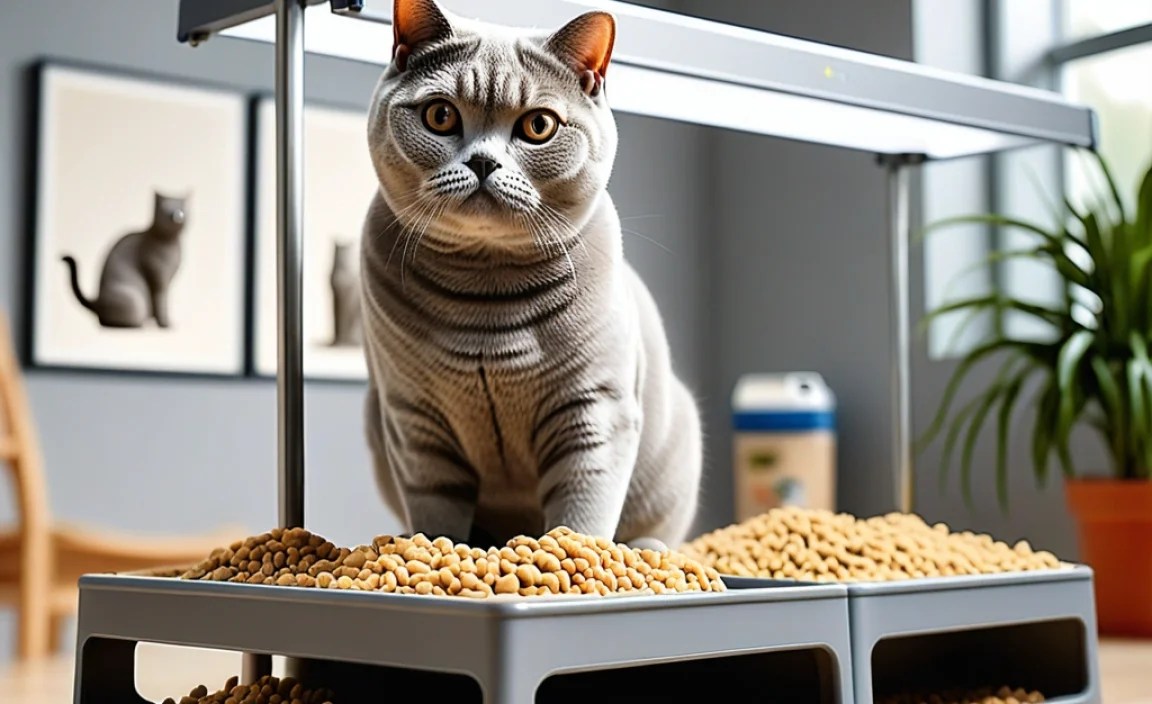
Even with the best setup, you might encounter some common feeding problems. Here’s how to address them:
Whisker Fatigue
- Problem: Cat avoids the bowl or eats messily.
- Solution: Switch to a wide, shallow bowl that doesn’t strain their whiskers.
Eating Too Fast
- Problem: Cat vomits after eating or seems uncomfortable.
- Solution: Use a slow-feeder bowl with obstacles that force the cat to eat more slowly.
Multiple Cats Competing for Food
- Problem: One cat bullies the others or steals their food.
- Solution: Provide separate feeding stations in different areas. Consider using microchip feeders that only open for the designated cat.
Messy Eating
- Problem: Food is scattered around the feeding area.
- Solution: Use a larger mat or tray to catch spills. Consider a bowl with higher sides to contain the food.
Lack of Appetite
- Problem: Cat isn’t eating enough or seems uninterested in food.
- Solution: Consult with your veterinarian to rule out any underlying health issues. Try different types of food or warm the food slightly to enhance its aroma.
By addressing these common issues, you can ensure your British Shorthair has a positive and healthy feeding experience.
Advanced Feeding Station Ideas
Once you have the basics covered, you can explore some advanced feeding station ideas to further enhance your British Shorthair’s dining experience:
Automatic Feeders
Automatic feeders dispense food at scheduled times, which can be helpful for managing your cat’s weight and ensuring they are fed even when you’re not home. Look for models with portion control and timer settings.
Puzzle Feeders
Puzzle feeders provide mental stimulation and slow down eating. These feeders require your cat to solve a puzzle to access the food, which can help prevent boredom and overeating.
Water Fountains
Many cats prefer drinking from running water. A water fountain provides a continuous supply of fresh, filtered water, encouraging your cat to stay hydrated. According to the Cornell Feline Health Center, encouraging water intake is crucial for preventing urinary issues in cats.
Microchip Feeders
Microchip feeders are ideal for multi-cat households. These feeders only open for the cat with the registered microchip, preventing food stealing and ensuring each cat gets the right amount of food.
DIY Feeding Stations
If you’re feeling creative, you can build your own feeding station. Use materials like wood or repurposed furniture to create a custom setup that fits your space and your cat’s needs. Make sure the materials are safe and non-toxic.
Table: Comparing Bowl Materials
| Material | Pros | Cons | Best For |
|---|---|---|---|
| Stainless Steel | Durable, easy to clean, hygienic | Can be noisy, may slide | General use, easy cleaning |
| Ceramic | Heavy, stable, aesthetically pleasing | Can break, may contain lead | Cats who tip bowls, stylish homes |
| Plastic | Lightweight, inexpensive | Scratches easily, can harbor bacteria | Temporary use, budget-conscious owners |
Table: Troubleshooting Common Feeding Issues
| Problem | Possible Cause | Solution |
|---|---|---|
| Whisker Fatigue | Deep or narrow bowls | Switch to shallow, wide bowls |
| Eating Too Fast | Boredom, competition | Use slow-feeder bowls, separate feeding areas |
| Messy Eating | Bowl shape, cat’s eating habits | Use a larger mat, bowls with higher sides |
| Lack of Appetite | Health issues, food preferences | Consult vet, try different foods |
| Food Stealing | Competition, resource guarding | Use microchip feeders, separate feeding stations |
Maintaining a Clean and Safe Feeding Area
Keeping the feeding area clean is crucial for your British Shorthair’s health. Here’s how to maintain a clean and safe feeding area:
Daily Cleaning
- Bowls: Wash food and water bowls daily with hot, soapy water. Rinse thoroughly to remove any soap residue.
- Mat/Tray: Wipe up any spills on the mat or tray immediately. Wash the mat or tray regularly to prevent bacteria growth.
- Surrounding Area: Sweep or vacuum the surrounding area to remove any stray food particles or debris.
Weekly Cleaning
- Deep Clean Bowls: Once a week, disinfect the bowls with a pet-safe cleaner or run them through the dishwasher on a hot cycle.
- Wash Mats/Trays: Wash mats and trays in the washing machine or by hand with hot, soapy water.
Food Storage
- Proper Storage: Store cat food in an airtight container to keep it fresh and prevent pests.
- Check Expiration Dates: Always check the expiration dates on food packages and discard any expired food.
Hygiene Practices
- Wash Hands: Always wash your hands before and after handling cat food and bowls.
- Pet-Safe Cleaners: Use pet-safe cleaning products to avoid exposing your cat to harmful chemicals.
By following these cleaning practices, you can ensure your British Shorthair’s feeding area is always clean, safe, and healthy.
FAQ: Indoor Feeding Station for British Shorthairs
Q: What is whisker fatigue, and how can I prevent it?
Whisker fatigue occurs when a cat’s sensitive whiskers are overstimulated by touching the sides of a deep or narrow bowl. To prevent it, use wide, shallow bowls that allow your cat to eat without bending their whiskers.
Q: How often should I clean my cat’s food and water bowls?
You should clean your cat’s food and water bowls daily with hot, soapy water. This prevents bacteria growth and keeps the feeding area hygienic.
Q: Where is the best place to set up a feeding station in my home?
The best place is a quiet, low-traffic area away from the litter box. A corner in the kitchen or dining room often works well. Make sure it’s easily accessible for your cat.
Q: What type of food bowl is best for a British Shorthair?
Stainless steel or ceramic bowls are excellent choices. They are durable, easy to clean, and hygienic. Avoid plastic bowls, as they can scratch easily and harbor bacteria.
Q: How can I prevent my cat from eating too fast?
Use a slow-feeder bowl with obstacles that force your cat to eat more slowly. You can also try dividing their daily food portion into smaller, more frequent meals.
Q: I have multiple cats. How should I set up their feeding stations?
Provide separate feeding stations for each cat to prevent competition and stress. Place the stations far enough apart that each cat feels secure while eating. Microchip feeders can also help ensure each cat gets their designated food.
Q: Is it better to use elevated bowls for my British Shorthair?
Elevated bowls can be beneficial for some cats, especially those with neck or back issues. They can improve posture and digestion. However, not all cats need elevated bowls, so observe your cat’s eating behavior to determine if they would benefit.
Conclusion
Setting up the perfect indoor feeding station for your British Shorthair is a simple yet crucial part of their care. By choosing the right bowls, selecting the ideal location, and maintaining cleanliness, you can ensure your cat enjoys a comfortable and healthy dining experience. Remember to address common feeding problems and consider advanced feeding options to further enhance their well-being.
With a little attention to detail, you can create a feeding station that meets your British Shorthair’s unique needs, promoting their overall health and happiness. Happy feeding!


