
Indoor Water Fountain Tips for British Shorthairs: Easy Guide

Quick Summary: British Shorthairs often need encouragement to drink enough water. An indoor water fountain can help! Choose a fountain made of cat-safe materials like stainless steel or ceramic, and place it away from their food. Clean it regularly and try different types to see what your cat prefers. This can prevent dehydration and keep your British Shorthair healthy and happy.
Is your British Shorthair turning up their nose at their water bowl? It’s a common worry for us cat parents. These lovely cats, like many others, sometimes don’t drink enough water, which can lead to health problems. But don’t worry! A simple solution might be an indoor water fountain. These fountains provide fresh, moving water that can entice your cat to drink more.
This guide will walk you through everything you need to know about choosing, setting up, and maintaining a water fountain that your British Shorthair will adore. We’ll cover the best materials, placement tips, cleaning schedules, and even how to introduce your cat to their new water source. Let’s get started on keeping your furry friend hydrated!
Why British Shorthairs Need Water Fountains

British Shorthairs are prone to certain health issues where hydration plays a critical role. Encouraging them to drink more water can be a proactive step in keeping them healthy. Let’s look at the reasons why a water fountain is beneficial for this breed.
Health Benefits of Hydration
Proper hydration is vital for all cats, but especially for British Shorthairs. Adequate water intake helps with:
- Kidney Health: British Shorthairs can be prone to kidney issues. Water helps flush out toxins and supports kidney function.
- Urinary Tract Health: Staying hydrated reduces the risk of urinary tract infections and crystal formation.
- Preventing Constipation: Water helps keep their digestive system moving smoothly.
- Overall Well-being: Hydration keeps their coat healthy and supports all bodily functions.
Why Cats Prefer Moving Water
Cats often prefer drinking from running water sources due to instinct. In the wild, stagnant water can be contaminated. Moving water is naturally cooler and has more oxygen, making it more appealing. Indoor water fountains tap into this instinct, encouraging your British Shorthair to drink more.
Recognizing Dehydration in Your Cat
It’s important to know the signs of dehydration. If you notice any of these symptoms, consult your vet:
- Lethargy
- Loss of appetite
- Dry gums
- Sunken eyes
- Skin tenting (gently pinch the skin on the back of their neck; if it doesn’t snap back quickly, they might be dehydrated)
Choosing the Right Water Fountain

With so many options available, selecting the perfect water fountain for your British Shorthair can feel overwhelming. Here’s what to consider:
Material Matters: Safe Options for Your Cat
The material of the fountain is crucial for your cat’s health. Here are the best and worst options:
- Stainless Steel: This is a top choice. It’s hygienic, easy to clean, and doesn’t leach chemicals into the water.
- Ceramic: Another safe option, ceramic fountains are often aesthetically pleasing and easy to clean. Ensure the glaze is lead-free.
- Plastic: While plastic fountains are affordable, they can harbor bacteria and some cats are allergic to plastic. If you choose plastic, make sure it’s BPA-free and clean it frequently.
Types of Fountains: Which Will Your Cat Love?
Different fountains offer various features. Consider these types:
- Free-Falling Stream Fountains: These have a stream of water falling into a bowl. Many cats are drawn to the movement and sound.
- Bubbling Fountains: Water bubbles up from the center. These are quieter and might be better for cats who are easily spooked.
- Multi-Tier Fountains: These have different levels for drinking, which can be good for multi-cat households.
Size and Capacity: How Much Water Does Your Cat Need?
Consider your cat’s size and activity level when choosing a fountain. A larger fountain is better if you have multiple cats or are away from home for long periods. Generally, a fountain with a capacity of 2-3 liters is sufficient for one British Shorthair.
Filter Quality: Keeping the Water Clean
A good filter is essential for removing impurities and keeping the water fresh. Look for fountains with:
- Activated Carbon Filters: These remove odors and improve taste.
- Foam Filters: These catch hair and debris.
Replace the filters regularly, as recommended by the manufacturer.
Noise Level: A Quiet Fountain for a Calm Cat
British Shorthairs are known for their calm demeanor. A noisy fountain can scare them away. Look for fountains with quiet pumps. Read reviews to see what other cat owners say about the noise level.
Setting Up Your Water Fountain

Once you’ve chosen the perfect fountain, proper setup is key to getting your British Shorthair to use it.
Placement: Where to Put the Fountain
Placement is crucial. Here’s where to put (and not put) the fountain:
- Away from Food: Cats prefer not to drink near their food. Place the fountain in a separate area.
- Quiet Areas: Avoid noisy or high-traffic spots. A calm area will make your cat feel more comfortable.
- Easy Access: Make sure the fountain is easily accessible. Don’t put it in a corner or behind furniture.
- Multiple Locations: If you have a large home, consider multiple fountains.
Initial Introduction: Getting Your Cat Comfortable
Introducing your cat to the fountain gradually can help them adjust:
- Let Them Explore: Let your cat sniff and investigate the fountain before turning it on.
- Turn It On Briefly: Start with short periods of operation. See how your cat reacts.
- Encourage Interaction: Use a toy to entice them to play near the fountain.
- Don’t Force It: If your cat is scared, don’t force them. Try again later.
Dealing with Hesitant Cats
Some cats are wary of new things. If your British Shorthair is hesitant, try these tips:
- Use Familiar Water: Initially, fill the fountain with water from their old bowl.
- Add Catnip: A sprinkle of catnip near the fountain can make it more appealing.
- Patience is Key: It might take time for your cat to get used to the fountain. Be patient and consistent.
Maintaining Your Water Fountain
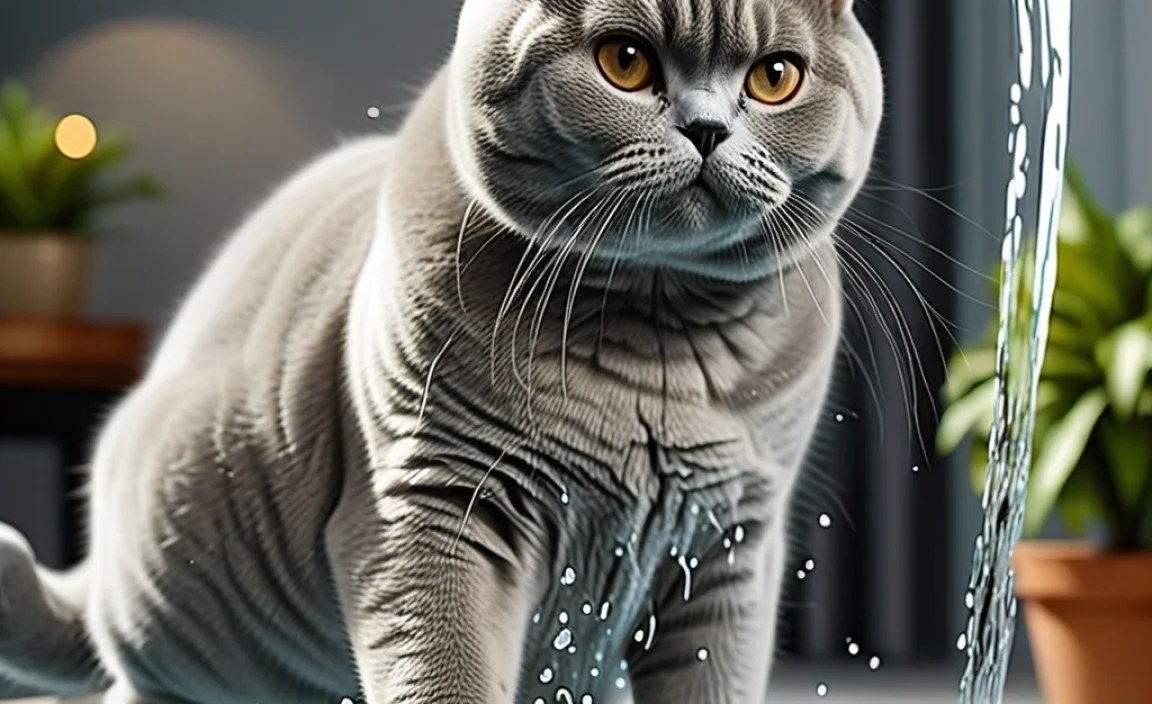
Regular maintenance is essential for keeping the fountain clean and your cat healthy.
Cleaning Schedule: How Often to Clean
A consistent cleaning schedule prevents bacteria buildup:
- Daily: Rinse the fountain and refill with fresh water daily.
- Weekly: Disassemble and clean all parts with soap and water. Pay special attention to the pump.
- Monthly: Deep clean the fountain with a mild vinegar solution to remove mineral deposits. Rinse thoroughly.
Cleaning Products: What to Use and Avoid
Use safe cleaning products to protect your cat:
- Safe: Mild dish soap, white vinegar, and water.
- Avoid: Harsh chemicals, bleach, and strong detergents. These can be harmful to your cat.
Filter Replacement: When to Change the Filters
Replace filters regularly to maintain water quality:
- Foam Filters: Replace every 1-2 months.
- Carbon Filters: Replace every month.
Always follow the manufacturer’s recommendations.
Pump Maintenance: Keeping It Running Smoothly
The pump is the heart of the fountain. Keep it clean to ensure it runs efficiently:
- Disassemble Regularly: Take the pump apart and clean it every few weeks.
- Remove Debris: Hair and debris can clog the pump. Clean these out regularly.
- Check for Wear: Inspect the pump for signs of wear and replace it if needed.
Troubleshooting Common Issues
Even with the best setup, you might encounter some problems. Here’s how to handle them:
Fountain Not Working
If the fountain stops working, check these things:
- Power Supply: Make sure the fountain is plugged in and the outlet is working.
- Pump: Check if the pump is clogged or damaged. Clean or replace it as needed.
- Water Level: Ensure the water level is sufficient. The pump might not work if the water level is too low.
Cat Still Not Drinking
If your cat still isn’t drinking from the fountain, try these tips:
- Try a Different Fountain: Your cat might not like the type of fountain you chose. Experiment with different styles.
- Change the Water: Some cats are sensitive to tap water. Try filtered or bottled water.
- Add Flavor: A small amount of tuna juice or chicken broth can entice them to drink.
Fountain is Too Noisy
If the fountain is too noisy, try these solutions:
- Check the Water Level: Low water levels can cause the pump to make more noise.
- Clean the Pump: A dirty pump can be noisy. Clean it thoroughly.
- Place on a Mat: A rubber mat under the fountain can dampen the sound.
| Issue | Possible Cause | Solution |
|---|---|---|
| Fountain not working | Power issues, pump problems, low water | Check power, clean/replace pump, add water |
| Cat not drinking | Fountain type, water taste, reluctance | Try different fountain, change water, add flavor |
| Fountain too noisy | Low water, dirty pump | Add water, clean the pump |
Expert Tips for British Shorthair Hydration
As a long-time British Shorthair enthusiast, I’ve gathered some additional tips to help you keep your feline friend hydrated.
Wet Food: An Additional Source of Hydration
Wet food is a great way to increase your cat’s water intake. It has a much higher moisture content than dry food. Consider incorporating wet food into their diet, especially if they are prone to dehydration. According to the Purina, wet food contains approximately 70-80% water, compared to dry food which contains only 5-10%.
Multiple Water Sources: Bowls and Fountains
Provide multiple water sources in different locations. Some cats prefer bowls, while others prefer fountains. Having both ensures that your cat has options. Place water bowls away from food and litter boxes to encourage drinking.
Experiment with Water Types
Some cats are picky about their water. Experiment with different types of water to see what your British Shorthair prefers. Options include:
- Tap Water: Make sure it’s safe and clean.
- Filtered Water: Removes impurities and can improve taste.
- Bottled Water: A good option if your tap water isn’t great.
Monitor Water Intake
Keep an eye on how much water your cat is drinking. If you notice a sudden decrease in water intake, consult your vet. This could be a sign of an underlying health issue.
FAQ: Water Fountains for British Shorthairs
Why is my British Shorthair not drinking enough water?
Many cats, including British Shorthairs, don’t naturally drink a lot of water. This can be due to their ancestry (desert-dwelling animals) or simply personal preference. A water fountain can entice them with fresh, moving water.
Are plastic water fountains safe for cats?
Plastic fountains can be safe if they are BPA-free. However, stainless steel or ceramic fountains are generally better as they are easier to clean and less likely to harbor bacteria. Some cats are also sensitive to plastic.
How often should I clean my cat’s water fountain?
You should rinse and refill the fountain daily. A thorough cleaning, including disassembling and washing all parts, should be done weekly. Monthly deep cleaning with a vinegar solution is also recommended.
Where is the best place to put a water fountain for my cat?
Place the fountain in a quiet, easily accessible area away from their food bowl and litter box. Cats prefer to drink in a separate location from where they eat and eliminate.
How do I get my cat to use a new water fountain?
Let your cat explore the fountain before turning it on. Start with short periods of operation and encourage interaction with toys. If your cat is hesitant, try using water from their old bowl or adding a sprinkle of catnip nearby.
What type of water is best for a cat water fountain?
Filtered water is often the best choice as it removes impurities and improves taste. Tap water is fine if it’s safe and clean. Avoid distilled water, as it lacks essential minerals.
How do I know if my British Shorthair is dehydrated?
Signs of dehydration include lethargy, loss of appetite, dry gums, sunken eyes, and skin tenting. If you notice these symptoms, consult your veterinarian immediately.
Conclusion
Encouraging your British Shorthair to drink enough water is crucial for their health and well-being. An indoor water fountain is a fantastic tool to achieve this. By choosing the right fountain, setting it up properly, and maintaining it regularly, you can provide your cat with a fresh, appealing water source. Remember to consider their preferences, be patient, and monitor their water intake. With these tips, you can ensure your British Shorthair stays hydrated and happy for years to come. Here’s to a healthier, happier, and well-hydrated feline friend!


