
How British Shorthairs Interact With Visitors: Secret?

British Shorthairs are generally known for being calm and friendly. When visitors come over, they might greet them with curiosity, observe from a distance, or simply continue napping. Each cat has its own personality, so some may be more outgoing than others. Patience and gentle introductions are key to making visitors feel welcome in your British Shorthair’s home.
Does your British Shorthair hide every time the doorbell rings? Or maybe they’re a bit too curious and jump on your guests! It’s normal to wonder how these charming cats will react to new people. Understanding their behavior can make visits smoother for everyone. No need to worry – with a few simple tips, you can help your British Shorthair feel comfortable and confident around visitors.
In this guide, we’ll explore how British Shorthairs typically interact with visitors and what you can do to encourage positive interactions. We’ll cover everything from setting up a welcoming environment to understanding your cat’s body language. Plus, we’ll answer common questions to help you handle any situation. Let’s get started and make your home a happy place for both your cat and your guests!
Understanding the British Shorthair Temperament

British Shorthairs are known for their laid-back and adaptable nature. Understanding their general temperament can help you predict and manage their interactions with visitors. Let’s explore what makes them tick.
Typical British Shorthair Traits
British Shorthairs are often described as:
- Calm: They aren’t usually hyperactive.
- Independent: They enjoy their own company.
- Affectionate: They show love on their own terms.
- Playful: They have bursts of energy.
- Intelligent: They are quick learners.
These traits influence how they react to new people in their space. Knowing this helps you create a welcoming environment.
How Temperament Affects Interactions
A British Shorthair’s temperament plays a big role in how they greet visitors:
- Shy Cats: May hide or observe from a distance.
- Confident Cats: May approach and sniff curiously.
- Anxious Cats: May display signs of stress like hissing.
Understanding these potential reactions allows you to tailor your approach and ensure your cat feels safe. According to the RSPCA, providing a safe space for your cat is crucial for their well-being.
Individual Differences
Keep in mind that every cat is unique. Just like people, British Shorthairs have their own personalities. Some might be more social, while others are more reserved. Pay attention to your cat’s specific behavior and adjust your strategies accordingly. This individualized approach will lead to happier interactions.
Preparing Your Home for Visitors

Creating a welcoming environment is key to helping your British Shorthair feel comfortable when visitors arrive. Here are some steps you can take to prepare your home.
Creating a Safe Space
A safe space is a retreat where your cat can go to feel secure. This could be a:
- Quiet room
- Cozy bed
- High perch
Make sure your cat has easy access to this space at all times, especially when visitors are present. According to the Cornell Feline Health Center, providing a safe haven can significantly reduce stress in cats.
Introducing Scents
Cats rely heavily on their sense of smell. Before visitors arrive, you can:
- Rub a cloth on your visitor’s hands or clothes.
- Place the cloth near your cat’s bed.
This helps your cat become familiar with the new scent in a non-threatening way. Familiar scents can reduce anxiety and make them more accepting of new people.
Using Pheromone Diffusers
Pheromone diffusers release synthetic feline pheromones that can have a calming effect. Plug one in a few days before visitors are expected to arrive. These diffusers can help create a more relaxed atmosphere in your home.
Managing Introductions
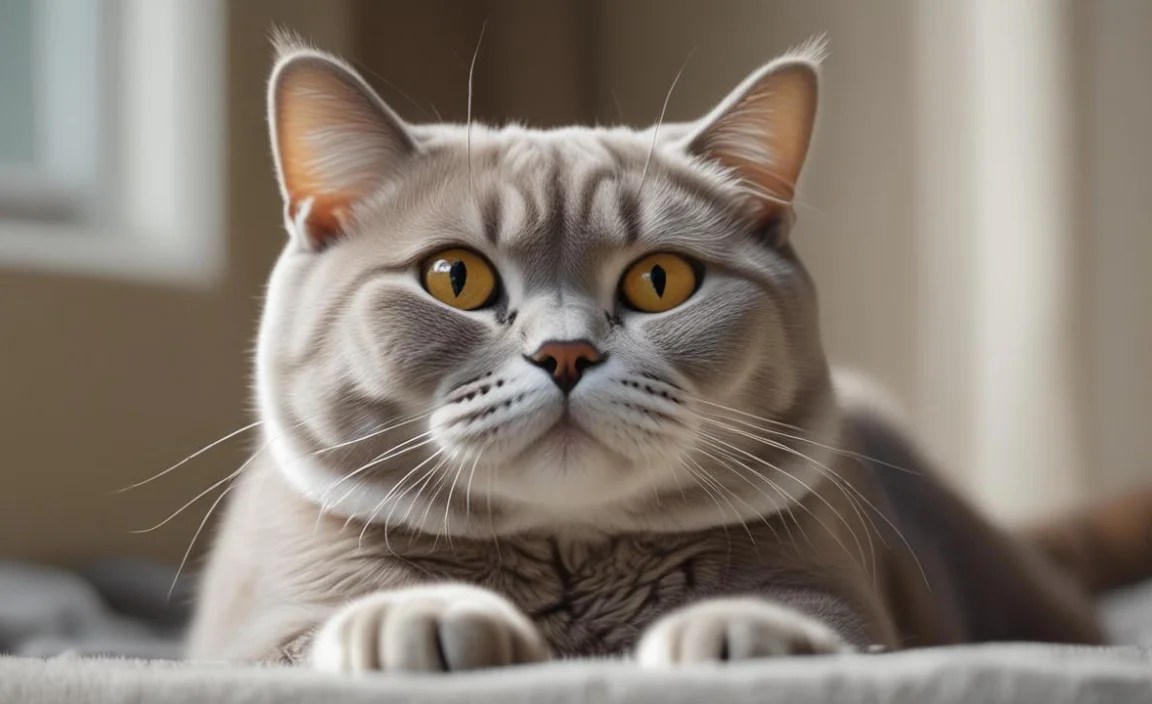
How you introduce your British Shorthair to visitors can make a big difference in their comfort level. Here’s a step-by-step guide to managing these introductions.
Initial Meeting
When visitors first arrive:
- Keep your cat in their safe space if they seem anxious.
- Allow your cat to approach the visitor on their own terms.
- Avoid forcing interaction.
Letting your cat take the lead reduces stress and helps them feel in control of the situation.
Encouraging Positive Interactions
If your cat seems curious, encourage positive interactions by:
- Having the visitor offer a treat.
- Suggesting gentle petting if your cat approaches.
- Avoiding loud noises or sudden movements.
Positive reinforcement can help your cat associate visitors with pleasant experiences.
Reading Your Cat’s Body Language
Understanding your cat’s body language is crucial. Look for these signs:
| Body Language | Meaning |
|---|---|
| Relaxed posture | Comfortable and calm |
| Ears forward | Curious and interested |
| Tail up | Friendly and confident |
| Hissing or flattened ears | Anxious or scared |
If your cat shows signs of stress, give them space and time to adjust. For more information, The International Cat Association (TICA) offers resources on feline behavior.
Dealing with Different Scenarios

Every visit is different, and your British Shorthair’s reaction can vary. Here’s how to handle some common scenarios.
The Hiding Cat
If your cat hides when visitors arrive:
- Don’t force them out.
- Make sure their safe space is comfortable.
- Let them observe from a distance.
Eventually, curiosity may get the better of them, and they might venture out on their own.
The Overly Curious Cat
Some cats are very curious and might jump on visitors or try to get into their belongings. In this case:
- Provide distractions like toys.
- Redirect their attention with a treat.
- Ask visitors to ignore the behavior.
Discouraging the behavior without scolding can help them learn appropriate boundaries.
The Anxious Cat
If your cat shows signs of anxiety, such as hissing or trembling:
- Separate them from the visitors.
- Provide a quiet, safe space.
- Consider using a calming spray or diffuser.
Reducing their stress is the top priority. If anxiety is a recurring issue, consult with your veterinarian.
Tips for Visitors

Educating your visitors on how to interact with your British Shorthair can make a big difference. Share these tips with them.
Dos and Don’ts
Here are some guidelines for visitors:
- Do: Speak softly and move slowly.
- Do: Offer a treat if the cat approaches.
- Do: Respect the cat’s space.
- Don’t: Stare directly at the cat.
- Don’t: Make sudden movements or loud noises.
- Don’t: Force interaction.
These simple rules can help create a positive experience for your cat.
Understanding Cat Etiquette
Explain to your visitors that cats have their own way of communicating. For example:
- Slow blinks are a sign of trust.
- Rubbing against legs is a way of marking territory.
- A twitching tail can indicate irritation.
Understanding these cues can help visitors interact more respectfully with your British Shorthair.
Encouraging Play
If your cat seems receptive, encourage visitors to engage in gentle play. This could involve:
- Using a wand toy.
- Rolling a ball.
- Offering a scratching post.
Playtime can be a great way for your cat to bond with visitors.
Long-Term Strategies
Consistency is key to helping your British Shorthair become more comfortable with visitors over time. Here are some long-term strategies to consider.
Desensitization
Desensitization involves gradually exposing your cat to new people. You can start by:
- Playing recordings of doorbells or voices.
- Having a friend sit quietly in the room.
- Gradually increasing the duration and intensity of exposure.
This process helps your cat become less reactive to new stimuli.
Positive Reinforcement
Continue to use positive reinforcement to reward calm behavior around visitors. This could include:
- Treats
- Praise
- Playtime
Positive associations can help your cat develop a more positive attitude toward visitors.
Creating a Routine
Cats thrive on routine. Try to keep your cat’s daily schedule consistent, even when visitors are present. This can help them feel more secure and less stressed.
When to Seek Professional Help
If your British Shorthair consistently displays extreme anxiety or aggression toward visitors, it may be time to seek professional help. Here are some signs to watch for:
- Hiding for extended periods
- Refusing to eat or drink
- Aggressive behavior such as biting or scratching
- Excessive vocalization
A veterinarian or certified cat behaviorist can help you identify the underlying cause of the behavior and develop a treatment plan.
FAQ: British Shorthairs and Visitors
Will my British Shorthair ever like visitors?
Many British Shorthairs can learn to tolerate or even enjoy visitors with the right approach. Patience, positive reinforcement, and creating a safe environment are key.
Why does my British Shorthair hide from visitors?
Hiding is a common response to stress or unfamiliar situations. Your cat may feel insecure or overwhelmed by new people in their space. Providing a safe space and allowing them to adjust at their own pace can help.
How can I make my British Shorthair more social?
Gradual desensitization, positive reinforcement, and creating a calm environment can help your cat become more social. Start with brief, low-pressure interactions and reward calm behavior.
Is it normal for my British Shorthair to be aloof with visitors?
Yes, British Shorthairs are known for their independent nature. It’s normal for them to be reserved or aloof with visitors, especially if they are not familiar with them. Don’t force interaction; let them approach on their own terms.
What should I do if my British Shorthair hisses at visitors?
If your cat hisses at visitors, it’s a sign that they feel threatened or uncomfortable. Immediately remove them from the situation and provide a safe, quiet space. Avoid forcing interaction and give them time to calm down.
Can pheromone diffusers really help?
Yes, pheromone diffusers can help create a calming environment for your cat. These diffusers release synthetic feline pheromones that can reduce stress and anxiety, making your cat more comfortable around visitors.
How long will it take for my British Shorthair to adjust to visitors?
The time it takes for your cat to adjust to visitors varies depending on their individual personality and experiences. Some cats may adjust quickly, while others may take weeks or even months. Consistency and patience are essential.
Conclusion
Understanding how British Shorthairs interact with visitors is all about empathy and patience. By creating a safe environment, managing introductions carefully, and educating your visitors, you can help your feline friend feel more comfortable and confident. Remember, every cat is unique, so tailor your approach to suit their individual personality and needs. With consistency and positive reinforcement, you can create a harmonious home where both your cat and your guests feel welcome.


