
Historical Background of Abyssinian Cats: The Secret?

Abyssinian cats likely originated in Southeast Asia and the Indian Ocean coast, not Abyssinia (now Ethiopia). They were developed in Britain in the late 19th century, with early examples resembling today’s breed. The name “Abyssinian” became associated with these cats, and they’ve become one of the most popular short-haired breeds worldwide, known for their ticked coats and lively personalities.
Have you ever wondered about the mysterious origins of the Abyssinian cat? Many people assume they come directly from Ethiopia (formerly Abyssinia), but the real story is much more interesting. It’s easy to get confused by the name, but don’t worry! We’re here to unravel the historical background of these beautiful felines.
In this article, we’ll explore where Abyssinian cats truly came from, how they developed into the breed we know and love today, and some fascinating facts about their early history. Get ready to discover the surprising journey of the Abyssinian cat!
The Misunderstood Origins of the Abyssinian Cat

The Abyssinian cat’s name suggests a direct link to Abyssinia (now Ethiopia), but this is a common misconception. While the exact origins remain debated, current evidence points to Southeast Asia and the coast of the Indian Ocean as the more likely birthplace of the breed’s ancestors. Let’s dive into the details:
Challenging the Abyssinian Myth
For many years, a popular story claimed that British soldiers brought Abyssinian cats from Abyssinia to England in the 1860s. However, there is little evidence to support this. Genetic research and historical records suggest a different story.
Genetic Clues and Southeast Asia
Modern genetic studies indicate that the Abyssinian’s ancestors likely originated in Southeast Asia and coastal areas of the Indian Ocean. The unique ticked coat pattern, a hallmark of the breed, can be traced back to cats in these regions. Trade routes may have then carried these cats to other parts of the world, including the Middle East and Europe.
Harrison Weir and Early Breed Development
Harrison Weir, considered the “father of the cat fancy,” played a crucial role in the early development of many cat breeds. He included an Abyssinian cat in his book “Our Cats and All About Them,” published in 1889. Weir described the Abyssinian as having a ticked coat and a general resemblance to a wild rabbit, highlighting the breed’s distinctive appearance even in its early stages. It is important to note that cats during this time were not as strictly standardized as they are today, so there was some variation in appearance.
The Role of Britain in Developing the Breed

While the Abyssinian’s ancestors may not have originated in Abyssinia, Britain played a vital role in shaping the breed into what we know today. British cat fanciers in the late 19th century selectively bred cats with ticked coats, establishing the Abyssinian as a distinct breed.
Early Examples and Breed Standards
Early Abyssinian cats in Britain varied in appearance, but they shared the distinctive ticked coat pattern. Breeders worked to refine the breed’s characteristics, focusing on features such as coat color, body shape, and ear size. The first official breed standard for the Abyssinian was established in Britain, providing guidelines for breeders to follow.
Notable Early Abyssinian Cats
Several early Abyssinian cats are documented in historical records and photographs. One notable example is a cat named Zula, who was said to have been brought from Abyssinia. However, as mentioned earlier, the true origins of these early cats are often difficult to verify. Despite the uncertainties, these cats contributed to the gene pool of the developing Abyssinian breed.
The Abyssinian’s Journey to Popularity

After being developed in Britain, the Abyssinian cat quickly gained popularity around the world. Its striking appearance, intelligent nature, and playful personality made it a favorite among cat lovers.
Recognition by Cat Associations
The Abyssinian cat was officially recognized as a breed by various cat associations in the early 20th century. This recognition helped to further standardize the breed and promote its popularity. The Cat Fanciers’ Association (CFA) and The International Cat Association (TICA) are two major organizations that recognize the Abyssinian breed. The CFA recognized the Abyssinian in 1903, while TICA recognized it later, contributing to its widespread appeal.
Worldwide Appeal
Today, the Abyssinian is one of the most popular short-haired cat breeds in the world. It is known for its active and curious nature, as well as its distinctive ticked coat. Abyssinians are often described as intelligent, playful, and affectionate cats who enjoy interacting with their human families. Their adaptability and engaging personality have made them beloved companions in households worldwide.
The Ticked Coat: A Defining Feature

The Abyssinian cat’s most distinctive feature is its ticked coat. This unique coat pattern sets it apart from other breeds and contributes to its wild appearance.
What is a Ticked Coat?
A ticked coat is one in which each individual hair has bands of different colors. This creates a subtle, shimmering effect that is unique to the Abyssinian breed. The ticked pattern is caused by the agouti gene, which controls the distribution of pigment in the hair shaft. According to research published in the Journal of Heredity, the agouti gene plays a crucial role in determining coat patterns in various mammals, including cats.
Common Coat Colors
The most common coat colors for Abyssinian cats are:
- Ruddy: A warm brown color with black ticking.
- Red: A copper-red color with chocolate ticking.
- Blue: A soft gray color with dark gray ticking.
- Fawn: A light beige color with cream ticking.
The Genetics Behind the Ticked Pattern
The ticked pattern in Abyssinian cats is determined by a specific gene, the agouti gene. This gene controls the distribution of pigment in each hair, creating the banded effect. The dominant allele (A) allows for the expression of the ticked pattern, while the recessive allele (a) results in a solid color. For an Abyssinian to have the ticked pattern, it must have at least one copy of the dominant A allele.
Understanding the genetics behind the ticked pattern helps breeders maintain the breed’s distinctive appearance. Breeders carefully select cats with desirable traits to ensure that the ticked pattern is preserved in future generations.
Abyssinian Cat Characteristics
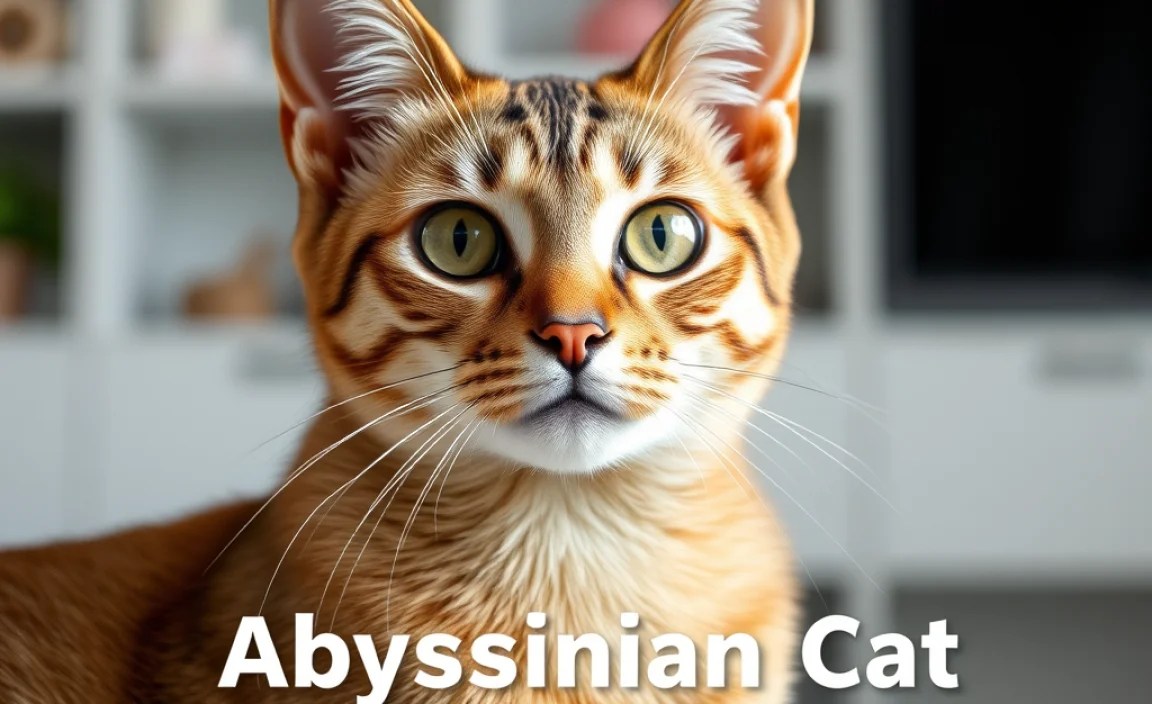
Beyond their historical background and distinctive ticked coat, Abyssinian cats are known for their unique physical and personality traits. Understanding these characteristics can help potential owners determine if an Abyssinian is the right fit for their lifestyle.
Physical Traits
Abyssinian cats are medium-sized with a lithe and muscular build. Here are some key physical characteristics:
- Body: Medium-sized, muscular, and graceful.
- Head: Wedge-shaped with large, expressive eyes.
- Ears: Large, pointed, and wide at the base.
- Legs and Paws: Long, slender legs with oval-shaped paws.
- Tail: Long and tapering.
Personality Traits
Abyssinians are known for their intelligence, curiosity, and playful nature. They are active cats who enjoy exploring their surroundings and interacting with their human families. Here are some common personality traits:
- Intelligent: Abyssinians are highly intelligent and can be trained to perform tricks.
- Curious: They are naturally curious and enjoy investigating new things.
- Playful: Abyssinians are active and playful, requiring plenty of toys and playtime.
- Affectionate: They are affectionate cats who enjoy spending time with their owners.
- Social: Abyssinians are social and get along well with other cats and even dogs.
Comparison with Other Breeds
To better understand the Abyssinian cat, here’s a comparison table with other popular breeds:
| Breed | Size | Coat Type | Personality | Activity Level |
|---|---|---|---|---|
| Abyssinian | Medium | Short, ticked | Intelligent, playful, affectionate | High |
| British Shorthair | Medium to Large | Short, dense | Calm, affectionate, easygoing | Moderate |
| Siamese | Medium | Short | Vocal, social, intelligent | High |
| Persian | Medium to Large | Long, flowing | Calm, docile, affectionate | Low |
Caring for an Abyssinian Cat
Providing proper care for an Abyssinian cat involves attention to their diet, exercise, grooming, and health. With the right care, Abyssinians can live long and healthy lives.
Diet and Nutrition
A balanced diet is crucial for maintaining the health and energy levels of an Abyssinian cat. Here are some key considerations:
- High-Quality Food: Choose a high-quality cat food that is rich in protein and essential nutrients.
- Portion Control: Monitor your cat’s food intake to prevent overeating and obesity.
- Fresh Water: Always provide fresh, clean water.
- Avoid Harmful Foods: Avoid feeding your cat foods that are toxic to cats, such as chocolate, onions, and grapes. The ASPCA offers a comprehensive list of foods to avoid to ensure your cat’s safety.
Exercise and Play
Abyssinians are active cats who require plenty of exercise and play. Here are some ways to keep them entertained:
- Interactive Toys: Provide interactive toys that stimulate their mind and body, such as puzzle toys and laser pointers.
- Climbing Structures: Offer climbing structures, such as cat trees and shelves, to satisfy their natural climbing instincts.
- Playtime: Schedule regular playtime sessions to bond with your cat and provide exercise.
Grooming Needs
Abyssinians have short coats that require minimal grooming. Here are some basic grooming tips:
- Brushing: Brush your cat’s coat weekly to remove loose hair and prevent mats.
- Nail Trimming: Trim your cat’s nails regularly to prevent overgrowth.
- Dental Care: Brush your cat’s teeth regularly to maintain dental health. The Cornell Feline Health Center recommends regular dental checkups and cleanings to prevent dental disease.
Health Considerations
Abyssinians are generally healthy cats, but they are prone to certain genetic conditions. Here are some health considerations:
- Progressive Retinal Atrophy (PRA): A degenerative eye disease that can lead to blindness.
- Pyruvate Kinase Deficiency (PKD): A genetic disorder that affects red blood cells.
- Regular Vet Checkups: Schedule regular vet checkups to monitor your cat’s health and detect any potential problems early.
FAQ About the Historical Background of Abyssinian Cats
1. Are Abyssinian cats really from Abyssinia (Ethiopia)?
No, despite their name, Abyssinian cats are not originally from Abyssinia (now Ethiopia). Genetic research suggests they likely originated in Southeast Asia and the coast of the Indian Ocean.
2. How did the Abyssinian cat get its name?
The exact reason for the name “Abyssinian” is unclear, but it may have been associated with cats that resembled those found in Abyssinia in the 19th century. The name stuck even though their true origins are elsewhere.
3. What is the most distinctive feature of the Abyssinian cat?
The most distinctive feature of the Abyssinian cat is its ticked coat. Each hair has bands of different colors, creating a unique, shimmering effect.
4. Are Abyssinian cats good pets for families?
Yes, Abyssinian cats are known for being intelligent, playful, and affectionate, making them great pets for families. They are also social and often get along well with children and other pets.
5. Do Abyssinian cats require a lot of grooming?
No, Abyssinian cats have short coats that require minimal grooming. Weekly brushing is usually sufficient to keep their coat healthy and shiny.
6. What are some common health issues in Abyssinian cats?
Some common health issues in Abyssinian cats include progressive retinal atrophy (PRA) and pyruvate kinase deficiency (PKD). Regular vet checkups can help detect and manage these conditions.
7. How can I keep my Abyssinian cat entertained?
Abyssinian cats are active and intelligent, so provide them with plenty of interactive toys, climbing structures, and playtime. Puzzle toys and laser pointers are great options to keep them mentally and physically stimulated.
Conclusion
The historical background of Abyssinian cats is a fascinating journey that challenges common misconceptions. While their name suggests an African origin, the evidence points to Southeast Asia as the likely birthplace of their ancestors. British cat fanciers played a crucial role in developing the breed into what we know and love today. Understanding their history, characteristics, and care needs can help you appreciate these wonderful cats even more. Whether you’re a seasoned cat owner or considering bringing an Abyssinian into your home, their unique history and vibrant personality make them a truly special breed.


