
Breed History of the Bullmastiff: The Powerful Secret

The Bullmastiff breed originated in 19th-century England, created by gamekeepers who needed a powerful, silent dog to deter poachers. They crossed the Mastiff, known for its size and strength, with the quicker, more agile Bulldog, resulting in a loyal, protective, and formidable guardian.
Do you know where the Bullmastiff breed comes from? Understanding your dog’s history isn’t just about fun facts – it gives you insights into their behavior and needs. Many people find the Bullmastiff’s background fascinating, but piecing together the whole story can be a bit confusing.
In this article, we’ll explore the Bullmastiff’s journey from its early days as a gamekeeper’s companion to its modern role as a beloved family pet. We’ll look at the breeds that contributed to its creation, the traits that made it so valuable, and how it has evolved over time. Let’s dive in!
A History of the Bullmastiff

The Bullmastiff’s history is rooted in 19th-century England, a time when large estates were plagued by poachers. Gamekeepers needed a dog that was strong enough to apprehend intruders but also intelligent enough to work silently and without causing undue harm. This led to the deliberate crossing of the Mastiff and the Bulldog, combining their best qualities into a new breed.
The Need for a New Breed
During the 1800s in England, poaching was a serious problem for landowners. Poachers would trespass on estates to steal game, such as deer and rabbits, often operating at night. Gamekeepers were tasked with protecting the land and its animals, but they needed a dog that could help them do their job effectively. Existing breeds either lacked the necessary size and strength or were too loud and aggressive.
The Old English Bulldog, though courageous and tenacious, was smaller and more confrontational than ideal. The Mastiff, on the other hand, had the size and power but sometimes lacked the agility and drive needed to track and apprehend poachers quickly. A cross between these two breeds seemed like the perfect solution.
The Blending of Bulldog and Mastiff
The exact origins are somewhat murky, but it’s generally accepted that the Bullmastiff is roughly 60% Mastiff and 40% Bulldog. This combination created a dog that was large and powerful, yet also agile and intelligent. The Mastiff contributed size, strength, and a powerful bite, while the Bulldog added tenacity, courage, and a lower center of gravity, making the resulting dog a formidable opponent.
Gamekeepers carefully selected dogs with the desired traits for breeding. They needed dogs that could track silently, knock down poachers without mauling them, and hold them until the gamekeeper arrived. The early Bullmastiffs were highly valued for their ability to do just that.
The “Gamekeeper’s Night Dog”
The Bullmastiff quickly became known as the “Gamekeeper’s Night Dog” because of its effectiveness in deterring poachers. These dogs were trained to work silently, using their keen senses to detect intruders. They would patrol the estates at night, often unleashed, and were capable of taking down even armed poachers.
Unlike some other guard dogs, the Bullmastiff was bred to apprehend and hold rather than to attack. This was an important distinction for gamekeepers, who wanted to minimize bloodshed and ensure that poachers could be brought to justice. The Bullmastiff’s combination of strength, courage, and restraint made it the ideal dog for the job.
Breed Characteristics and Traits

The Bullmastiff’s unique history has shaped its physical and behavioral traits. Understanding these characteristics is crucial for anyone considering bringing a Bullmastiff into their home.
Physical Attributes
The Bullmastiff is a large and powerful dog, with a well-muscled body and a broad head. Males typically stand 25 to 27 inches tall at the shoulder and weigh between 110 and 130 pounds. Females are slightly smaller, standing 24 to 26 inches tall and weighing between 100 and 120 pounds. According to the American Kennel Club (AKC), their size and build contribute to their imposing presence.
- Size: Large and muscular
- Coat: Short and dense
- Color: Fawn, red, or brindle
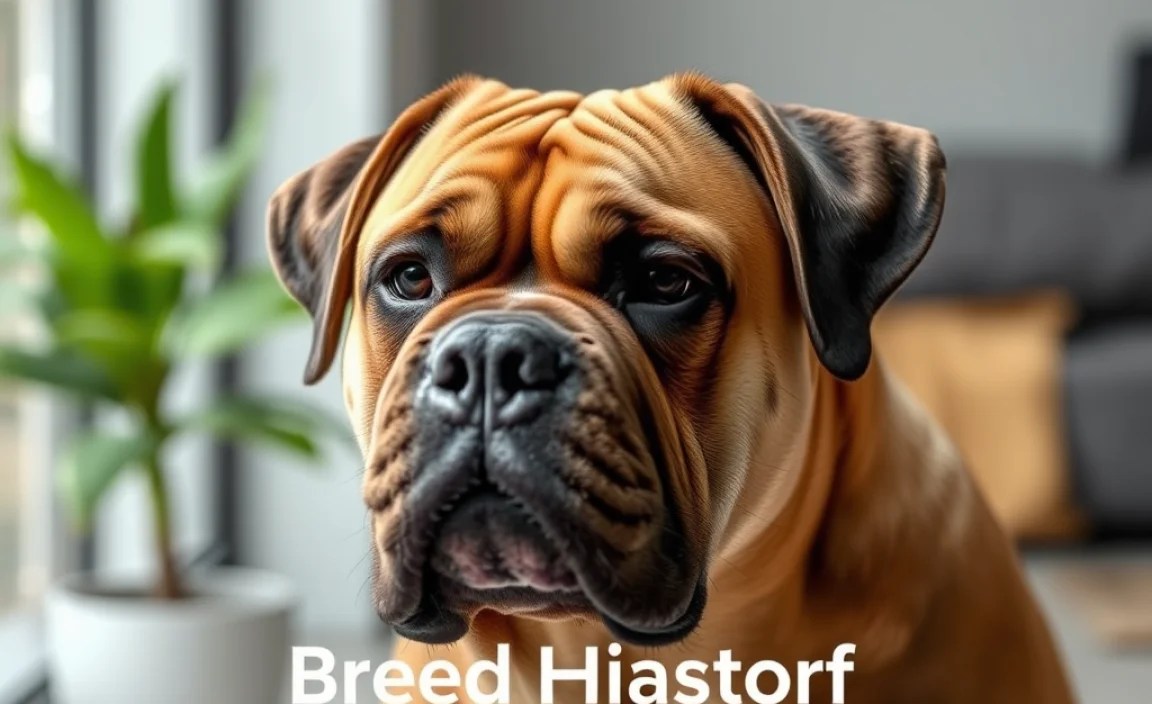
- Head: Broad and square with a wrinkled brow
- Muzzle: Short and dark
Their coat is short and dense, providing protection from the elements. Common colors include fawn, red, and brindle. The Bullmastiff’s head is broad and square, with a wrinkled brow and a short, dark muzzle. Their powerful jaws and teeth reflect their original purpose as a guard dog.
Temperament and Behavior
Despite their imposing appearance, Bullmastiffs are known for their gentle and affectionate nature. They are loyal and devoted to their families, often forming strong bonds with children. However, their guarding instincts remain strong, and they can be wary of strangers.
According to a study by the American Kennel Club, key temperament traits include:
- Loyalty: Extremely devoted to their families
- Courage: Fearless and protective
- Intelligence: Trainable and quick to learn
- Calmness: Generally relaxed and even-tempered
- Wariness: Can be reserved with strangers
Early socialization and training are essential for Bullmastiffs to ensure they are well-behaved and comfortable around new people and situations. They respond well to positive reinforcement techniques and require consistent leadership from their owners.
Training and Socialization
Training a Bullmastiff requires patience, consistency, and a firm but gentle approach. They are intelligent dogs but can also be stubborn, so it’s important to start training early and be consistent with commands. Socialization is equally important, as it helps them become well-adjusted and confident adults.
Tips for training and socializing your Bullmastiff:
- Start early: Begin training and socialization as soon as you bring your puppy home.
- Be consistent: Use clear and consistent commands.
- Use positive reinforcement: Reward good behavior with treats, praise, and toys.
- Expose them to new experiences: Introduce your Bullmastiff to different people, places, and situations.
- Enroll in obedience classes: Professional training can provide valuable guidance and support.
By investing time and effort into training and socialization, you can help your Bullmastiff become a well-behaved and loving companion.
Recognition and Popularity
The Bullmastiff’s unique qualities led to its recognition as a distinct breed in the early 20th century. Since then, it has gained popularity as both a working dog and a family pet.
Early Recognition
The Bullmastiff was officially recognized by the English Kennel Club in 1924, marking an important milestone in the breed’s history. This recognition acknowledged the Bullmastiff as a distinct breed with its own set of characteristics and standards. The American Kennel Club (AKC) followed suit in 1934, further solidifying the Bullmastiff’s place in the world of purebred dogs.
Evolution of Breed Standards
Breed standards are guidelines that describe the ideal characteristics of a breed, including physical appearance, temperament, and movement. These standards are used by breeders and judges to evaluate dogs and ensure that the breed’s unique qualities are preserved.
Over the years, the Bullmastiff’s breed standards have been refined to reflect the breed’s original purpose and to promote overall health and well-being. Some key aspects of the breed standard include:
- Size and Proportion: The ideal height and weight for males and females.
- Head: The shape and size of the head, muzzle, and jaw.
- Coat: The texture and color of the coat.
- Temperament: The desired temperament, including loyalty, courage, and calmness.
Breeders who adhere to these standards help ensure that the Bullmastiff remains true to its origins and continues to be a healthy and well-tempered breed.
Modern Popularity
Today, the Bullmastiff is a popular breed around the world, known for its loyalty, courage, and gentle nature. While they are still used as guard dogs and working dogs in some situations, they are also cherished family pets.
According to the AKC, the Bullmastiff consistently ranks among the most popular breeds in the United States. Their popularity can be attributed to their:
- Protective instincts: They make excellent guard dogs.
- Affectionate nature: They are loving and devoted to their families.
- Relatively low exercise needs: They don’t require as much exercise as some other large breeds.
However, potential owners should be aware of the breed’s potential health issues and training needs. Responsible breeding practices and proper care are essential for ensuring that Bullmastiffs live long and healthy lives.
Health Considerations

Like all breeds, Bullmastiffs are prone to certain health issues. Understanding these potential problems can help you provide the best possible care for your dog.
Common Health Issues
Bullmastiffs are generally healthy dogs, but they can be susceptible to certain genetic conditions. Some of the most common health issues in Bullmastiffs include:
| Health Issue | Description | Prevention/Management |
|---|---|---|
| Hip Dysplasia | A condition in which the hip joint doesn’t develop properly, leading to pain and arthritis. | Responsible breeding, maintaining a healthy weight, and providing appropriate exercise. |
| Elbow Dysplasia | Similar to hip dysplasia, but affecting the elbow joint. | Responsible breeding and proper nutrition during puppyhood. |
| Bloat (Gastric Torsion) | A life-threatening condition in which the stomach twists, trapping gas and cutting off blood supply. | Feeding smaller meals, avoiding exercise after eating, and considering prophylactic gastropexy. |
| Hypothyroidism | A condition in which the thyroid gland doesn’t produce enough thyroid hormone. | Regular veterinary checkups and thyroid hormone replacement therapy. |
| Entropion/Ectropion | Conditions in which the eyelids turn inward (entropion) or outward (ectropion), causing irritation and discomfort. | Surgical correction. |
Regular veterinary checkups and responsible breeding practices can help minimize the risk of these health issues.
Preventive Care
Preventive care is essential for keeping your Bullmastiff healthy and happy. This includes:
- Regular veterinary checkups: At least once a year, or more frequently if your dog has any health issues.
- Vaccinations: Following your veterinarian’s recommended vaccination schedule.
- Parasite control: Protecting your dog from fleas, ticks, heartworms, and other parasites.
- Dental care: Brushing your dog’s teeth regularly and providing dental chews.
- Proper nutrition: Feeding a high-quality dog food that is appropriate for your dog’s age, size, and activity level.
By taking these steps, you can help ensure that your Bullmastiff lives a long and healthy life.
Nutrition and Exercise
Proper nutrition and exercise are crucial for maintaining your Bullmastiff’s health and well-being. Feed your dog a balanced diet that is appropriate for their age, size, and activity level. Avoid overfeeding, as obesity can exacerbate many health problems.
Bullmastiffs require moderate exercise to stay in shape. Daily walks and playtime in the yard are usually sufficient. However, avoid strenuous exercise, especially during hot weather, as they are prone to overheating.
Here are some tips for keeping your Bullmastiff in shape:
- Provide daily walks: Aim for at least 30 minutes of walking per day.
- Engage in playtime: Play fetch, tug-of-war, or other games to keep your dog mentally stimulated.
- Avoid overexertion: Be mindful of the weather and your dog’s physical limitations.
- Monitor their weight: Keep an eye on your dog’s weight and adjust their diet and exercise accordingly.
With proper care and attention, your Bullmastiff can enjoy a long and healthy life.
Bullmastiff FAQs
Here are some frequently asked questions about Bullmastiffs:
- Are Bullmastiffs good family dogs?
- Yes, Bullmastiffs are generally good family dogs. They are known for their loyalty and affection towards their families, including children. However, early socialization and training are essential to ensure they are well-behaved around strangers.
- How much exercise does a Bullmastiff need?
- Bullmastiffs require moderate exercise. Daily walks and playtime are usually sufficient to keep them in shape. Avoid strenuous exercise, especially in hot weather, as they can be prone to overheating.
- Are Bullmastiffs easy to train?
- Bullmastiffs are intelligent but can be stubborn. Consistent and positive reinforcement training methods work best. Early socialization and obedience classes are highly recommended.
- What is the average lifespan of a Bullmastiff?
- The average lifespan of a Bullmastiff is 8 to 10 years. Proper care, nutrition, and regular veterinary checkups can help extend their lifespan.
- Do Bullmastiffs drool a lot?
- Yes, Bullmastiffs are known to drool, especially after eating or drinking. Keeping a towel handy can help manage the drool.
- Are Bullmastiffs good guard dogs?
- Yes, Bullmastiffs make excellent guard dogs due to their protective instincts and imposing size. They are naturally wary of strangers and will protect their family and property.
- What are the common health issues in Bullmastiffs?
- Common health issues in Bullmastiffs include hip dysplasia, elbow dysplasia, bloat, hypothyroidism, and eye conditions like entropion and ectropion. Responsible breeding and regular veterinary care can help minimize these risks.
Conclusion
The Bullmastiff’s breed history is a testament to the ingenuity and dedication of gamekeepers who sought to create the perfect guard dog. From its origins as the “Gamekeeper’s Night Dog” to its modern role as a beloved family pet, the Bullmastiff has retained its unique qualities of loyalty, courage, and gentleness. Understanding the breed’s history, characteristics, and health considerations is essential for providing the best possible care and ensuring that these magnificent dogs continue to thrive for generations to come. If you’re considering adding a Bullmastiff to your family, be prepared to offer them consistent training, plenty of affection, and a loving home where they can thrive.


