
Cat Breed Classification Explained: The Ultimate Guide

Do you love cats? Cats come in many shapes and sizes. They have different colors and patterns. Some cats are fluffy. Others have short hair. Have you ever wondered how we know so much about them? Let’s explore cat breed classification explained.
Cats are grouped into different breeds. This helps us understand their traits. It also helps us learn about their history. It’s like sorting toys into boxes. Each box has toys that are alike. Cat breed classification does the same thing. It puts similar cats together.
Think of a fluffy Persian cat. Then think of a sleek Siamese cat. They look very different, right? But they are both cats. Understanding cat breed classification helps us see these differences. It makes learning about cats even more fun.
Key Takeaways
- Cat breed classification helps us organize cats into different groups based on their traits.
- Different cat breeds have unique physical characteristics like fur length and color.
- Understanding cat breeds can help you choose a cat that fits your lifestyle.
- Some cat breeds are known for being friendly, while others are more independent.
- Organizations like the Cat Fanciers’ Association help define and maintain cat breed standards.
The Basics of Cat Breed Classification Explained

Cat breed classification explained starts with understanding what makes each breed unique. This includes their physical appearance, like fur color, length, and body shape. It also involves their personality traits. Some breeds are known for being playful. Others are more calm and quiet. Think about a Ragdoll cat. They are known for being floppy and relaxed. Then think about an Abyssinian cat. They are known for being active and curious. These differences help us put cats into different groups. Understanding these basics makes it easier to learn about all the different kinds of cats. Each breed has its own special story and set of characteristics. This makes the world of cats very interesting. Learning about cat breeds is like learning about different cultures. Each one has its own unique history and traditions. Knowing the basics is the first step in becoming a cat expert.
- Fur length can be short, medium, or long.
- Coat patterns include tabby, calico, and solid colors.
- Body shape can be slender, muscular, or cobby.
- Personality traits vary from playful to calm.
- Some breeds are hypoallergenic, meaning they produce less allergens.
Learning about cat breed classification is like being a detective. You look at clues to figure out what kind of cat it is. What color is its fur? How long is its tail? Does it like to play fetch? All these things help you decide what breed it might be. It’s also important to remember that not all cats are purebred. Many cats are mixed breeds, which means they have a mix of different breeds in their background. These cats can be just as wonderful and unique as purebred cats. So, whether you have a purebred Persian or a mixed-breed tabby, every cat is special in its own way. Cat breed classification helps us appreciate all the different kinds of cats in the world.
What is a Purebred Cat?
Have you ever heard of a purebred dog? Purebred cats are similar. A purebred cat has parents who are both the same breed. This means they share similar traits. Think of it like a family tree. If both parents are Siamese, the kittens will also be Siamese. Purebred cats often have specific standards. These standards describe how they should look and act. Cat organizations keep track of these standards. They also register purebred cats. This helps ensure that the breed stays true to its traits. Some people like purebred cats because they know what to expect. They know the cat will likely have certain characteristics. But all cats, purebred or not, need love and care.
How are Breeds Defined?
How do people decide what makes a new breed? It starts with unique traits. These traits can be physical or behavioral. For example, a cat might have curly fur. Or it might have a very short tail. If these traits are passed down through generations, it could become a new breed. Breeders work to maintain these traits. They carefully select which cats to breed. This helps ensure the kittens inherit the desired traits. Cat organizations play a role too. They set standards for each breed. These standards describe the ideal appearance and temperament. It takes time and effort to establish a new breed. But it’s a fascinating process.
Why Classify Cat Breeds?
Have you ever wondered why we bother to classify cat breeds? There are several reasons. First, it helps us understand the history of cats. Each breed has its own unique story. Knowing the breed’s origin can tell us about its past. Second, it helps us predict a cat’s traits. If you know a cat is a Persian, you can expect it to be fluffy and calm. Third, it helps breeders maintain breed standards. This ensures that each breed stays true to its characteristics. Finally, it’s just interesting! Learning about different cat breeds is like learning about different cultures. It’s a fun way to appreciate the diversity of the cat world. So, cat breed classification is more than just sorting cats into boxes. It’s a way to understand and appreciate these amazing animals.
Fun Fact or Stat: The Cat Fanciers’ Association (CFA) recognizes over 40 different cat breeds!
Different Types of Cat Breed Classifications Explained

Cat breed classification explained involves several categories. These categories help group cats with similar traits. One way to classify cats is by their fur length. There are long-haired cats, like Persians and Maine Coons. Then there are short-haired cats, like Siamese and Bengals. Another way to classify cats is by their body type. Some cats are slender and elegant, like Orientals. Others are stocky and muscular, like British Shorthairs. Personality also plays a role in classification. Some breeds are known for being affectionate and playful. Others are more independent and reserved. Understanding these different types of classifications helps us appreciate the diversity of cat breeds. It also helps us choose a cat that fits our lifestyle. Do you want a cat that loves to cuddle? Or do you prefer a cat that is more self-sufficient? Knowing the different classifications can help you decide.
- Long-haired breeds require regular grooming.
- Short-haired breeds are often easier to care for.
- Slender cats are typically more active.
- Stocky cats are often more laid-back.
- Affectionate breeds make great family pets.
- Independent breeds are good for busy people.
Think of cat breed classification like sorting your books. You might sort them by genre, like fantasy, science fiction, or mystery. Or you might sort them by author or title. There are many different ways to organize your books. The same is true for cats. We can classify them based on their fur, their body type, their personality, or even their origin. Each classification tells us something different about the cat. For example, knowing that a cat is an Oriental Shorthair tells us that it is likely to be slender, active, and vocal. Knowing that a cat is a Persian tells us that it is likely to be fluffy, calm, and needs regular grooming. So, the different types of classifications help us understand and appreciate the unique qualities of each cat breed.
Fur Length Classifications
Have you ever petted a cat with long, flowing fur? Or a cat with short, sleek fur? Fur length is a key way to classify cats. Long-haired cats, like Persians and Maine Coons, need regular grooming. Their fur can easily get tangled and matted. Short-haired cats, like Siamese and Bengals, are easier to care for. Their fur doesn’t require as much brushing. Some cats have medium-length fur, like the American Curl. These cats need some grooming, but not as much as long-haired cats. Fur length can also affect how warm a cat is. Long-haired cats are better suited for colder climates. Short-haired cats may need a sweater in the winter. So, fur length is an important factor in cat breed classification.
Body Type Classifications
Imagine a slender, graceful Siamese cat. Now imagine a sturdy, muscular British Shorthair. These cats have very different body types. Body type is another way to classify cat breeds. Some cats are slender and elegant, like the Oriental Shorthair. These cats are often very active and playful. Other cats are stocky and muscular, like the Manx. These cats tend to be more laid-back and sturdy. Some cats have a medium build, like the American Shorthair. These cats are a good balance of activity and relaxation. Body type can also affect a cat’s health. Slender cats may be more prone to certain health problems. Stocky cats may be prone to others. So, understanding body type classifications can help you care for your cat.
Personality Classifications
Do you want a cat that loves to cuddle? Or do you prefer a cat that is more independent? Personality is a key factor in cat breed classification. Some breeds are known for being affectionate and playful, like the Ragdoll. These cats make great family pets. Other breeds are more independent and reserved, like the Russian Blue. These cats are good for busy people who don’t have a lot of time to cuddle. Some breeds are known for being vocal, like the Siamese. These cats love to talk and will let you know what they want. Other breeds are quieter, like the Persian. So, think about your lifestyle and what you want in a cat. Then you can choose a breed that matches your personality.
Fun Fact or Stat: The Maine Coon is one of the largest domestic cat breeds!
Cat Breed Characteristics Explained: Physical Traits

Cat breed characteristics explained often begin with physical traits. These are the things you can see and touch. Fur color is one important trait. Cats come in many colors, like black, white, orange, and gray. They also have different patterns, like tabby, calico, and pointed. Fur length is another key trait. Some cats have long fur, while others have short fur. Body size and shape also vary. Some cats are large and muscular, while others are small and slender. Eye color is another distinguishing trait. Cats can have blue, green, yellow, or copper eyes. Tail length and shape can also differ. Some cats have long tails, while others have short or no tails. These physical traits help us identify different cat breeds. They also tell us about the cat’s history and origin. Learning about these traits makes cat breed classification more interesting.
- Fur color can be solid, bi-color, or tri-color.
- Coat patterns include stripes, spots, and swirls.
- Body size ranges from small to large.
- Eye color can be blue, green, yellow, or copper.
- Tail length can be long, short, or absent.
Imagine you are trying to describe a cat to a friend. You would probably start by talking about its physical traits. “It has long, fluffy white fur,” you might say. “It has blue eyes and a long, bushy tail.” These details help your friend picture the cat in their mind. Physical traits are important for identifying cat breeds. For example, the Siamese cat is known for its pointed pattern and blue eyes. The Persian cat is known for its long, fluffy fur. These traits help us distinguish these breeds from others. But remember, not all cats fit neatly into breed categories. Many cats are mixed breeds and have a combination of different traits. That’s what makes them unique and special. Cat breed classification helps us understand the similarities and differences between cats, but it’s important to appreciate each cat as an individual.
Coat Color and Patterns
Have you ever seen a cat with stripes? Or spots? Or maybe a mix of colors? Coat color and patterns are important physical traits. Some cats have solid colors, like black or white. Others have bi-color patterns, like black and white or orange and white. Still others have tri-color patterns, like calico or tortoiseshell. These patterns are created by different genes. Tabby is a common pattern with stripes or swirls. Pointed is another pattern where the face, ears, paws, and tail are darker than the body. The possibilities are endless! Coat color and patterns can help us identify different breeds. They also make each cat unique. So, pay attention to the colors and patterns of cats. It’s a fun way to learn about cat breed characteristics.
Size and Body Structure
Think about a tiny Singapura cat. Now think about a large Maine Coon. Cats come in all shapes and sizes! Size and body structure are important physical traits. Some cats are small and slender, like the Siamese. Others are large and muscular, like the Ragdoll. Body structure can also vary. Some cats have long, lean bodies, while others have short, stocky bodies. The shape of the head can also differ. Some cats have round faces, while others have more angular faces. These differences in size and body structure help us classify cats into different breeds. They also tell us about the cat’s history and purpose. For example, the Maine Coon’s large size and thick fur helped it survive in the cold climate of Maine.
Eye and Tail Variations
Have you ever noticed how different cat eyes can be? Some cats have bright blue eyes. Others have green, yellow, or copper eyes. Eye color is a key physical trait. Some breeds are known for specific eye colors. For example, Siamese cats are known for their blue eyes. Tail length and shape can also vary. Some cats have long, flowing tails. Others have short, stubby tails. The Manx cat has no tail at all! These variations in eye and tail appearance help us identify different breeds. They also add to the unique charm of each cat. So, pay attention to the eyes and tails of cats. You might be surprised by the variety!
Fun Fact or Stat: Cats can jump up to six times their height!
Understanding Cat Breed Temperament Explained
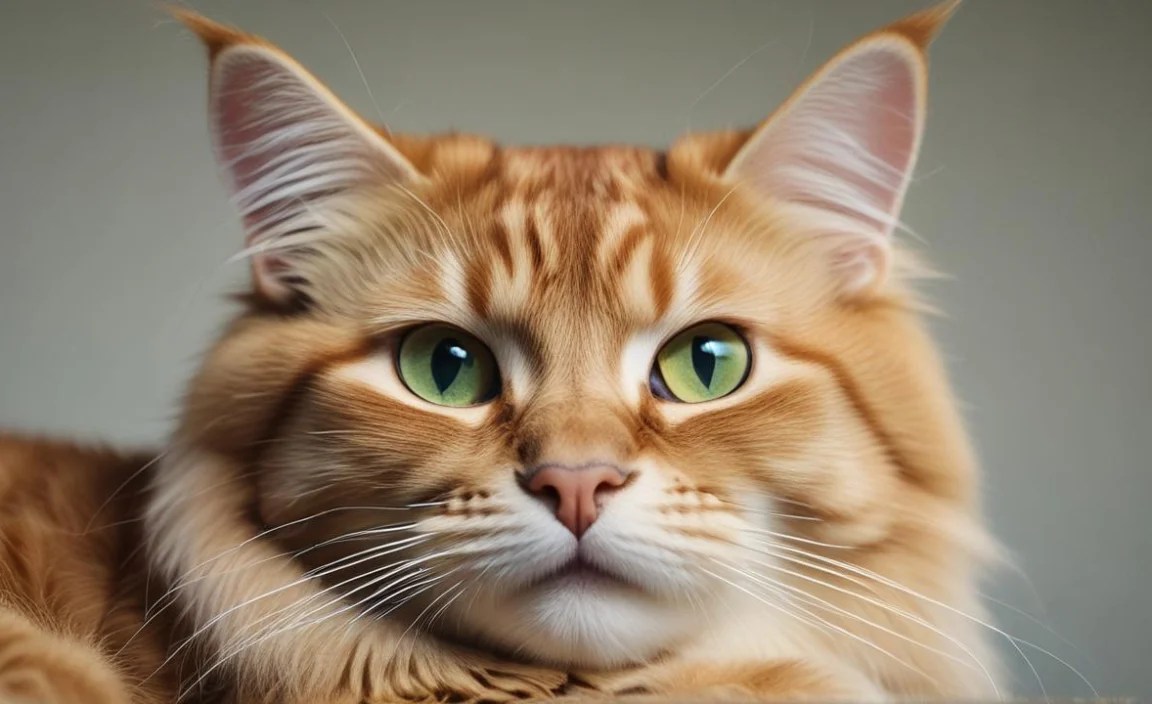
Cat breed temperament explained focuses on personality and behavior. Some cats are very playful. Others are more calm and quiet. Some breeds are known for being friendly and affectionate. Others are more independent and reserved. Understanding temperament is important. It helps you choose a cat that fits your lifestyle. Do you want a cat that loves to cuddle? Then a Ragdoll might be a good choice. Do you prefer a cat that is more independent? Then a Russian Blue might be a better fit. Temperament can also affect how well a cat gets along with children and other pets. Some breeds are known for being good with kids. Others are better suited for homes without young children. So, consider temperament when choosing a cat. It will help you find a furry friend that you will love for years to come.
- Playful breeds need lots of toys and attention.
- Calm breeds are often happy to nap all day.
- Friendly breeds love to be petted and cuddled.
- Independent breeds are happy to entertain themselves.
- Some breeds are vocal and love to talk.
Think of cat breed temperament like the different personalities of your friends. Some of your friends are outgoing and love to play. Others are more shy and prefer quiet activities. The same is true for cats. Some breeds are naturally more playful and energetic. They need lots of toys and attention to stay happy. Other breeds are more laid-back and content to nap in a sunny spot. It’s important to choose a cat whose temperament matches your own. If you are a busy person who doesn’t have a lot of time to play, then a more independent breed might be a good choice. If you are looking for a cuddly companion, then a more affectionate breed might be a better fit. Cat breed classification helps us understand these different temperaments so we can make the best choice for our homes and families.
Affectionate vs. Independent Breeds
Do you dream of a cat that follows you around and snuggles in your lap? Or do you prefer a cat that is more self-sufficient and doesn’t need constant attention? Some breeds are known for being very affectionate, like the Ragdoll and the Burmese. These cats love to be petted and cuddled. They will often follow you from room to room and want to be involved in everything you do. Other breeds are more independent, like the Russian Blue and the Scottish Fold. These cats are happy to entertain themselves and don’t need as much human interaction. Understanding the difference between affectionate and independent breeds can help you choose a cat that fits your lifestyle. If you want a constant companion, choose an affectionate breed. If you prefer a cat that is more low-maintenance, choose an independent breed.
Playfulness and Energy Levels
Imagine a kitten bouncing off the walls, chasing toys and batting at anything that moves. Now imagine a cat sleeping peacefully in a sunbeam, barely moving a muscle. Cats have different levels of playfulness and energy. Some breeds are very playful and energetic, like the Abyssinian and the Bengal. These cats need lots of toys and playtime to stay happy. They will often get into mischief if they are not given enough stimulation. Other breeds are more calm and laid-back, like the Persian and the British Shorthair. These cats are content to nap and relax. Consider your own energy level and lifestyle when choosing a cat. If you are active and enjoy playing, choose a playful breed. If you prefer a more relaxed atmosphere, choose a calmer breed.
Vocalization and Communication
Have you ever heard a Siamese cat “talk”? Some cats are very vocal and love to communicate with their owners. They will meow, purr, and chirp to let you know what they want. Other cats are more quiet and reserved. They may only meow when they are hungry or need something. Some breeds are known for being particularly vocal, like the Siamese and the Oriental Shorthair. These cats will often “talk” to you for hours. Other breeds are quieter, like the Persian and the Ragdoll. Consider your tolerance for noise when choosing a cat. If you prefer a quiet environment, choose a less vocal breed. If you enjoy chatting with your cat, choose a more vocal breed.
Fun Fact or Stat: A cat’s purr can vibrate at a frequency of 25 to 150 Hertz, which may promote healing!
Organizations Involved in Cat Breed Classification Explained

Cat breed classification explained also involves organizations. These groups set standards for different breeds. They also keep track of cat pedigrees. One of the most well-known organizations is the Cat Fanciers’ Association (CFA). The CFA recognizes many different breeds. They also hold cat shows. Another organization is The International Cat Association (TICA). TICA also recognizes many breeds. These organizations help maintain breed standards. They also promote responsible breeding practices. They ensure that cats are healthy and well-cared for. If you are interested in showing cats or breeding them, you should join one of these organizations. They can provide valuable information and support. They also help protect the welfare of cats. So, organizations play a vital role in cat breed classification.
| Organization | Focus | Activities |
|---|---|---|
| Cat Fanciers’ Association (CFA) | Breed standards, cat shows | Registers cats, sets breed guidelines, organizes shows |
| The International Cat Association (TICA) | Breed recognition, cat welfare | Recognizes new breeds, promotes responsible breeding |
| American Cat Fanciers Association (ACFA) | Cat shows, breed education | Hosts cat shows, provides educational resources |
| Governing Council of the Cat Fancy (GCCF) | UK-based breed standards | Sets breed standards in the UK, registers cats |
- The CFA is the world’s largest registry of pedigreed cats.
- TICA recognizes more breeds than the CFA.
- These organizations promote responsible breeding.
- They also work to protect cat welfare.
- Joining these organizations can be beneficial for breeders.
Imagine you are a judge at a cat show. You need to know what makes each breed unique. You need to know what the ideal Persian cat looks like. You need to know what the ideal Siamese cat looks like. That’s where organizations like the CFA and TICA come in. They provide detailed breed standards that describe the ideal appearance and temperament of each breed. These standards help judges evaluate cats at shows. They also help breeders maintain the quality of their cats. These organizations also play a role in promoting responsible breeding practices. They encourage breeders to test their cats for genetic diseases and to provide them with proper care. So, these organizations are essential for cat breed classification and cat welfare.
Cat Fanciers’ Association (CFA)
Have you ever heard of the Cat Fanciers’ Association? It is the world’s largest registry of pedigreed cats. The CFA sets the standards for many different breeds. They also organize cat shows. At these shows, cats are judged based on how well they meet the breed standards. The CFA also promotes responsible breeding practices. They want to make sure that cats are healthy and well-cared for. If you are interested in showing cats, the CFA is a great resource. They can provide you with information about breed standards and show rules. They also offer educational programs for breeders and cat owners. So, the CFA plays a big role in the world of cat breed classification.
The International Cat Association (TICA)
Did you know that there is another major cat organization besides the CFA? It’s called The International Cat Association, or TICA. TICA recognizes even more breeds than the CFA. They also have their own set of breed standards and cat show rules. TICA is known for being more inclusive and welcoming to new breeds. They also focus on cat welfare and promoting responsible pet ownership. If you are interested in a breed that is not recognized by the CFA, TICA might be a good option. TICA also offers educational programs and resources for cat owners and breeders. So, TICA is another important player in the world of cat breed classification.
Other Breed-Specific Clubs
Besides the major organizations like the CFA and TICA, there are also many smaller breed-specific clubs. These clubs focus on promoting and preserving a particular breed. For example, there might be a Persian Cat Club or a Siamese Cat Club. These clubs often have their own breed standards that are more detailed than the standards set by the CFA or TICA. They also organize events and activities for owners of that breed. If you are passionate about a particular breed, joining a breed-specific club can be a great way to connect with other enthusiasts. You can learn more about the breed’s history, health, and care. You can also participate in shows and other events. So, breed-specific clubs play an important role in preserving the diversity of cat breed classification.
Fun Fact or Stat: The first cat show was held in London in 1871!
The Importance of Breed Standards in Cat Breed Classification Explained
Cat breed classification explained relies heavily on breed standards. Breed standards describe the ideal traits for each breed. These traits include physical appearance and temperament. Breed standards help breeders maintain the quality of their cats. They also help judges evaluate cats at shows. Understanding breed standards is important if you want to show cats. It’s also important if you want to breed cats. Breed standards ensure that each breed stays true to its characteristics. They also help prevent genetic diseases. By following breed standards, breeders can produce healthy and well-tempered cats. So, breed standards are essential for cat breed classification and cat welfare. They help preserve the unique qualities of each breed.
- Breed standards define ideal physical traits.
- They also define ideal temperament traits.
- Breeders use standards to select breeding cats.
- Judges use standards to evaluate cats at shows.
- Standards help maintain breed purity.
Imagine you are trying to bake a cake. You need a recipe to follow. The recipe tells you what ingredients to use and how to mix them. Breed standards are like a recipe for cats. They tell breeders what traits to look for when selecting breeding cats. They also tell judges what to look for when evaluating cats at shows. Without breed standards, it would be difficult to maintain the unique characteristics of each breed. Breed standards help ensure that Persians stay fluffy, Siamese stay pointed, and Bengals stay spotted. They also help prevent breeders from exaggerating certain traits, which can lead to health problems. So, breed standards are essential for preserving the diversity and health of cat breed classification.
Defining Ideal Traits
What makes a cat a “good” example of its breed? Breed standards define the ideal traits for each breed. These traits can include fur color, fur length, body shape, eye color, and tail length. They can also include temperament traits, such as playfulness, affection, and intelligence. Breed standards are often very detailed and specific. They describe exactly what the ideal cat should look and act like. These standards are developed by breed experts and are maintained by cat organizations like the CFA and TICA. By defining ideal traits, breed standards help breeders strive for excellence and help judges evaluate cats at shows.
Maintaining Breed Purity
Have you ever heard of a “purebred” cat? Breed standards help maintain breed purity. This means that cats of a particular breed should consistently produce offspring that look and act like them. Breed standards help breeders select breeding cats that meet the breed’s ideal traits. This helps ensure that the kittens inherit those traits. Breed standards also help prevent crossbreeding between different breeds. By following breed standards, breeders can maintain the unique characteristics of each breed. This helps preserve the diversity of cat breed classification.
Preventing Genetic Issues
Did you know that some breeds are prone to certain genetic health problems? Breed standards can help prevent genetic issues. By understanding the common health problems in a breed, breeders can select breeding cats that are less likely to pass on those problems to their kittens. They can also test their cats for genetic diseases. By following breed standards and testing their cats, breeders can help ensure that their cats are healthy and well-cared for. This is an important part of responsible breeding and cat welfare. So, breed standards play a role in preventing genetic issues in cat breed classification.
Fun Fact or Stat: Some cat breeds are prone to specific health issues, like hypertrophic cardiomyopathy in Maine Coons.
Choosing a Cat Based on Breed Classification Explained
Cat breed classification explained can help you choose a cat. Different breeds have different traits. Some breeds are good for families. Others are better for single people. Some breeds need lots of attention. Others are more independent. Think about your lifestyle. Do you have kids? Do you have other pets? How much time do you have to spend with a cat? Once you know what you want, you can look at different breeds. Read about their traits. Talk to breeders and cat owners. Visit shelters and rescues. Meeting different cats can help you decide. Choosing a cat is a big decision. Make sure you find a cat that is a good fit for you. Cat breed classification can help you make the right choice.
- Consider your lifestyle and living situation.
- Research different breeds and their traits.
- Meet cats in person before making a decision.
- Talk to breeders and cat owners.
- Visit shelters and rescues.
Imagine you are adopting a new pet. You want to make sure you choose the right one. You wouldn’t just pick the first animal you see. You would think about what kind of pet you want. Do you want a dog or a cat? Do you want a playful pet or a cuddly pet? The same is true for choosing a cat breed. Think about what you want in a cat. Do you want a cat that loves to play fetch? Or do you want a cat that will curl up in your lap and purr? Once you know what you want, you can start researching different breeds. Cat breed classification can help you narrow down your choices. Then, you can meet different cats in person and see which one is the best fit for you.
Matching Breed to Lifestyle
Does your lifestyle match a cat breed? Think about your daily routine. Do you work long hours? Do you travel often? Do you have kids or other pets? Some breeds are better suited for busy people. Other breeds need more attention. Some breeds get along well with children. Others are better for homes without kids. For example, if you work long hours, an independent breed like a Russian Blue might be a good choice. If you have young children, a gentle and patient breed like a Ragdoll might be a better fit. Matching the breed to your lifestyle will help ensure that you and your cat are happy.
Considering Family and Other Pets
Do you have a family? Do you have other pets? These factors can affect which breed you choose. Some breeds are known for being good with children, like the Maine Coon and the Ragdoll. These cats are patient and tolerant. Other breeds are not as good with children and may prefer a quieter environment. If you have other pets, you need to choose a breed that gets along well with them. Some breeds are known for being friendly with dogs, like the Abyssinian. Other breeds are more territorial and may not get along well with other animals. Consider your family and other pets when choosing a cat breed.
Visiting Shelters and Breeders
Where should you get your new cat? You have two main options: shelters and breeders. Shelters are a great place to find a cat in need of a home. You can often find cats of all ages and breeds at shelters. You can also save a life by adopting a cat from a shelter. Breeders specialize in specific breeds. If you want a purebred cat, you will need to go to a breeder. Make sure you choose a reputable breeder who cares about the health and welfare of their cats. Visit both shelters and breeders before making a decision. This will give you a chance to meet different cats and see which one is the best fit for you.
Fun Fact or Stat: Millions of cats enter animal shelters every year, waiting for their forever homes.
Summary
Cat breed classification explained shows how we organize cats. We group them by traits like fur length and color. We also look at personality. Organizations like the CFA help define breeds. Breed standards ensure cats stay true to type. Understanding breeds helps you choose the right cat. Consider your lifestyle and family. Research different breeds before you decide. Cat breed classification makes it easier to find a perfect furry friend.
Conclusion
Learning about cat breed classification explained is interesting and useful. It helps us understand the amazing diversity of cats. Different breeds have different needs and personalities. Choosing the right breed can bring joy to your life. Whether you love fluffy Persians or sleek Siamese, there’s a cat breed for everyone. So, explore the world of cat breeds. You might just find your purrfect match.
Frequently Asked Questions
Question No 1: What is cat breed classification explained in simple terms?
Answer: Cat breed classification explained is like sorting cats into groups. We put cats that look and act alike together. For example, all Persian cats have long, fluffy fur. All Siamese cats have blue eyes and a pointed pattern. These groups are called breeds. Classifying cats helps us understand their traits. It also helps us learn about their history. It’s like sorting toys into boxes. Each box has toys that are alike. Cat breed classification does the same thing for cats. It makes it easier to learn about them.
Question No 2: How many different cat breeds are there?
Answer: There are many different cat breeds. The exact number depends on which organization you ask. The Cat Fanciers’ Association (CFA) recognizes over 40 breeds. The International Cat Association (TICA) recognizes even more. Some breeds are very popular. Others are more rare. Each breed has its own unique traits and history. Learning about different breeds is a fun way to explore the world of cats. You might be surprised by how many different kinds of cats there are. From long-haired Persians to hairless Sphynx, there’s a breed for everyone.
Question No 3: What are some popular cat breeds?
Answer: Some popular cat breeds include Persians, Maine Coons, Siamese, and Bengals. Persians are known for their long, fluffy fur and calm temperament. Maine Coons are large and friendly cats. Siamese cats are known for their blue eyes and vocal nature. Bengals have a spotted coat that resembles a leopard. These breeds are popular for different reasons. Some people like the fluffy appearance of Persians. Others like the playful nature of Bengals. Each breed has its own unique appeal. That’s why there are so many different cat lovers in the world.
Question No 4: How does cat breed classification explained help me choose a cat?
Answer: Cat breed classification explained helps you understand the traits of different breeds. This can help you choose a cat that fits your lifestyle. For example, if you want a cat that loves to cuddle, you might choose a Ragdoll. If you want a cat that is more independent, you might choose a Russian Blue. Knowing the different traits of each breed can help you make the right choice. It’s also important to consider your living situation. Do you have kids? Do you have other pets? These factors can also affect which breed is right for you. So, research different breeds and think about your lifestyle before you decide.
Question No 5: What is a mixed-breed cat?
Answer: A mixed-breed cat is a cat whose parents are different breeds. Mixed-breed cats are also called domestic shorthairs or domestic longhairs. They can have a mix of different traits from different breeds. This makes them unique and special. Mixed-breed cats are often just as wonderful as purebred cats. They can be just as loving and affectionate. They can also be healthier than purebred cats. This is because they have a wider gene pool. So, don’t overlook mixed-breed cats when you are looking for a new pet. They can make great companions.
Question No 6: Where can I learn more about cat breed classification explained?
Answer: You can learn more about cat breed classification explained from several sources. You can visit the websites of cat organizations like the CFA and TICA. These websites have information about different breeds and breed standards. You can also read books and articles about cat breeds. Your local library or bookstore might have some good resources. You


