
British Shorthair Training Sessions: Easy Start!

Quick Summary: British Shorthairs are intelligent but independent. Keep training sessions short (5-10 minutes), positive, and reward-based. Focus on basic commands like “come” and “stay,” using treats or toys as motivation. Consistency is key! Be patient and understand your cat’s limitations. With the right approach, you can successfully train your British Shorthair.
Is your British Shorthair a little too independent for its own good? Many owners find that training these beautiful cats requires patience and a special approach. It’s not always easy, but with the right techniques, you can teach your British Shorthair basic commands and even some fun tricks! This guide will walk you through step-by-step, making training sessions enjoyable for both you and your feline friend. Let’s turn those independent streaks into positive learning experiences!
Understanding Your British Shorthair’s Temperament

Before diving into training, it’s essential to understand the unique temperament of the British Shorthair. These cats are known for their calm, easygoing nature, but they also have an independent streak. This means they might not be as eager to please as some other breeds.
- Independent Nature: British Shorthairs are happy to entertain themselves. They aren’t usually demanding of attention but enjoy quiet companionship.
- Intelligence: They are intelligent cats, which means they can learn. However, their independence might make them less motivated to perform tricks just to please you.
- Gentle and Calm: Their calm nature makes them less reactive and easier to manage during training, provided you use the right methods.
Knowing these traits will help you tailor your training approach to be more effective and enjoyable for your cat. Remember, patience and understanding are key.
Setting Up Successful British Shorthair Training Sessions

Creating the right environment and using the appropriate tools can significantly improve your training sessions.
Choosing the Right Time and Place
Timing is everything. Train when your cat is most receptive:
- Optimal Timing: Choose a time when your cat is neither too hungry nor too full. A little before mealtime can work well, as they might be more motivated by treats.
- Quiet Environment: Select a quiet space with minimal distractions. Turn off the TV, put away toys that might divert their attention, and ensure other pets or family members won’t interrupt.
- Short Sessions: Keep sessions short and sweet, around 5-10 minutes. British Shorthairs have a limited attention span, so shorter, more frequent sessions are more effective than long, drawn-out ones.
Essential Training Tools
Having the right tools can make training easier and more rewarding:
- High-Value Treats: Use treats that your cat absolutely loves. These should be small, soft, and irresistible.
- Clicker (Optional): A clicker can be a great tool for marking desired behaviors. The consistent sound helps your cat associate the click with a reward.
- Favorite Toys: Some cats are more motivated by toys than treats. Use a favorite toy, such as a feather wand or laser pointer, as a reward.
- Comfortable Mat or Bed: Designate a specific mat or bed as a training spot. This helps your cat understand when it’s time to focus.
Step-by-Step Training Techniques
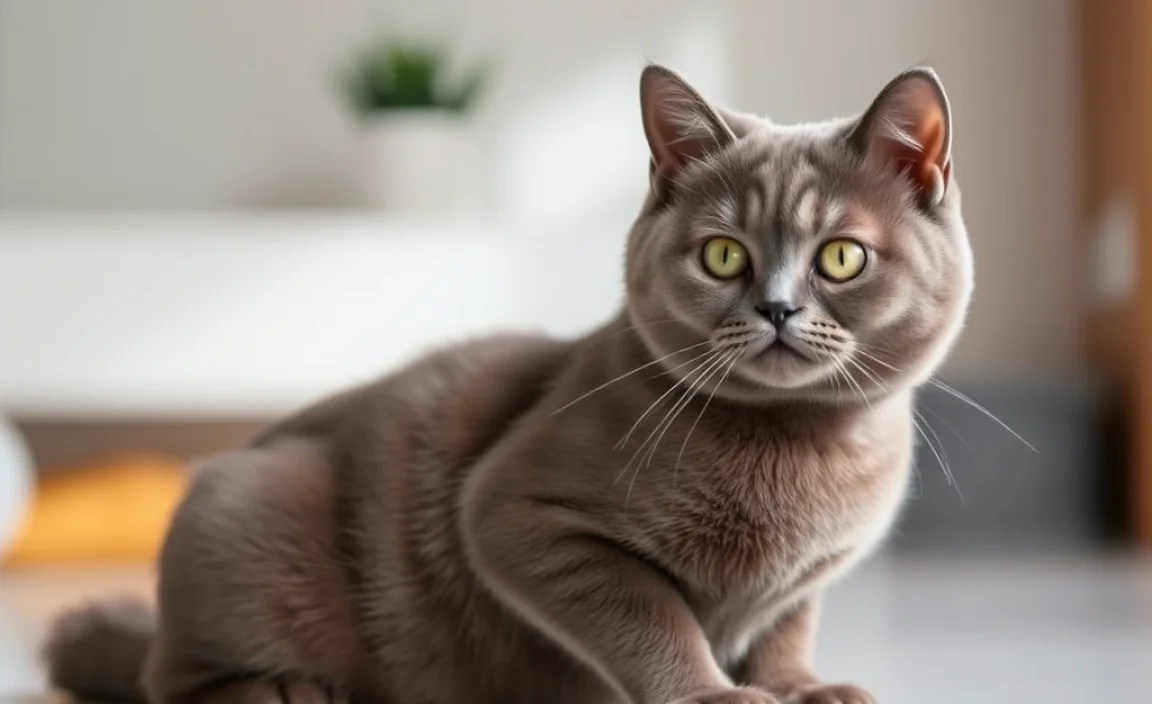
Now, let’s get into the practical steps of training your British Shorthair.
1. Basic Command: “Come”
Teaching your cat to come when called is a fundamental command that can be very useful.
- Start Simple: Begin in a quiet room with your cat nearby. Say their name followed by “come” in a cheerful voice.
- Reward Immediately: As soon as your cat starts to move towards you, offer a treat and praise.
- Gradual Increase Distance: Gradually increase the distance between you and your cat as they become more responsive.
- Use Positive Reinforcement: Always reward your cat for coming, even if it takes them a moment. Never punish them for not coming immediately.
2. Basic Command: “Sit”
Teaching your British Shorthair to sit can be achieved through luring and rewarding.
- Lure with a Treat: Hold a treat near your cat’s nose.
- Move the Treat: Slowly move the treat upwards and backwards over their head. As they follow the treat, they will naturally lower their rear into a sitting position.
- Say “Sit”: As they sit, say the word “sit.”
- Reward and Praise: Immediately give them the treat and offer praise.
- Repeat: Repeat this process several times during each training session.
3. Using a Clicker
A clicker can be a very effective tool for marking desired behaviors. It creates a consistent sound that your cat can easily associate with a reward.
- Charge the Clicker: Pair the clicker with a treat. Click and immediately give your cat a treat. Repeat this several times until your cat associates the click with something positive.
- Mark the Behavior: When your cat performs the desired behavior (e.g., sitting), click the clicker at the exact moment they do it.
- Reward: Immediately follow the click with a treat.
- Consistency: Be consistent with your clicker usage. Only click when your cat does something you want to reinforce.
4. Target Training
Target training involves teaching your cat to touch a specific object (like a stick or a finger) with their nose. This can be used to guide them into different positions or locations.
- Introduce the Target: Hold a target stick (or your finger) near your cat.
- Reward Exploration: When your cat sniffs or touches the target, click (if using a clicker) and give them a treat.
- Move the Target: Gradually move the target to guide your cat into different positions or locations.
- Use for Other Commands: Once your cat understands target training, you can use it to teach them other commands, like going to a specific spot or entering a carrier.
5. Addressing Common Challenges
Training isn’t always smooth sailing. Here’s how to handle some common issues:
- Lack of Motivation: If your cat isn’t interested in treats, try different kinds or use toys instead. Make sure the reward is something they truly value.
- Short Attention Span: Keep sessions short and frequent. End on a positive note, even if your cat only performs the behavior once.
- Consistency is Key: Stick to a regular training schedule and use the same commands and cues each time.
- Patience: Be patient and understanding. It takes time for your cat to learn new things. Celebrate small victories and don’t get discouraged by setbacks.
Advanced Training and Fun Tricks

Once your British Shorthair has mastered the basics, you can move on to more advanced training and fun tricks.
Teaching Your Cat to “Stay”
The “stay” command can be useful in various situations, such as preventing your cat from darting out the door.
- Start with “Sit”: Have your cat sit.
- Say “Stay”: Say the word “stay” in a firm but gentle voice.
- Hold Your Hand Up: Hold your hand up in a “stop” gesture.
- Short Duration: Initially, only ask your cat to stay for a few seconds.
- Reward: If they stay, reward them with a treat and praise.
- Gradually Increase Duration: Gradually increase the amount of time you ask them to stay.
Teaching Your Cat to “Fetch”
Some British Shorthairs enjoy playing fetch, although it may require some encouragement.
- Choose a Toy: Select a lightweight toy that your cat can easily carry.
- Toss the Toy: Toss the toy a short distance.
- Encourage Retrieval: Encourage your cat to bring the toy back to you. You can use treats or praise as motivation.
- Reward Retrieval: When your cat brings the toy back, reward them with a treat and praise.
- Repeat: Repeat this process several times during each training session.
Other Fun Tricks
Here are a few other tricks you can try teaching your British Shorthair:
- High-Five: Teach your cat to raise their paw and touch your hand.
- Roll Over: Guide your cat through a roll with a treat.
- Play Dead: Teach your cat to lie down and play dead on cue.
Troubleshooting Common Training Problems
Even with the best techniques, you might encounter some challenges. Here’s how to troubleshoot common training problems.
| Problem | Possible Solution |
|---|---|
| Cat loses interest quickly | Keep sessions shorter, use higher-value treats, or try a different training time. |
| Cat gets distracted easily | Train in a quieter environment with fewer distractions. |
| Cat refuses to perform the behavior | Break the behavior into smaller steps, use more enticing rewards, or try a different approach. |
| Cat becomes aggressive or fearful | Stop the training session immediately and reassess your approach. Make sure you are not pushing your cat too hard or using negative reinforcement. |
| Cat only performs the behavior for treats | Gradually reduce the frequency of treats and replace them with praise and affection. |
Maintaining Consistency and Reinforcement
Consistency is key to successful training. Make sure to reinforce learned behaviors regularly to prevent your cat from forgetting them.
Regular Practice
Incorporate short training sessions into your daily routine. Even a few minutes each day can make a big difference.
Positive Reinforcement
Continue to use positive reinforcement to reward desired behaviors. This will help your cat stay motivated and engaged.
Generalization
Once your cat has learned a behavior in one location, practice it in other locations as well. This will help them generalize the behavior and perform it reliably in different environments.
Ethical Considerations in Cat Training
It’s crucial to approach training with ethical considerations in mind. Always prioritize your cat’s well-being and avoid using methods that could cause them harm or distress.
Avoid Punishment
Never use punishment or negative reinforcement during training. This can damage your relationship with your cat and lead to fear and anxiety. According to the RSPCA, positive reinforcement is much more effective and humane.
Respect Your Cat’s Limits
Pay attention to your cat’s body language and respect their limits. If they seem stressed or uncomfortable, stop the training session and try again later.
Focus on Positive Reinforcement
Always focus on positive reinforcement techniques, such as treats, praise, and toys. This will create a positive and enjoyable training experience for both you and your cat.
British Shorthair Training Sessions: FAQs
Here are some frequently asked questions about training British Shorthairs:
Q: How long should training sessions be?
A: Keep training sessions short, around 5-10 minutes. British Shorthairs have a limited attention span, so shorter, more frequent sessions are more effective.
Q: What kind of treats should I use?
A: Use high-value treats that your cat loves. These should be small, soft, and irresistible. Experiment with different treats to find what motivates your cat the most.
Q: Is clicker training effective for British Shorthairs?
A: Yes, clicker training can be very effective for British Shorthairs. The consistent sound of the clicker helps your cat associate the desired behavior with a reward.
Q: What if my cat isn’t motivated by treats?
A: If your cat isn’t motivated by treats, try using toys instead. Some cats are more motivated by play than food. Experiment to find what works best for your cat.
Q: How often should I train my cat?
A: Aim to train your cat daily, even if it’s just for a few minutes. Consistency is key to successful training.
Q: My cat seems bored during training. What should I do?
A: If your cat seems bored, try changing up the training routine. Introduce new tricks or behaviors, or try training in a different location. Make sure the training sessions are fun and engaging.
Q: Can older British Shorthairs be trained?
A: Yes, older British Shorthairs can be trained, although it may take more patience and effort. Focus on simple commands and use positive reinforcement. According to the Cornell Feline Health Center, cats of any age can learn with the right approach.
Conclusion
Training your British Shorthair can be a rewarding experience, strengthening the bond between you and your feline friend. Remember, patience, consistency, and positive reinforcement are key. Understand your cat’s unique temperament, set up successful training sessions, and address any challenges with understanding and care. Whether you’re teaching basic commands or advanced tricks, the journey will be filled with delightful moments and a deeper connection with your beloved British Shorthair. Enjoy the process, celebrate the small victories, and cherish the unique personality of your wonderful cat. You’ve got this!


